River Shannon
The River Shannon is the longest river in Ireland, flowing through the central lowlands to the Atlantic Ocean. Several notable tributaries join the river…
What are the main tributaries of the River Shannon?
The River Shannon is the longest river in Ireland, flowing through the central lowlands to the Atlantic Ocean. Several notable tributaries join the river along its course:1
- Suck: Recognized as the largest tributary of the Shannon, it joins the main river at Shannonbridge.1
- Boyle: This river flows into the Shannon from the west, joining it above Carrick-on-Shannon.1
Additionally, the river is connected to the wider Irish waterway network via the Royal Canal at Richmond Harbour and the Grand Canal at Shannon Harbour. While the River Fergus is mentioned in relation to the Shannon’s estuary near the airport, it is not explicitly categorized as a tributary in the provided text.1
How has the River Shannon been utilized for hydroelectric power generation?
The River Shannon has been a significant source of hydroelectric power in Ireland, most notably through the Ardnacrusha power station.
This facility utilizes the substantial drop in elevation between Lough Derg and the sea. Specifically, the station harnesses the 109-foot (33-meter) fall of the river’s waters to generate electricity. This development represents a major engineering use of the river’s natural geography to provide energy for the region.1
What role does the River Shannon play in Ireland’s economy and tourism?
The River Shannon serves as a vital component of Ireland’s infrastructure, transitioning from a historical commercial artery to a modern hub for energy and recreation.
Economic Contributions
- Energy Generation: The river is a key source of hydroelectric power, specifically through the Ardnacrusha power station, which harnesses the 109-foot drop between Lough Derg and the sea to generate electricity.1
- Land Management: The government has utilized arterial drainage projects along the river system to manage water levels, which helps prevent flooding and converts marshy areas into productive land for cultivation.3
- Infrastructure: While commercial shipping on the river and its connected canals has declined since the 19th century due to rail competition, the river remains a significant geographic feature that supports regional connectivity. Additionally, reclaimed land near the river’s estuary supports critical infrastructure, such as Shannon International Airport.1
Tourism and Recreation
- Pleasure Craft: Since the 1950s, the river has become a popular destination for leisure boating. Many sections of the Shannon are now dedicated to pleasure craft, supported by the maintenance of the Royal Canal and Grand Canal for recreational use.12
- Waterway Networks: The successful restoration of the Shannon-Erne waterway has spurred further interest in the redevelopment of Ireland’s inland waterways, enhancing the country’s appeal for tourism.2
What is the geographical location and length of the River Shannon?
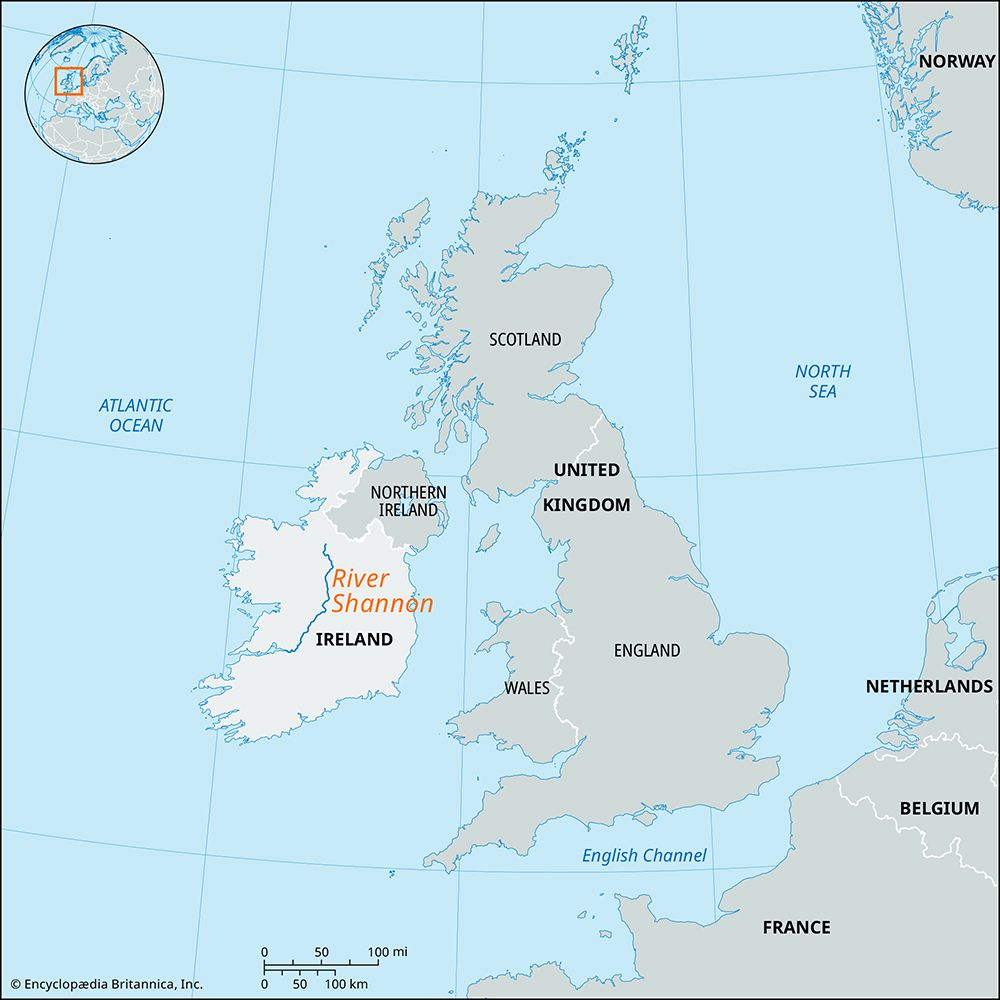
The River Shannon is the longest river in Ireland. It rises in northwestern County Cavan, specifically at the pools located at the foot of Tiltinbane Mountain, and flows for approximately 161 miles (259 km) in a southerly direction.
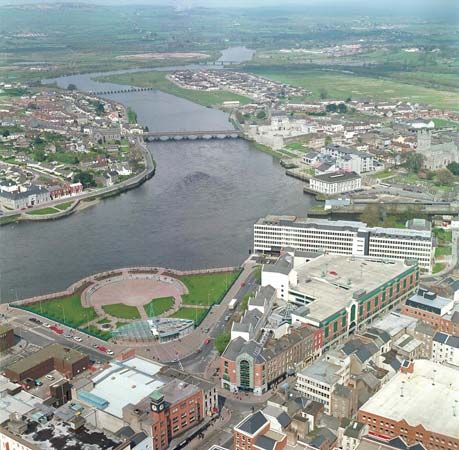
The river serves as the primary drainage system for Ireland’s central lowland. After its main course, it enters the Atlantic Ocean via a 70-mile (113-km) estuary located below Limerick city. Throughout its journey, the river drains an area of 6,060 square miles (15,695 square km) and is characterized by its passage through various lakes and belts of marshes and bogs.1
Sources
- River Shannon — Encyclopædia Britannica
- Ireland - Drainage of Ireland — Encyclopædia Britannica
- Ireland - Waterborne traffic — Encyclopædia Britannica
Published on · 3 min read