Niagara River
The Niagara River has been a vital force in the development of North America, serving as a geographic boundary, a strategic military corridor, and a…
What role has the Niagara River played in the history and development of the region?
The Niagara River has been a vital force in the development of North America, serving as a geographic boundary, a strategic military corridor, and a powerhouse for industrial growth.
Strategic and Historical Significance
Forming the border between the United States and Canada, the river was a focal point during the War of 1812. It served as a theater for significant conflicts, including the Battle of Queenston Heights and the Battle of Chippewa, as forces from both nations vied for control of the region.12
Economic and Industrial Development
The river’s steep gradient and steady flow make it a premier source of hydroelectric power. Since the late 19th century, this energy has fueled the growth of electrochemical, aerospace, and metallurgical industries in cities like Niagara Falls, New York, and Ontario. Furthermore, the river is a key component of regional transportation; while Niagara Falls acts as a natural barrier, the Welland Canal and the New York State Barge Canal allow for navigation, linking the Great Lakes to the St. Lawrence Seaway.345
How did the Niagara River form, and what is its geological significance?
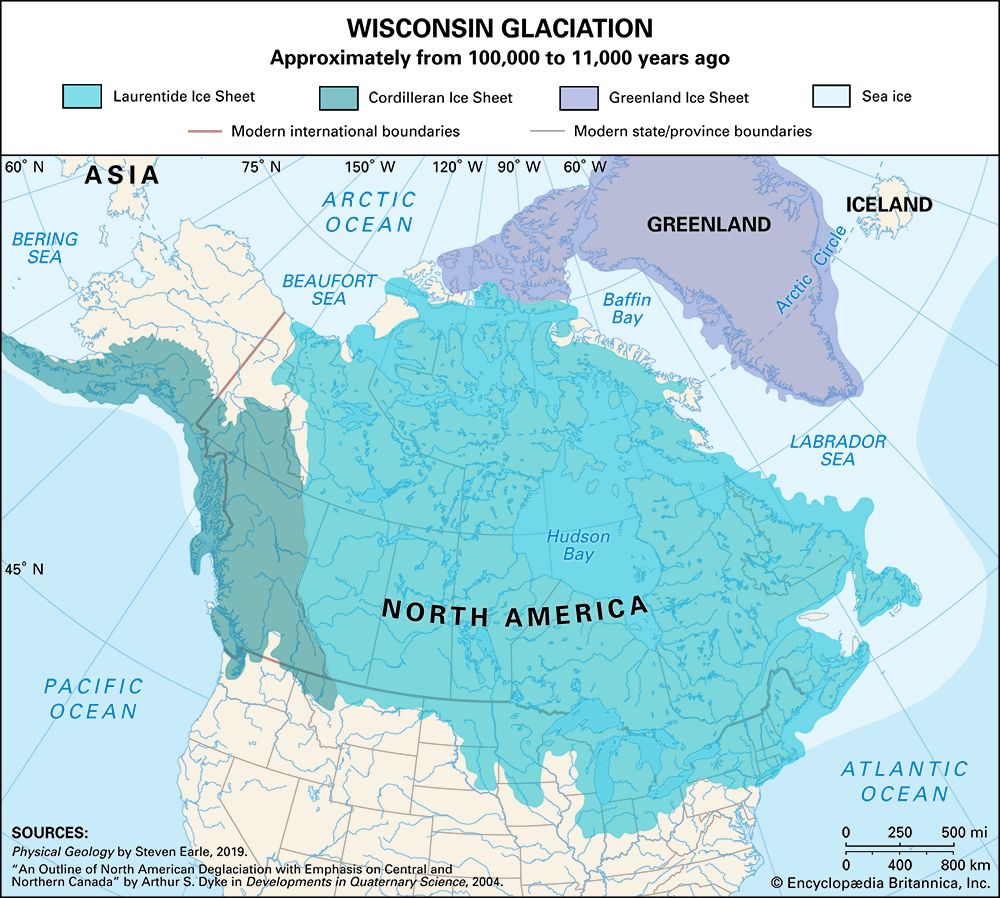
The Niagara River formed approximately 12,000 years ago during the late Pleistocene Epoch as the Laurentide Ice Sheet retreated. This melting ice released a massive volume of water that began draining the Great Lakes basin, carving a path over the Niagara Escarpment.71
Geological Significance
The river’s formation is inextricably linked to the unique geology of the region, which dates back over 400 million years to the Silurian Period.7
- The Escarpment: The river flows over a ridge of hard dolomite underlain by softer shale.7
- Erosion and Migration: As water exerts hydrostatic pressure, the softer shale erodes more quickly than the dolomite. This causes the dolomite to collapse, allowing Niagara Falls to maintain its vertical drop while migrating upstream.7
- Gorge Formation: This long-term recession of the falls created the Niagara Gorge, a 7-mile-long feature that serves as a record of the river’s post-glacial history.1
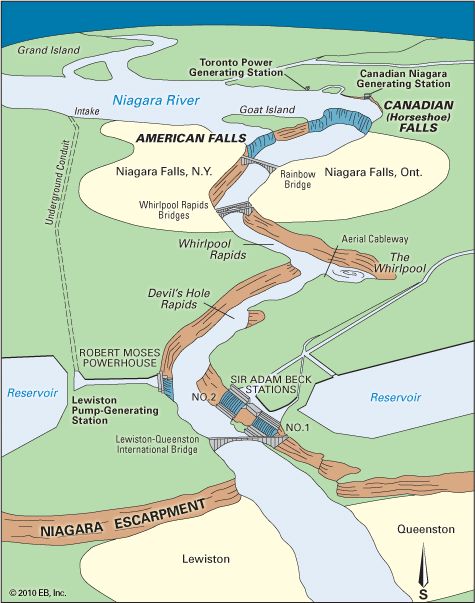
What are the major features and attractions along the Niagara River?
The Niagara River region is defined by its dramatic natural scenery and a wealth of historical and recreational sites.
Major Natural Features
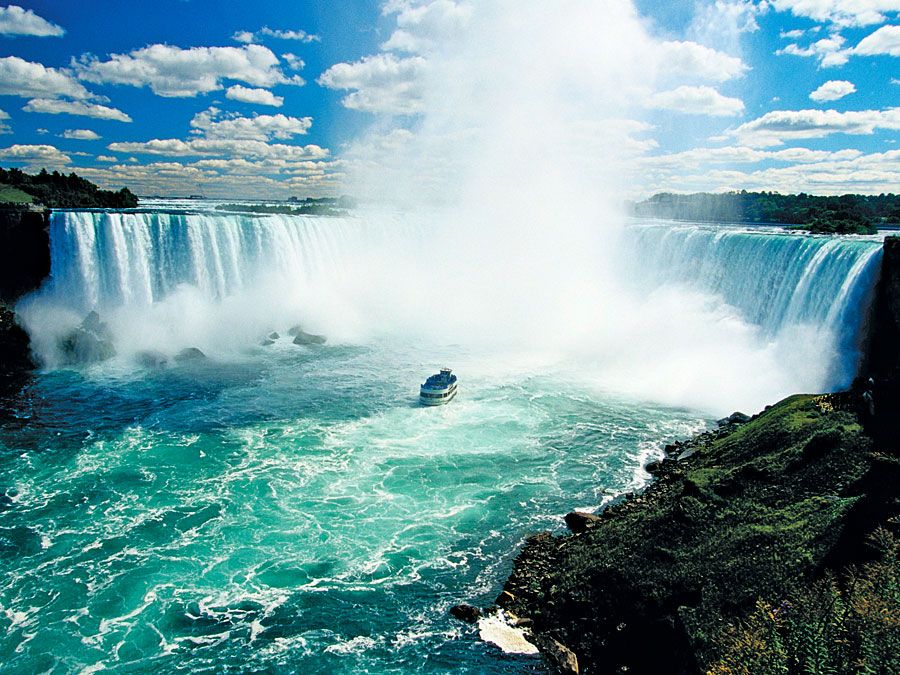
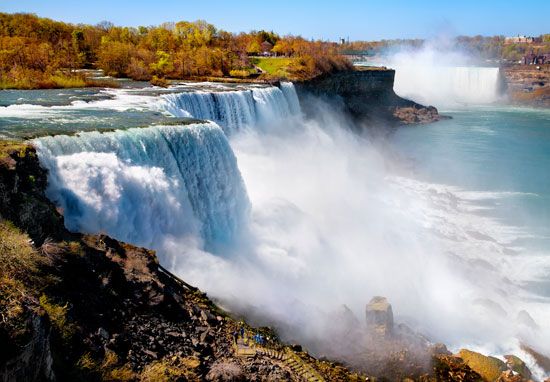
The centerpiece of the region is Niagara Falls, which consists of three distinct sections:
- Horseshoe Falls: The largest section, located on the Canadian side, with a massive curving crest line.4
- American Falls: Located on the U.S. side, known for its impressive vertical drop.4
- Bridal Veil Falls: A smaller, picturesque section adjacent to the American Falls.4
Key Attractions and Parks
The area is managed through an extensive network of parks that offer unique perspectives of the river and falls:
- Niagara Falls State Park: The oldest state park in the U.S., featuring observation towers, elevators to the gorge base, and access to Goat Island.82
- Cave of the Winds: An attraction allowing visitors to walk behind the curtain of falling water.4
- Historical Sites: Old Fort Niagara, built by the French in the 18th century, is a major landmark located at the mouth of the river on Lake Ontario.8
- Recreational Parks: Sites such as Whirlpool State Park, Devil’s Hole State Park, and Beaver Island State Park provide diverse opportunities for hiking, wildlife viewing, and boating.8
- Cultural Venues: The Earl W. Brydges Artpark in Lewiston serves as a prominent destination for the performing arts.8
What is the length and average flow rate of the Niagara River?
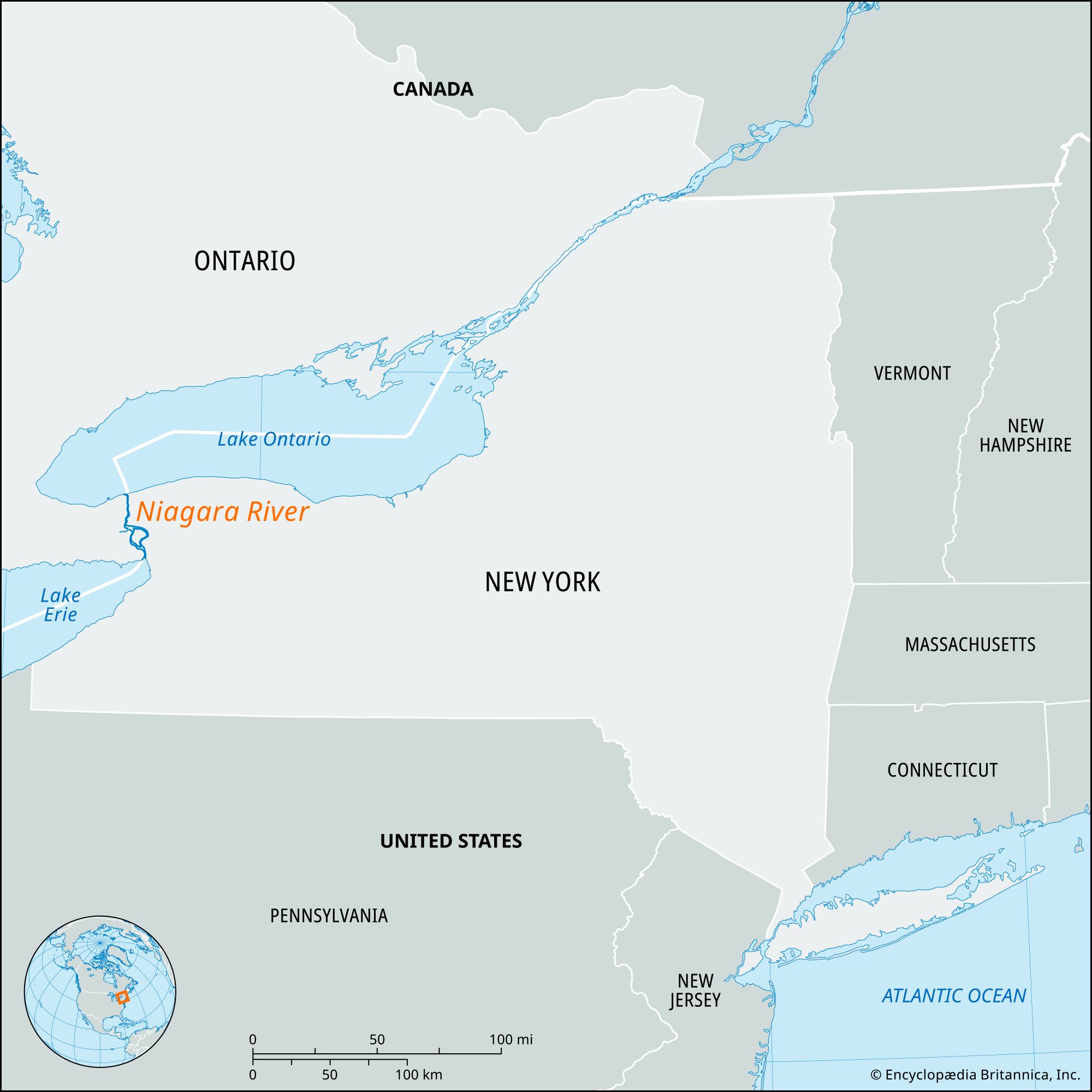
The Niagara River flows for a distance of approximately 35 miles (56 km) from Lake Erie to Lake Ontario.1
Regarding its flow, the river’s total discharge is significant, though a large portion is diverted for hydroelectric power under international treaties. The amount of water available for diversion—in excess of the volume reserved to maintain the scenic flow over Niagara Falls—is estimated to average about 130,000 cubic feet (3,600 cubic metres) per second.1
Sources
- Niagara River — Encyclopædia Britannica
- Niagara Falls — Encyclopædia Britannica
- Battle of Chippewa — Encyclopædia Britannica
- Why is Niagara Falls famous? — Encyclopædia Britannica
- North America - Waterways — Encyclopædia Britannica
- Battle of Queenston Heights — Encyclopædia Britannica
- How was Niagara Falls formed? — Encyclopædia Britannica
- Niagara Frontier — Encyclopædia Britannica
- Niagara Falls — Encyclopædia Britannica
Published on · 3 min read