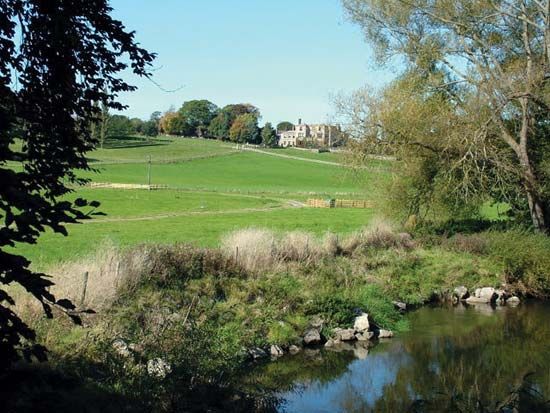
River Wye
The River Wye is a major river in the United Kingdom, stretching approximately 130 miles (210 km) in length. It originates in the moorlands of central Wales…
What is the River Wye and where is it located in the United Kingdom?
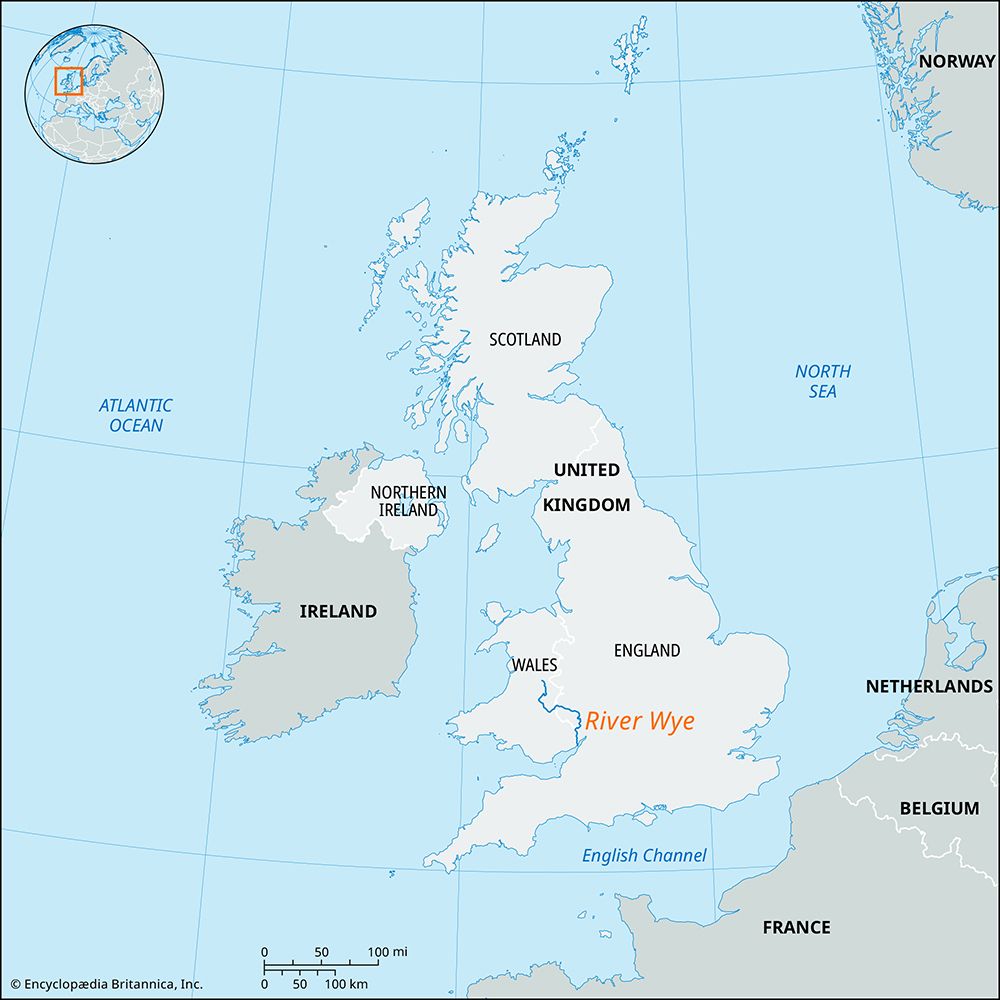
The River Wye is a major river in the United Kingdom, stretching approximately 130 miles (210 km) in length. It originates in the moorlands of central Wales on the eastern slopes of Plynlimon and flows generally southeastward, eventually reaching the Irish Sea via the Severn Estuary.12
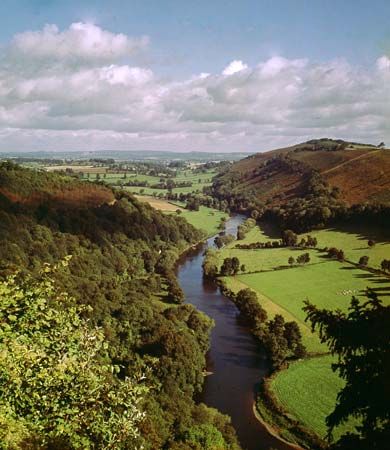
Throughout its course, the river serves as a significant geographical feature, forming the historic frontier between England and Wales below the town of Monmouth. The Wye is noted for its diverse landscape, ranging from the glaciated, deeply cut valleys of the Welsh uplands to the mature, meandering valley it forms upon entering England near Hay and passing through Hereford and Ross. The river is also well-regarded for its scenic beauty, particularly at locations like Symonds Yat, and its rich salmon fisheries.1
How long is the River Wye and what are its main tributaries?
The River Wye is approximately 130 miles (210 km) long.1
Its main tributaries mentioned in the context of its course include:
- The Elan: Joins the Wye near Rhayader; its upper valley has been dammed to create reservoirs for water supply.1
- The Lugg: Joins the Wye from the north at Hereford.1
What are some of the notable towns and landmarks along the River Wye?
The River Wye passes through several notable towns and landmarks as it flows from the Welsh uplands to the Severn Estuary:
Notable Towns
- Rhayader: Located near the confluence of the Wye and the Elan.1
- Builth Wells: A town situated along the river’s path as it bends toward the northeast.1
- Hay: The point where the river enters England.1
- Hereford: A major stop where the river is joined by the River Lugg.1
- Ross-on-Wye: A historic market town known for its narrow streets, 17th-century market house, and panoramic views of the valley.4
- Monmouth: A town located near the historic frontier between England and Wales.15
- Chepstow: The site where the river enters its tidal estuary.15
Landmarks and Scenic Points
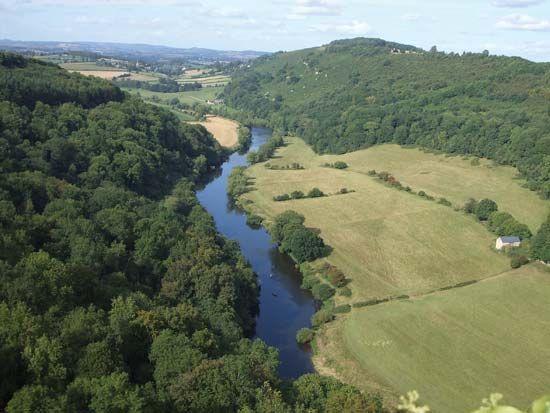
- Symonds Yat: A famous location featuring a great meander loop and spectacular viewpoints, such as Yat Rock.16
- Tintern Abbey: A renowned 12th-century Cistercian ruin in Monmouthshire, immortalized by William Wordsworth.78
- Elan Valley: Known for its system of dams and reservoirs.1
How does the River Wye contribute to the border between England and Wales?
The River Wye serves as a significant geographical and political marker in the region. While the river originates in the moorlands of central Wales and flows through both Welsh and English landscapes, it specifically functions as the historic frontier between England and Wales for the portion of its course below the town of Monmouth.1
This boundary role highlights the river’s long-standing importance in defining the territorial limits between the two nations as it meanders toward its eventual mouth in the Severn Estuary.1
Sources
- River Wye — Encyclopædia Britannica
- Wye — Merriam-Webster
- Wales - Drainage — Encyclopædia Britannica
- Symonds Yat — Encyclopædia Britannica
- Tintern Abbey — Encyclopædia Britannica
- Ross-on-Wye — Encyclopædia Britannica
- list of cities and towns in the United Kingdom - Monmouthshire (county) — Encyclopædia Britannica
- Tintern Abbey — Merriam-Webster
Published on · 2 min read