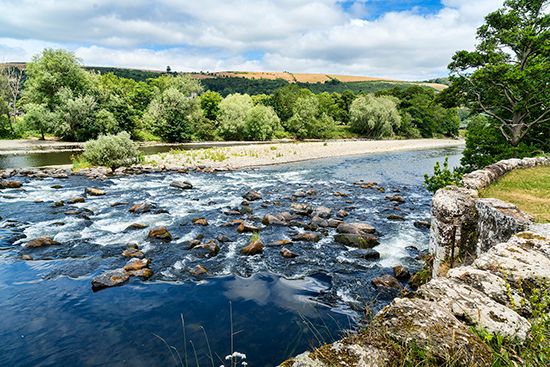
River Yarrow
The River Yarrow, also known as Yarrow Water, is a river located in Scotland. Its headstreams originate on the eastern slopes of White Coomb, approximately…
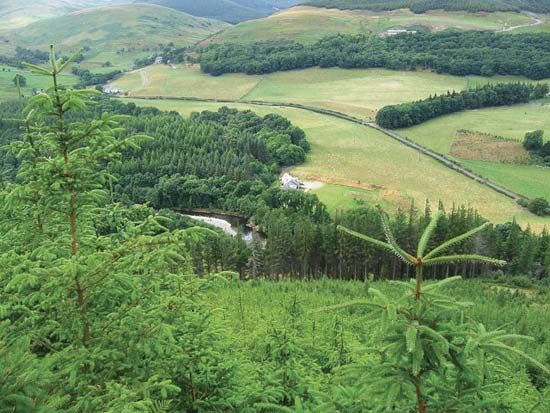
What is River Yarrow?
The River Yarrow, also known as Yarrow Water, is a river located in Scotland. Its headstreams originate on the eastern slopes of White Coomb, approximately 1,500 feet (460 metres) above sea level near the western border of Selkirk. The river flows northeast through a small glaciated ribbon loch before joining the River Tweed near Abbotsford, situated west of Galashiels.1
The vale of Yarrow is historically significant for its deep literary connections, notably featuring in border ballads and the works of poets James Hogg and William Wordsworth, as well as the novelist Sir Walter Scott. Additionally, the parish of Yarrow encompasses one-third of the area of Selkirk.1
What are border ballads?
Border ballads are a type of spirited, heroic ballad that emerged during the 15th and 16th centuries. These songs celebrate the raids, feuds, seductions, and elopements that occurred along the lawless border between England and Scotland.2
Key characteristics include:
- Subject Matter: While a few ballads address events of national historical importance, most focus on the personal retributions, courage, and cruelty of the outlaws and robber clans who lived by their own grim code.23
- Historical Accuracy: The details within these ballads are often factually incorrect due to partisan alterations or faulty memory; however, they remain valuable for reflecting the folk attitudes and popular sentiments of the time.3
- Notable Examples: Well-known titles include “Johnny Cock,” “Jock o’ the Side,” “Hobie Noble,” “The Bonny Earl of Murray,” and “Edom o Gordon”.23
The region surrounding the River Yarrow is particularly famous for its strong historical associations with these ballads.1
Who was James Hogg and why is he famous?
James Hogg (1770–1835) was a Scottish poet and novelist widely known as the “Ettrick Shepherd.” Born in Selkirkshire, he spent his early life working as a shepherd and was largely self-educated before gaining recognition during the ballad revival of the Romantic movement.4
Hogg is famous for several key contributions to literature:
- Literary Connections: His talent was discovered by Sir Walter Scott, whom he assisted by providing material for Minstrelsy of the Scottish Border. In Edinburgh, he moved in influential literary circles, meeting figures such as Lord Byron, Robert Southey, and William Wordsworth.4
- Poetry: He achieved success with The Queen’s Wake (1813), a collection of poems about Mary Stuart, which includes notable works like “Kilmeny” and “The Witch of Fife.”4
- Prose: He is perhaps most celebrated today for his novel The Private Memoirs and Confessions of a Justified Sinner (1824), a dark, psychological tale that is considered a precursor to the modern thriller.4
What is a glaciated ribbon loch?
The term “glaciated ribbon loch” is not a standard geological term; however, it refers to a ribbon lake, which is a long, narrow body of water found in a glacial valley.
These lakes form when a glacier moves through a valley, deepening the floor through erosion. Because the ice is thicker in certain areas—often where the bedrock is softer or the glacier’s erosive power is concentrated—it creates deep basins. When the glacier retreats, these basins fill with water, resulting in a long, thin lake that follows the path of the U-shaped valley.
Sources
- River Yarrow — Encyclopædia Britannica
- border ballad — Encyclopædia Britannica
- ballad - Historical ballads — Encyclopædia Britannica
- James Hogg — Encyclopædia Britannica
- glacial valley — Encyclopædia Britannica
Published on · 2 min read