Rum
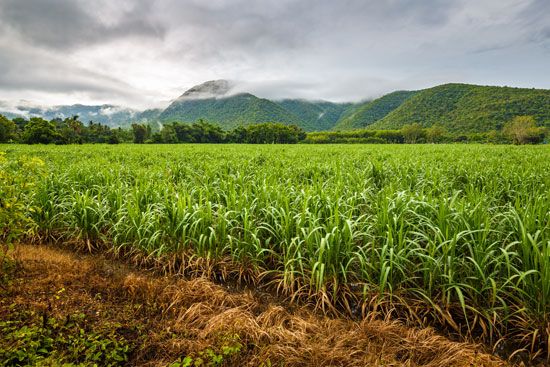
Rum is a distilled liquor produced from sugarcane products, most commonly molasses, which is a byproduct of sugar manufacturing. In regions where the sugar…
What is Rum?
Rum is a distilled liquor produced from sugarcane products, most commonly molasses, which is a byproduct of sugar manufacturing. In regions where the sugar industry is less developed, it may be produced directly from sugarcane juice.1
The spirit originated in the West Indies around 1650 and has a complex history, including its role in the slave trade and as a staple ration for British sailors.1
Rum is generally categorized by its body and flavor profile:
- Heavy/Dark Rums: Primarily from Jamaica, Barbados, and Guyana, these are often fermented naturally and distilled in pot stills, resulting in a strong molasses flavor.1
- Light-Bodied Rums: Typified by those from Cuba and Puerto Rico, these use cultured yeast and continuous-operation patent stills to create a milder, drier spirit.1
How is molasses created during the sugar-making process?
Molasses is the syrupy byproduct created during the sugar manufacturing process after sugar crystals have been extracted from sugarcane or sugar beet juice.23
The creation of molasses follows these key steps:
- Juice Extraction: Sugarcane is crushed or shredded to extract its juice, while sugar beets are sliced into strips and soaked in hot water to release their sugar content.43
- Concentration: The resulting raw juice is purified and then concentrated through evaporation to form a thick syrup.3
- Crystallization: Fine seed crystals are added to the syrup in vacuum pans to encourage the formation of sugar crystals.35
- Centrifuging: The mixture is spun in centrifuges, which separates the solid sugar crystals from the remaining liquid—this liquid is molasses.23
This process is repeated multiple times. Each successive extraction yields a lower-grade molasses, culminating in blackstrap molasses, which is the final, viscous byproduct from which no more sugar can be economically crystallized.25
What role did rum play in the history of the slave trade?
Rum played a significant role in the economic cycle of the transatlantic trade of enslaved people, often functioning as a key commodity within the “triangular trade” model.6
This economic system operated through a three-legged route:
- First Leg: European merchants transported manufactured goods, including alcoholic beverages like rum, to the coast of western Africa, where they were exchanged for enslaved people.6
- Second Leg: Enslaved Africans were transported across the Atlantic Ocean to the West Indies or Brazil, a journey known as the Middle Passage.6
- Third Leg: In the Americas, enslaved people were forced to work on plantations producing sugar and molasses. This molasses was then shipped to places like New England, where it was distilled into rum. This rum was subsequently traded back to Africa to acquire more enslaved people, perpetuating the cycle.61
The trade of these goods was deeply intertwined with the exploitation of human lives, and the production of rum became a major industry in the American colonies, further incentivizing the demand for enslaved labor to produce the necessary raw materials.17
How does the distillation process differ between pot stills and patent stills?
The primary difference between pot stills and patent (continuous) stills lies in their operational method and the resulting flavor profile of the spirit.
The Pot Still
The pot still is a batch-processing vessel, typically used in a series of two or three. As the fermentation mixture is heated, the temperature rises, causing the composition of the vapor to change throughout the run. Because the final product is an average of these varying vapors, pot-still spirits possess a complex, distinct flavor profile. This method is traditionally used for whiskey and brandy production.9
The Patent Still
Also known as a continuous still, this apparatus uses a column of stacked vaporization chambers. Unlike the pot still, the temperature in a patent still remains approximately constant throughout the process. This consistency results in a more uniform flavor profile. Developed in the early 19th century—notably by Aeneas Coffey in 1831—this technology allows for large-scale, efficient production and has largely replaced the pot still for the majority of modern alcoholic-liquor manufacturing.910
Sources
- rum — Encyclopædia Britannica
- molasses — Encyclopædia Britannica
- sugar - Juice extraction — Encyclopædia Britannica
- How is sugar made? — Encyclopædia Britannica
- sugar - Crystallization — Encyclopædia Britannica
- triangular trade — Encyclopædia Britannica
- Western colonialism - Slave trade — Encyclopædia Britannica
- Molasses Act — Encyclopædia Britannica
- distilled spirit - The pot still — Encyclopædia Britannica
- distilled spirit - History of distilling — Encyclopædia Britannica
Published on · 3 min read