Safflower
Safflower (Carthamus tinctorius) is a flowering annual plant belonging to the Asteraceae family. It typically grows between 0.3 and 1.2 meters tall and…
What is safflower and where does it originate from?
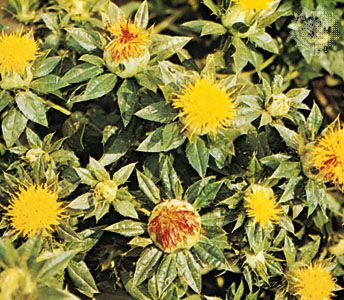
Safflower (Carthamus tinctorius) is a flowering annual plant belonging to the Asteraceae family. It typically grows between 0.3 and 1.2 meters tall and produces red, orange, yellow, or white flowers.1
The plant is native to regions spanning from central India through the Middle East to the upper reaches of the Nile River and into Ethiopia.1
Historically, its dried flowers were used to produce a red textile dye known as carthamin, though this has largely been replaced by synthetic alternatives. Today, the plant is primarily cultivated for its seeds, which are rich in oil. This oil is valued for its high proportion of polyunsaturated fats and is commonly used in cooking, salad oils, and margarines, as well as in the production of paint and varnish. Additionally, the plant is sometimes used as an adulterant for the spice saffron.1
What are the main uses of safflower in industries such as food and medicine?
Safflower (Carthamus tinctorius) serves several significant industrial and dietary purposes, primarily centered on the oil extracted from its seeds.
Food Industry
The most prominent modern use of safflower is the production of oil derived from its seeds. This oil is highly valued in the food industry for its high proportion of polyunsaturated fats, making it a popular choice for:
- Cooking and Salad Oils: Used widely as a healthy dietary fat source.
- Margarine: Utilized in the production of soft margarines.
- Livestock Feed: The meal or cake residue left after oil extraction serves as a protein-rich supplement for livestock.1
Industrial and Other Uses
Beyond food, the plant has historical and technical applications:
- Paints and Varnishes: Because safflower oil does not yellow with age, it is a preferred ingredient in the manufacturing of paint and varnish.1
- Dyes: Historically, dried flowers were used to produce a red textile dye called carthamin, though this has largely been superseded by synthetic alternatives.1
- Culinary Adulterant: It is sometimes used as an adulterant for the spice saffron.1
While the provided information highlights these industrial and food-related uses, it does not detail specific medicinal applications.
What are some historical uses of safflower throughout different cultures?
Safflower (Carthamus tinctorius) has played a significant role in various cultures, primarily as a source of pigment and as a substitute for more expensive commodities.
Historical Uses of Safflower
- Textile Dyeing: The most notable historical use of the plant was the extraction of carthamin from its dried flowers. This red dye was commercially important for coloring textiles across many regions, particularly in southwestern Asia, before it was largely replaced by synthetic aniline dyes.1
- Culinary Adulterant: Due to its vibrant color, safflower has long been used as an adulterant for saffron. Because genuine saffron is the most expensive spice in the world, safflower—sometimes referred to as “false saffron” or “dyer’s saffron”—was historically used to mimic the appearance of the more costly spice in food preparation.134
While safflower has been cultivated for centuries across a range spanning from India through the Middle East to Ethiopia, its historical application remains most distinct in the context of traditional textile production and as a cost-effective alternative to luxury spices.1
What parts of the safflower plant are used commercially?
Commercial use of the safflower (Carthamus tinctorius) focuses on two primary parts of the plant:
- Seeds: The seeds are the most significant commercial component. They are processed to extract safflower oil, which is widely used in the food industry for cooking, salad oils, and the production of soft margarines due to its high polyunsaturated fat content. Industrially, the oil is valued in the manufacturing of paint and varnish because it does not yellow with age. Additionally, the meal or cake residue remaining after oil extraction is utilized as a protein-rich supplement for livestock.1
- Flowers: The dried flowers have historically been used to obtain carthamin, a red textile dye. While largely replaced by synthetic alternatives today, this remains a traditional practice in parts of southwestern Asia. The flowers are also used as an adulterant for the spice saffron.1
Sources
- Safflower — Encyclopædia Britannica
- safflower — Merriam-Webster
- saffron — Encyclopædia Britannica
- dyer's saffron — Merriam-Webster
- false saffron — Merriam-Webster
- safflower oil — Merriam-Webster
Published on · 3 min read