Chicory
Chicory (Cichorium intybus) is a blue-flowered perennial plant belonging to the Asteraceae family. While some older classifications may refer to it as part…
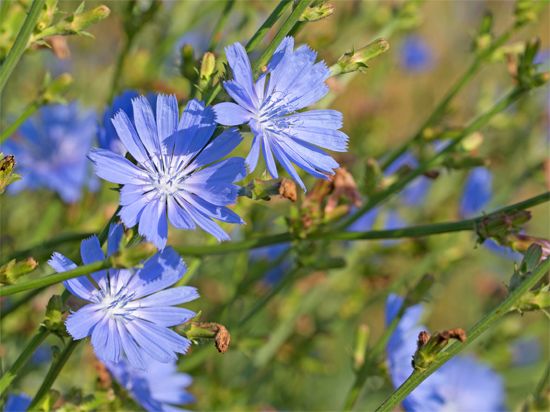
What is chicory and which plant family does it belong to?
Chicory (Cichorium intybus) is a blue-flowered perennial plant belonging to the Asteraceae family. While some older classifications may refer to it as part of the Cichoriaceae, it is botanically categorized within the Asteraceae family.12
Native to Europe, this plant is widely cultivated for its leaves, which are consumed as a vegetable or in salads, and its fleshy taproot. The roots are often roasted and ground to serve as a flavoring or additive for coffee, a practice particularly well-known in New Orleans. Additionally, the plant is grown as a fodder or herbage crop for livestock. Depending on the cultivation method, it can produce varieties such as barbe de capucin or the tight heads known as witloef.13
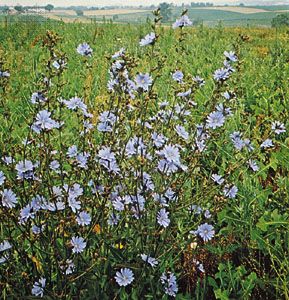
How is chicory cultivated and what are its ideal growing conditions?
Chicory (Cichorium intybus) is cultivated primarily for its leaves and fleshy taproot. Successful cultivation requires careful timing regarding the growing season, which typically spans five and a half to six months in temperate regions.2
Cultivation Methods
- Field Growth: Plants are grown in the open during the summer months to allow for the development of large storage roots.2
- Forcing: In the fall, roots are harvested and moved indoors to be forced—a process of growing them out of season during the winter. This can be done in cellars, under greenhouse benches, or outdoors.2
- Varieties: Different forcing techniques produce specific types of chicory, such as barbe de capucin (loose, blanched leaves) or witloef (tight, compact heads).2
Ideal Growing Conditions
To ensure the plant develops suitable storage roots rather than going to seed prematurely, timing is critical. In temperate areas, sowing seeds too early in the spring can cause the plant to bolt. Consequently, it is recommended to sow seeds in June to optimize root development for later forcing.2
How is chicory used in livestock feed and what are its benefits for animals?
Chicory (Cichorium intybus) is utilized as a fodder or herbage crop for cattle. While the provided information confirms its use as a livestock feed, it does not detail the specific nutritional benefits or physiological effects of chicory on animals.
What are some other common plants in the Asteraceae family?
The Asteraceae family, also known as the aster, daisy, or composite family, is one of the largest plant families, encompassing over 25,000 species. These plants are found globally and include a wide variety of herbaceous plants, shrubs, and trees.45
Common plants within this family include:
- Garden Ornamentals: Ageratum, aster, chrysanthemum, cosmos, dahlia, marigold, and zinnia.56
- Food Crops: Artichoke, lettuce, endive, salsify, sunflower, safflower, and stevialower), and stevia.6
- Wildflowers and Herbs: Dandelion, chamomile, yarrow, goldenrod, coneflower, and tarragon.5
- Other Notable Species: Burdock, ragweed, wormwood, sagebrush, and edelweiss.56
These plants are characterized by their composite flower heads, which are made up of many small florets surrounded by bracts, and their one-seeded fruits known as achenes.75
Sources
- chicory family — Merriam-Webster
- Chicory — Encyclopædia Britannica
- chicory — Merriam-Webster
- Asteraceae — Encyclopædia Britannica
- Asteraceae - Physical characteristics — Encyclopædia Britannica
- list of plants in the family Asteraceae — Encyclopædia Britannica
- Asteraceae - Economic importance — Encyclopædia Britannica
Published on · 2 min read