Tickseed
Tickseed refers to any ornamental, summer-blooming plant belonging to the genus Coreopsis within the Asteraceae family. Native to North America, this group…
What is Tickseed?
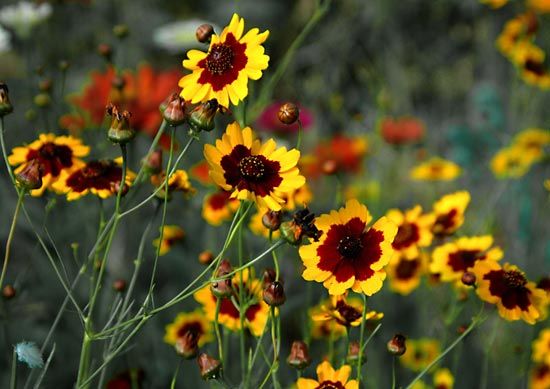
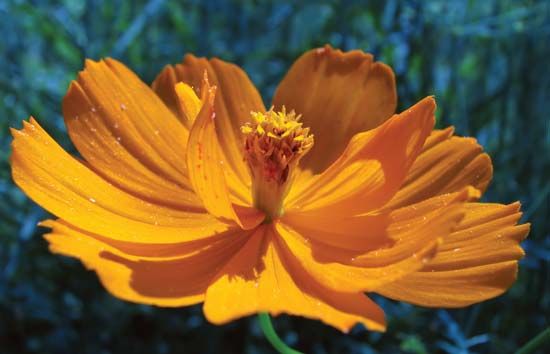
Tickseed refers to any ornamental, summer-blooming plant belonging to the genus Coreopsis within the Asteraceae family. Native to North America, this group includes approximately 115 species of both annual and perennial herbs.1
These plants are characterized by showy flower heads that feature yellow disk flowers surrounded by ray flowers in shades of yellow, pink, white, or variegated patterns. Their leaves are typically lobed and arranged oppositely along the stem. Popular varieties include golden coreopsis (C. tinctoria), often found in gardens, and swamp tickseed (C. rosea), which is frequently cultivated in wildflower settings. The name Coreopsis is derived from the Greek words koris (bedbug) and -opsis (resembling), likely referring to the appearance of the seeds.12
Why is the genus called Coreopsis?
The genus name Coreopsis is derived from the Greek word koris, meaning “bedbug,” combined with the New Latin suffix -opsis, meaning “resembling”. This naming convention refers to the appearance of the plant’s seeds.2
In the family Asteraceae, the fruit is technically an achene, which is a dry, single-seeded fruit that does not open at maturity. In the case of Coreopsis, these achenes are thin and flat, featuring an expanded, wing-like margin that increases their surface area.3
What are the differences between annual and perennial plants?
The primary difference between annual and perennial plants lies in their life cycle and longevity.
Annual Plants
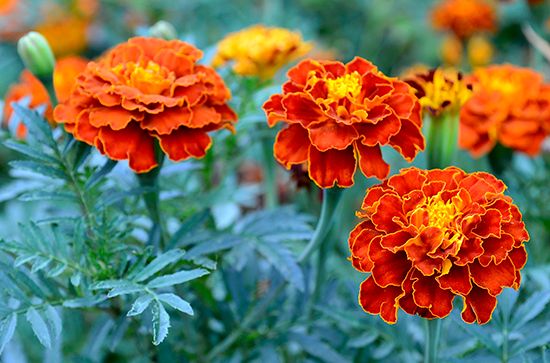
An annual is a plant that completes its entire life cycle—from germination to seed production and death—within a single growing season. Because the entire individual dies after reproducing, the species relies on its seeds to survive and continue the next generation. Common examples include many vegetables, wildflowers, and garden favorites like marigolds and zinnias.456
Perennial Plants
A perennial is a plant that persists for several years. While the aboveground portions of herbaceous perennials may die back during winter, the plant survives through specialized underground structures—such as bulbs, rhizomes, or tubers—and regrows when conditions are favorable. This category includes all trees and shrubs, as well as many nonwoody flowering plants like chrysanthemums and dahlias.7
In short, if you want a plant that returns year after year, you should choose perennials; if you prefer plants that complete their growth and expire in one season, you should choose annuals.4
Which other plants belong to the Asteraceae family?
The Asteraceae family, also known as the aster, daisy, or composite family, is one of the largest plant families, encompassing over 1,620 genera and 25,000 species. These plants are found globally and are characterized by their composite flower heads and one-seeded achene fruits8.89
The family includes a diverse range of plants, from common garden ornamentals to important food crops and even some weeds. Notable members include:10
- Garden Ornamentals: Ageratum, aster, chrysanthemum, cosmos, dahlia, marigold, and zinnia.910
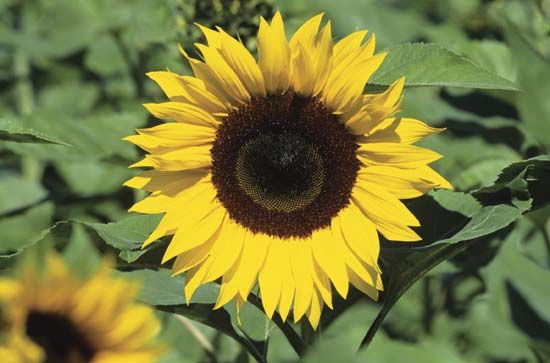
- Food Crops: Artichoke, lettuce, endive, salsify, safflower, sunflower, and stevia.910
- Wildflowers and Other Plants: Arnica, sagebrush, tarragon, wormwood, black-eyed Susan, dandelion, goldenrod, ragweed, and yarrow.910
Sources
- Tickseed — Encyclopædia Britannica
- coreopsis — Merriam-Webster
- Asteraceae - Fruit and seeds — Encyclopædia Britannica
- Is That Plant 'Perennial' or 'Annual'? — Merriam-Webster
- Perennial — Encyclopædia Britannica
- Annual — Encyclopædia Britannica
- Plant development - Senescence in plants — Encyclopædia Britannica
- Asteraceae — Encyclopædia Britannica
- list of plants in the family Asteraceae — Encyclopædia Britannica
- Asteraceae - Economic importance — Encyclopædia Britannica
Published on · 2 min read