Costmary
Costmary (Tanacetum balsamita) is an aromatic perennial herb belonging to the aster family (Asteraceae). It is a member of the tansy genus and is…
What is Costmary?
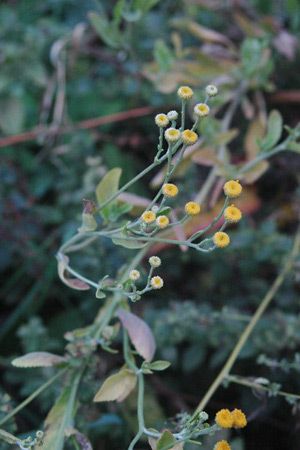
Costmary (Tanacetum balsamita) is an aromatic perennial herb belonging to the aster family (Asteraceae). It is a member of the tansy genus and is characterized by its yellow, button-shaped flowers.12
The plant’s leaves possess a bitter, slightly lemony flavor. These leaves are versatile in their applications:1
- Culinary: They can be used fresh in salads or used fresh and dried as a flavouring for poultry, meats, and English ale.1
- Other uses: The dried leaves are frequently utilized in potpourri and as a herbal tea.1
While sometimes cultivated in herb gardens for these purposes, costmary is also recognized for its historical use in traditional medicine.2
What other plants belong to the Asteraceae family?
The Asteraceae family, also known as the aster, daisy, or composite family, is one of the largest families of angiosperms, comprising over 1,620 genera and 25,000 species. These plants are found in nearly every terrestrial habitat worldwide and are characterized by their composite flower heads.456
The family includes a vast array of plants, ranging from common garden ornamentals to important food crops and weeds:
- Garden Ornamentals: Popular varieties include asters, chrysanthemums, cosmos, dahlias, marigolds, zinnias, coneflowers, and yarrow.75
- Food Crops: Economically significant species include lettuce, artichokes, endive, salsify, sunflowers, safflower, and stevia.75
- Wildflowers and Weeds: The family also contains well-known plants such as dandelions, ragweed, thistles, burdock, and goldenrod.675
- Medicinal and Other Uses: Wormwood is used in the production of absinthe, while pyrethrum is valued as a natural insecticide.75
How are perennial herbs different from annual plants?
The primary difference between perennial and annual plants lies in the duration of their life cycles and how they survive from one growing season to the next.
- Annuals: These plants complete their entire life cycle—germination, growth, flowering, and death—within a single growing season. The only part of the plant that survives to the next season is the dormant seed.910
- Perennials: These plants persist for several years. While woody perennials like trees and shrubs remain visible year-round, herbaceous perennials often have aboveground parts that die back in autumn. They survive the winter through specialized underground structures such as bulbs, rhizomes, corms, or tubers, which produce new growth the following season.1110
In short, while annuals must be replanted or rely on self-seeding to return, perennials are capable of regrowing and reblooming year after year from their established root systems.1211
What are some other examples of plants used in traditional medicine?
Throughout history, various cultures have utilized plants for their medicinal properties. Many of these traditional remedies have provided the foundation for modern pharmaceuticals, while others remain central to holistic and indigenous health practices.
Historical and Modern Medicinal Plants
- Quinine: Derived from a tree in the Andes, this was the original treatment for malaria.13
- Willow Bark: The primary source of the main ingredient in aspirin.13
- Yew Tree: The bark of this tree was the original source of Taxol, a drug used to treat several types of cancer.13
- Mahuang: A Chinese herb from which ephedrine was first isolated; it is used to treat asthma and allergy symptoms.1415
- Huperzia serrata: A moss used in China to produce the herbal medicine qian ceng ta, which contains huperzine A, an agent studied for the treatment of Alzheimer disease. treatment of Alzheimer disease.14
- St. John’s wort: Used in phytotherapy and herbalism, this plant is often used to provide symptomatic relief for mild to moderate depression.1617
Indigenous Sacred Medicines
In certain Native American cultures, particularly among the Anishinaabe, four plants are revered for their spiritual and medicinal roles:
- Tobacco: Used in prayer and ceremony to communicate with the spirit world.18
- Cedar: Used for purification and its restorative, infection-fighting properties.18
- Sage: Used for smudging and as a poultice to treat external bleeding, swelling, and ulcers, or as a tea for coughs.18
- Sweetgrass: Used for purification and to treat fever, cough, and bladder issues.18
Sources
- Costmary — Encyclopædia Britannica
- rosemary — Encyclopædia Britannica
- Tansy — Encyclopædia Britannica
- Asteraceae — Encyclopædia Britannica
- list of plants in the family Asteraceae — Encyclopædia Britannica
- Daisy — Encyclopædia Britannica
- Asteraceae - Economic importance — Encyclopædia Britannica
- Asterales - Asteraceae — Encyclopædia Britannica
- Is That Plant 'Perennial' or 'Annual'? — Merriam-Webster
- Perennial — Encyclopædia Britannica
- Annual — Encyclopædia Britannica
- Angiosperm - General features — Encyclopædia Britannica
- Did you know? — Merriam-Webster
- traditional Chinese medicine - Genetics research and drug development — Encyclopædia Britannica
- spice and herb — Encyclopædia Britannica
- four sacred medicines — Encyclopædia Britannica
- Ayurveda — Encyclopædia Britannica
- pharmaceutical industry - Medicines of ancient civilizations — Encyclopædia Britannica
- complementary and alternative medicine - Efficacy of CAM — Encyclopædia Britannica
- phytotherapy — Encyclopædia Britannica
Published on · 3 min read