Saint John River
There are two distinct rivers known as the Saint John River:
What is Saint John River?
There are two distinct rivers known as the Saint John River:
Saint John River (North America)
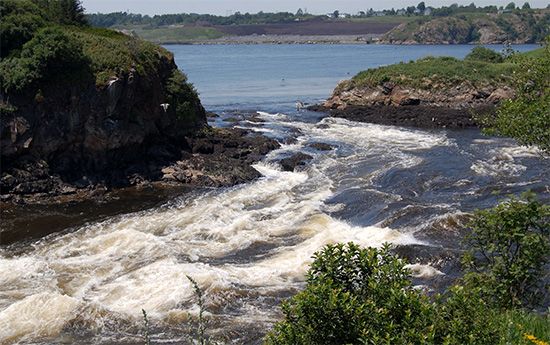
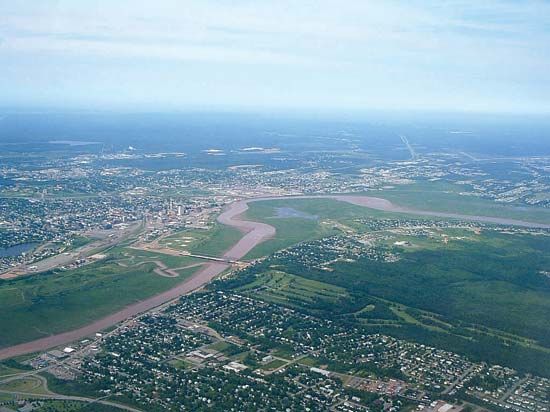
This 418-mile-long river rises in Maine, U.S., and flows into Canada, forming part of the international boundary before entering New Brunswick and emptying into the Bay of Fundy. Discovered by Samuel de Champlain in 1604, it is named for John the Baptist. A notable feature at its mouth is the reversing falls rapids, where powerful tides force the river to flow backward.12
Saint John River (Africa)
Located in West Africa, this 175-mile-long river rises in Guinea and flows through Liberia to the Atlantic Ocean at Edina. It was named by 15th-century Portuguese navigators who discovered it on the feast day of St. John. Its course is frequently interrupted by rapids.3
How do the reversing falls work?
The reversing falls rapids at the mouth of the Saint John River are a unique natural phenomenon driven by the extreme tidal activity of the Bay of Fundy.
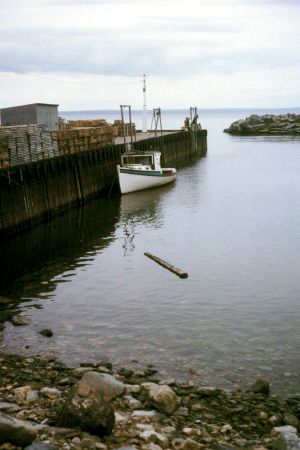
The bay is world-renowned for having the highest tides on Earth, which can rise as much as 70 feet (21 meters) in certain areas. Because the Saint John River empties into this bay, its flow is dictated by the massive volume of water moving in and out with the tides:1
- Low Tide: The river flows normally toward the bay, creating a series of rapids as it descends over a rocky ledge at the river’s mouth.4
- High Tide: As the tide rises in the Bay of Fundy, the water level becomes significantly higher than that of the river. This immense pressure forces the river to reverse its direction, causing the water to flow back upstream.41
Who were the Wolastoqiyik people?
The Wolastoqiyik, also known as the Maliseet or Malecite, are an Indigenous people who have traditionally inhabited the region surrounding the Saint John River in what is now New Brunswick, Canada, and parts of the northeastern United States.5
The name “Wolastoqiyik” translates to “people of the beautiful river,” referring to the Saint John River, which they have stewarded for generations prior to the arrival of European explorers like Samuel de Champlain in 1604. Historically, they share cultural and linguistic ties with other Algonquian-speaking peoples of the Northeast, and they are distinct from their neighbors, the Mi’kmaq, though both groups have long histories in the Maritime region.53
What is the significance of the Bay of Fundy tides?
The Bay of Fundy is globally significant primarily for its extreme tidal activity, which features the highest tides on Earth, reaching up to 70 feet (21 meters) in height.46
The bay’s unique shape and narrowness magnify the tidal range, creating several notable phenomena:
- Geological Impact: The rapid movement of water causes significant erosion of coastal sandstone and shale, resulting in dramatic cliffs and expansive mudflats at low tide.4
- Natural Phenomena: The tides create the famous “reversing falls” at the mouth of the Saint John River and a powerful tidal bore on the Petitcodiac River.4
- Energy Potential: The bay represents a major potential source of tidal energy. While the continent’s first tidal energy project was established near Annapolis Royal in 1984, large-scale development remains challenging due to immense engineering costs, feasibility issues, and environmental concerns.47
Sources
- Saint John River — Encyclopædia Britannica
- Saint John River — Encyclopædia Britannica
- Saint John — Encyclopædia Britannica
- Bay of Fundy — Encyclopædia Britannica
- Mi’kmaq — Encyclopædia Britannica
- Fundy National Park — Encyclopædia Britannica
- Nova Scotia - Resources and power — Encyclopædia Britannica
Published on · 2 min read