Saint John River
The provided search results do not contain information regarding specific recreational activities available along the Saint John River in North America.…
What types of recreational activities are popular along the Saint John River?
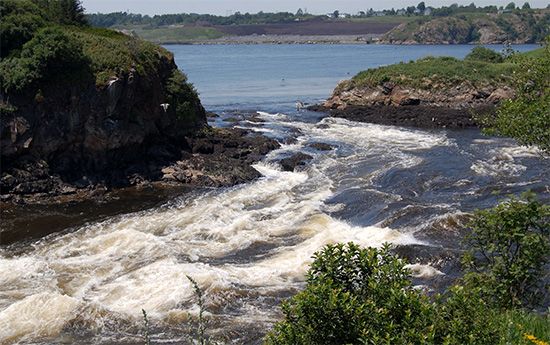
The provided search results do not contain information regarding specific recreational activities available along the Saint John River in North America. While the river is noted for its geography, hydroelectric developments, and the reversing falls at its mouth, its recreational uses are not detailed in the available documentation.
Please note that the search results do provide information on recreational activities for the Saint Johns River in Florida, which include fishing and visits to various state parks and wildlife refuges, but this is a distinct waterway from the Saint John River in Maine and New Brunswick.
How long is the Saint John River, and what are some of the notable cities along its course?
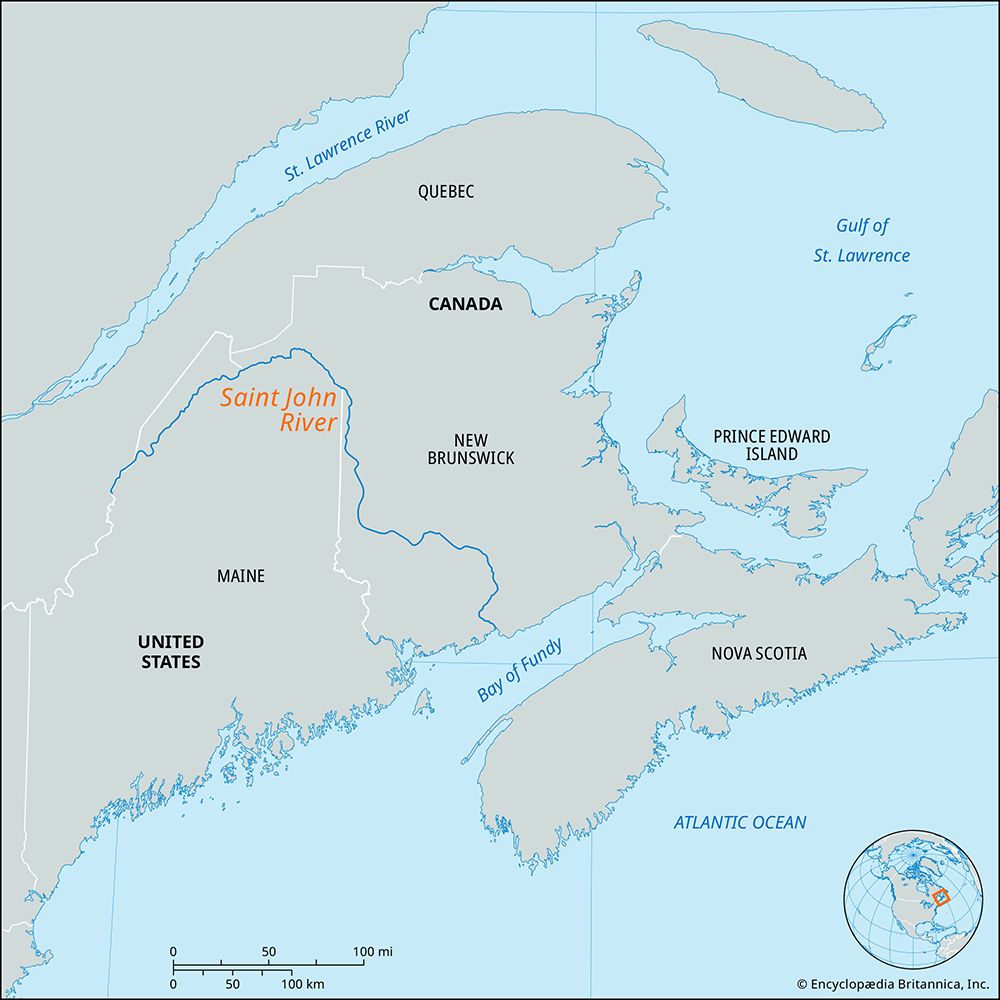
The Saint John River spans a total length of 418 miles (673 km). Rising in Somerset County, Maine, it flows northeast to the Canadian border, serves as an international boundary for 80 miles, and continues through New Brunswick before emptying into the Bay of Fundy.1
Notable cities and settlements along its course include:
- Saint John: Located at the river’s mouth, this is the second most populous city in New Brunswick and holds the distinction of being Canada’s first incorporated city.3
- Fredericton: Situated 81 miles upstream, this city marks the limit of the river’s tidal and navigable waters.1
- Grand Falls: A significant location on the river where it drops 75 feet (23 meters) and features a major hydroelectric power development.1
Other areas along the river, such as Beechwood and Mactaquac, are also notable for their hydroelectric facilities.1
What role did the Saint John River play in the boundary dispute between the United States and Canada?
The Saint John River served as a central geographic feature in the long-standing boundary dispute between the United States and the British province of New Brunswick. Following the 1783 peace treaty that ended the American Revolution, the precise location of the “highlands” or watershed intended to divide the two territories remained unclear, leading to decades of diplomatic friction.1
As settlers and lumbermen from both sides moved into the disputed Aroostook region, tensions escalated into the bloodless Aroostook War of 1838–39. The conflict involved the arrest of “trespassers” by both British and American officials, eventually prompting the mobilization of militias and the intervention of federal authorities to prevent open warfare.1
The dispute was finally resolved by the Webster-Ashburton Treaty of 1842. This agreement established the modern boundary between Maine and New Brunswick and formally granted the United States navigation rights on the Saint John River. Today, the river serves as an international boundary for 80 miles (130 km) of its course.45
Where is the Saint John River located, and what are its major tributaries?
The Saint John River is a 418-mile-long waterway that rises in Somerset County, Maine, in the United States. It flows northeast toward the Canadian border, where it serves as an international boundary for 80 miles before entering New Brunswick and emptying into the Bay of Fundy.12
It is important to distinguish this river from the Saint Johns River in Florida and the Saint John River located in West Africa, as these are entirely separate geographic entities.910
The major tributaries of the Saint John River in North America include:
- Tobique River
- Aroostook River
- Madawaska River
These tributaries are notable for supporting hydroelectric power developments, similar to those found on the main stem of the river at Grand Falls, Beechwood, and Mactaquac.1
Sources
- Saint John River — Encyclopædia Britannica
- Saint Johns River — Encyclopædia Britannica
- Saint John — Encyclopædia Britannica
- Webster–Ashburton Treaty — Encyclopædia Britannica
- Aroostook War — Encyclopædia Britannica
- list of treaties - 1846 — Encyclopædia Britannica
- Aroostook — Encyclopædia Britannica
- Canada - The War of 1812 — Encyclopædia Britannica
- Saint John River — Encyclopædia Britannica
- Saint John — Merriam-Webster
Published on · 3 min read