Saint Croix River
There are two distinct rivers in North America known as the Saint Croix River:
What is Saint Croix River?
There are two distinct rivers in North America known as the Saint Croix River:
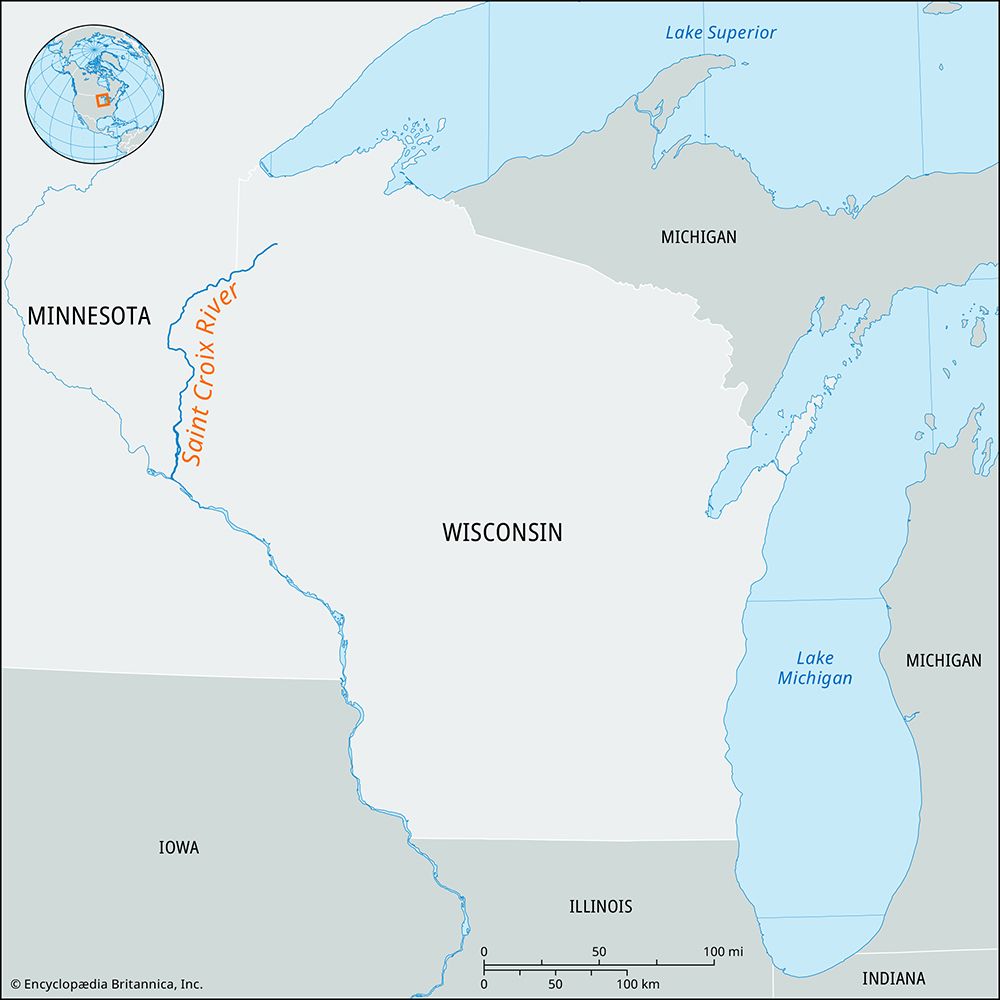
- Saint Croix River (Midwest): This tributary of the Mississippi River rises in northwestern Wisconsin and flows 164 miles southwest. For 130 miles, it serves as the border between Wisconsin and Minnesota. It is known for its scenic beauty, particularly at Interstate Park, and supports a hydroelectric plant that powers the Minneapolis-St. Paul area.1
- Saint Croix River (Northeast): This 75-mile river forms the international boundary between Maine and New Brunswick, Canada. It flows from the Chiputneticook Lakes into Passamaquoddy Bay. Historically significant for the lumber industry, it was named by Jacques Cartier and later explored by Samuel de Champlain.2
How does the Mississippi River system work?
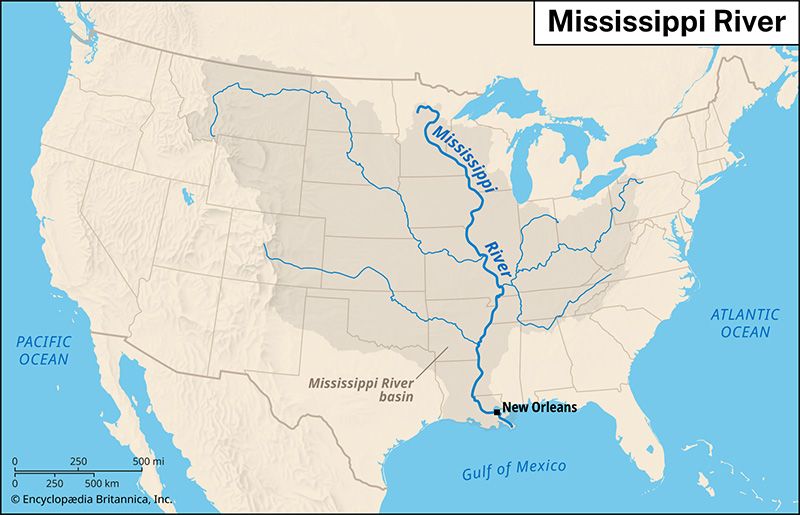
The Mississippi River system functions as a vast, interconnected drainage network that acts like a giant funnel, collecting water and sediment from approximately 1.2 million square miles of the North American continent.34
How the System Works
The system operates through the interdependence of three primary contributory areas:
- Western Tributaries: Rivers like the Missouri, Arkansas, and Platte drain the Great Plains, carrying significant silt loads derived from the erosion of unconsolidated materials.4
- Eastern Tributaries: Rivers such as the Ohio and Tennessee drain the well-watered Appalachian Mountains, providing a steady volume of water to the main stem.4
- Upper Mississippi: This section gathers strength from regions shaped by past glacial activity, with tributaries like the St. Croix and Illinois tracing former glacial meltwater channels.4
Sediment and Modification
The river acts as a conveyor of sediment, depositing material into its floodplain and eventually forming a massive delta in the Gulf of Mexico. Today, this natural process is heavily managed by human engineering, including levees, dams, and spillways, which control flooding and navigation but also trap silt that would otherwise nourish the delta.34
What is the significance of the Bay of Fundy?
The Bay of Fundy, located between the Canadian provinces of New Brunswick and Nova Scotia, is globally significant primarily for its extreme tidal activity.67
Key Features and Significance
- Record-Breaking Tides: The bay is home to the highest tides in the world, with rises reaching up to 70 feet (21 meters). This phenomenon is caused by the bay’s unique shape and narrowness, which magnify tidal ranges in inlets like the Minas Basin and Chignecto Bay.689
- Hydroelectric Potential: The immense volume of water moving through the bay twice daily has long been studied as a major potential source of renewable energy. However, development remains limited by significant engineering challenges, high costs, and environmental concerns.6
- Geological and Ecological Value: The coastline features dramatic bedrock cliffs and unique tidal landscapes, such as the “reversing falls” at the Saint John River and tidal bores on the Petitcodiac River. These features are protected in areas like Fundy National Park.68
Who were the early French explorers in North America?
Early French exploration in North America was driven by the search for wealth, a passage to Asia, and the desire to challenge Spanish territorial claims. Key figures in this era include:
- Giovanni da Verrazzano: Commissioned by France in 1524, he explored the Atlantic coast of North America.10
- Jacques Cartier: A pivotal mariner who made three major voyages (1534, 1535, and 1541–42). He navigated the St. Lawrence River, explored the Gulf of St. Lawrence, and claimed the region for the French crown, laying the foundation for New France.111210
- Jean-François de La Rocque, sieur de Roberval: Commissioned to establish a colony in the lands Cartier discovered, he led an expedition in 1541 but ultimately failed to maintain a permanent settlement.1112
- Samuel de Champlain: Known as the founder of Quebec (1608), he was instrumental in consolidating French colonies. He explored the Ottawa River, the eastern Great Lakes, and Acadia, and established critical alliances with local First Nations to support the fur trade.13
Sources
- Saint Croix River — Encyclopædia Britannica
- Saint Croix River — Encyclopædia Britannica
- Mississippi River — Encyclopædia Britannica
- Mississippi River - Physiography — Encyclopædia Britannica
- river — Encyclopædia Britannica
- Bay of Fundy — Encyclopædia Britannica
- Fundy, Bay of — Merriam-Webster
- Fundy National Park — Encyclopædia Britannica
- Minas Basin — Encyclopædia Britannica
- Canada - Jacques Cartier — Encyclopædia Britannica
- Jacques Cartier — Encyclopædia Britannica
- Western colonialism - Colonization of New France — Encyclopædia Britannica
- Samuel de Champlain — Encyclopædia Britannica
- Native American - France — Encyclopædia Britannica
Published on · 3 min read