Saint Thomas
The climate of Saint Thomas is pleasant and semiarid, characterized by temperatures typically ranging between 70 and 90 °F (21 and 32 °C). The island…
What is the climate like on Saint Thomas, and how does it affect daily life and tourism?
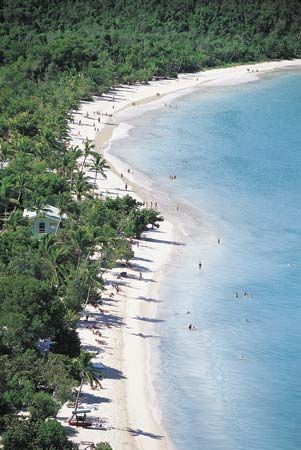
The climate of Saint Thomas is pleasant and semiarid, characterized by temperatures typically ranging between 70 and 90 °F (21 and 32 °C). The island experiences northeasterly trade winds that help temper the heat, and it maintains relatively low humidity for a tropical location. Rainfall averages about 45 inches annually, with a distinct rainy season occurring from September to December.12
This climate significantly influences daily life and the island’s economy:
- Water Scarcity: Because the climate is semiarid and the island lacks natural wells, public water supply is a critical challenge. Residents and businesses rely on rainwater catchment, desalination, and water shipped via barge from Puerto Rico, which serves as a deterrent to further development.2
- Tourism: Tourism is the island’s chief industry, supported by the generally favorable weather. However, the environment is subject to periodic droughts and the rare but significant threat of hurricanes, which can cause widespread devastation.213
What is the geographical location and size of Saint Thomas island?
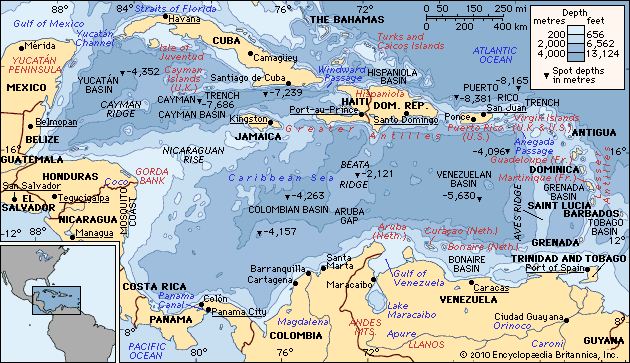
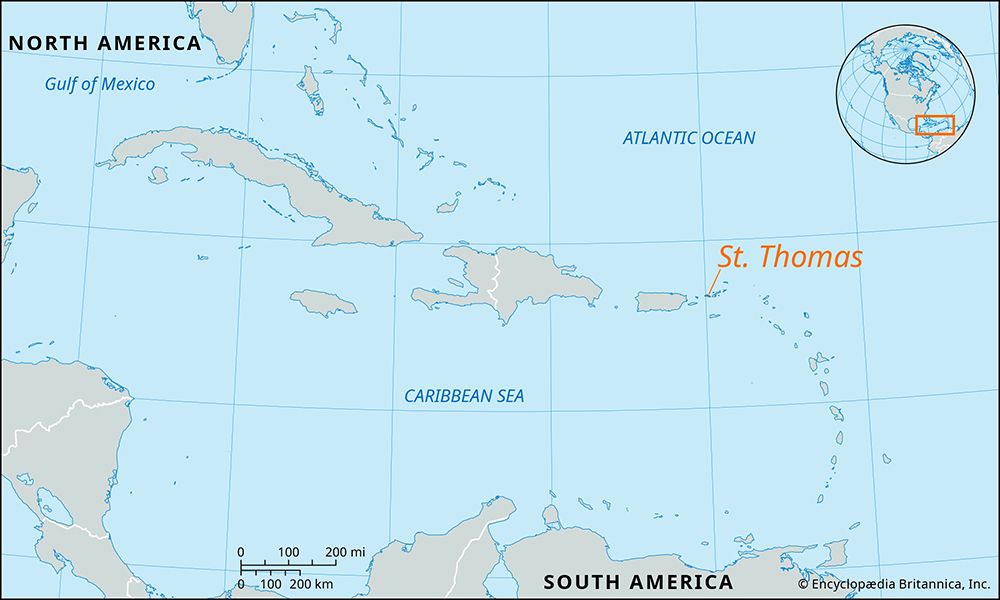
Saint Thomas is a volcanic island located in the eastern Caribbean Sea. It is the chief island of the U.S. Virgin Islands and is situated approximately 40 miles (64 km) east of Puerto Rico.24
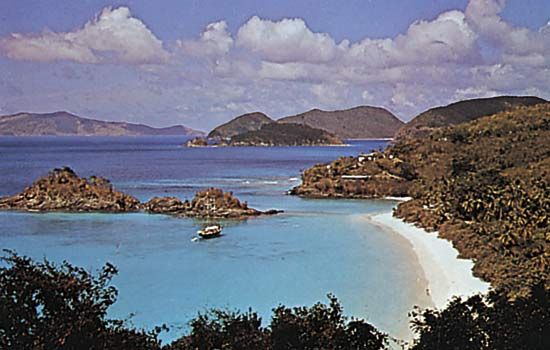
The island covers an area of 32 square miles (83 square km). Geographically, it is composed primarily of a ridge of rugged hills that run east-west, reaching a maximum elevation of 1,556 feet (474 meters) at Crown Mountain. Due to this mountainous terrain, the island has very little level, tillable land.254
What are the main economic activities and industries on Saint Thomas?
The economy of Saint Thomas is primarily driven by the service sector, with tourism serving as the island’s chief industry. This dominance is supported by the island’s pleasant tropical climate, scenic beauty, and its status as a free port, which attracts significant numbers of visitors.62
Beyond tourism, the island’s economic activities include several key areas:
- Manufacturing and Exports: The assembly of watches and the distilling of rum and bay rum are the most important sources of export income for the island.2
- Government and Services: A significant portion of the workforce is employed in government services, as well as trade, finance, real estate, and insurance sectors.6
- Infrastructure and Support: While agriculture is limited due to the island’s mountainous terrain and lack of natural water sources, the government has invested in infrastructure such as dams to support local needs. The island also relies on imported goods and energy, as it has few domestic resources.62
The economy remains closely tied to the broader U.S. Virgin Islands framework, which benefits from U.S. duty-free manufacturing incentives and tax programs designed to encourage industrial growth.6
How did Saint Thomas become part of the United States Virgin Islands?
Saint Thomas became part of the United States through a purchase from Denmark in 1917. While the United States had expressed interest in acquiring the islands as early as the American Civil War period, a proposed purchase in 1870 was rejected by the U.S. Senate.8
The acquisition gained strategic urgency during World War I. The United States sought to control the main passage through the Caribbean Sea to the Panama Canal and secure routes along the eastern coasts of the Americas. Simultaneously, Denmark was willing to sell the islands to avoid the risk of them being seized by the Allies or conquered by Germany, which held significant commercial property on Saint Thomas at the time.8
In 1917, the United States purchased Saint Thomas, along with Saint John and Saint Croix, for $25 million. Following the sale, the islands became an unincorporated territory of the United States, with the treaty of cession granting U.S. citizenship to the inhabitants.928
Sources
- United States Virgin Islands - Land — Encyclopædia Britannica
- Saint Thomas — Encyclopædia Britannica
- Saint Croix — Encyclopædia Britannica
- Virgin Islands - Relief — Encyclopædia Britannica
- Saint Thomas — Merriam-Webster
- United States Virgin Islands - Economy — Encyclopædia Britannica
- Martinique - Tourism and trade — Encyclopædia Britannica
- United States Virgin Islands - History — Encyclopædia Britannica
- Virgin Islands - Settlement and history of the U.S. Virgin Islands — Encyclopædia Britannica
- Virgin Islands — Encyclopædia Britannica
Published on · 3 min read