Saint Croix
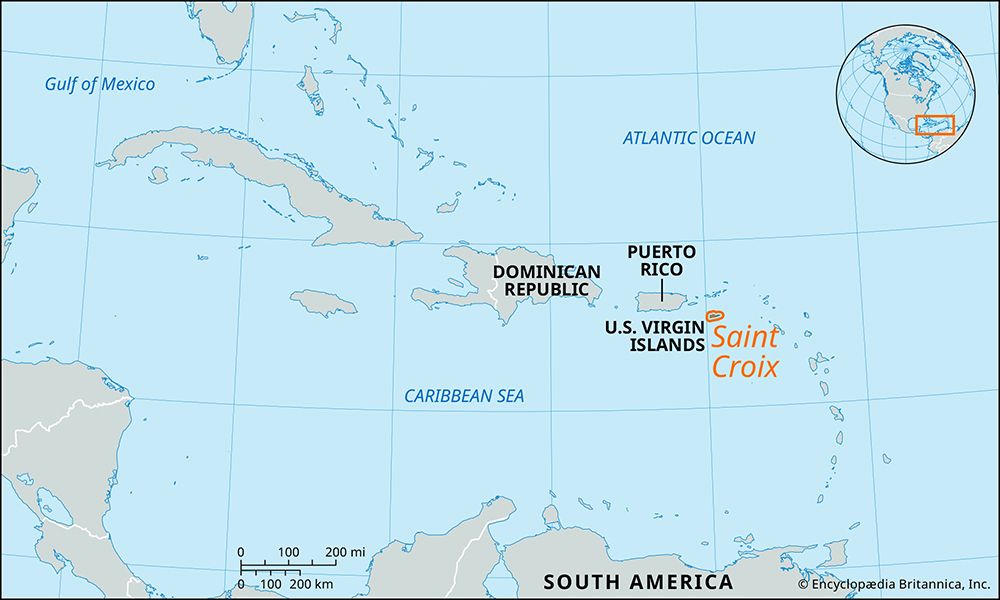
Saint Croix is the largest island of the U.S. Virgin Islands, located in the eastern Caribbean Sea. It is situated approximately 65 miles (105 km) southeast…
What is the geographic location and size of Saint Croix island?
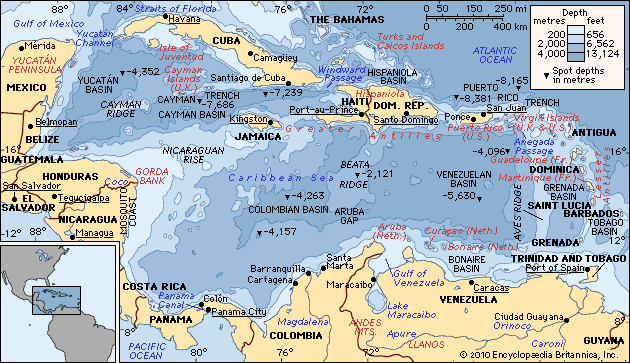
Saint Croix is the largest island of the U.S. Virgin Islands, located in the eastern Caribbean Sea. It is situated approximately 65 miles (105 km) southeast of Puerto Rico and 40 miles (65 km) south of St. Thomas.1
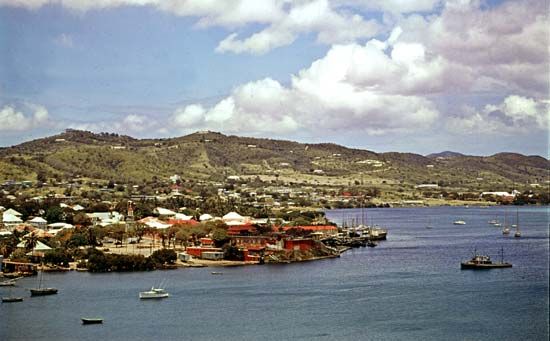
The island covers an area of 84 square miles (218 square km). While some sources cite an area of 80 square miles (208 square km), the most recent data indicates the larger figure. The island is characterized by hills in the west and an extensive plain that covers much of its interior. Its primary towns include the capital, Christiansted, on the northern coast, and Frederiksted on the western coast.12
What is the historical background of Saint Croix, including its indigenous inhabitants and European colonization?
The history of Saint Croix is marked by a succession of indigenous cultures and European colonial powers.
Indigenous Inhabitants
The island was first inhabited around 1000 BCE by Arawakan-speaking people who migrated from the Orinoco River basin. By 1200 CE, they had developed the complex Taino culture. In the mid-15th century, the warlike Carib people conquered the Taino and were the dominant group when Christopher Columbus arrived in 1493. Following a skirmish with the Caribs, the Spanish eventually defeated the indigenous population in 1555, leading to their near-total annihilation or displacement by 1596.23
European Colonization
European interest intensified in the 17th century. After being claimed by Spain, the island saw competing settlements by the English, Dutch, and French. The Knights of Malta briefly held the island in the 1650s before selling it to the French West India Company.42
In 1733, Denmark purchased Saint Croix, establishing a plantation economy centered on sugarcane and the labor of enslaved Africans. This system persisted until the abolition of slavery in 1848. The United States eventually purchased the islands from Denmark in 1917.42
How did Saint Croix become part of the United States Virgin Islands?
Saint Croix became part of the United States through a purchase agreement with Denmark in 1917. Although the United States had expressed interest in acquiring the islands as early as the American Civil War—including a failed purchase attempt in 1870—the acquisition did not move forward until World War I.36
The purchase was driven by strategic necessity: the U.S. sought to control the primary passage through the Caribbean Sea to the Panama Canal and secure routes along the eastern coast of the Americas. Denmark, meanwhile, was motivated to sell to prevent the islands from being seized by Germany or other powers during the conflict. The United States purchased Saint Croix, along with St. Thomas and St. John, for $25 million.36
Following the sale, the islands became an unincorporated territory of the United States. The treaty of cession granted U.S. citizenship to most inhabitants, and the administration was initially managed by the U.S. Navy before transferring to the Department of the Interior in 1931.36
What are the main economic activities and industries on Saint Croix?
The economy of Saint Croix, the largest of the U.S. Virgin Islands, is primarily driven by tourism and various service sectors.
Tourism and Services
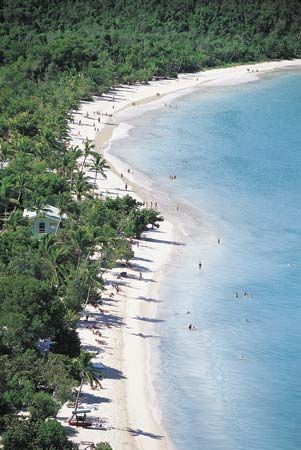
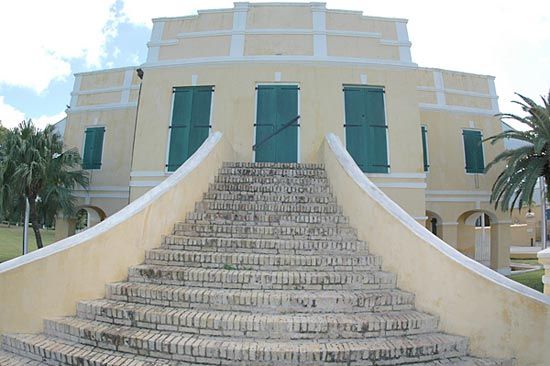
Tourism serves as the keystone of the island’s economy, supported by its tropical climate, scenic landscapes, and status as a free port. Major attractions include historic sites in towns like Christiansted and Frederiksted, as well as recreational activities such as sportfishing and visits to the Buck Island Reef National Monument. Beyond tourism, leading employment sectors include government services, finance, real estate, and insurance.372
Agriculture and Industry
While Saint Croix was historically a center for sugarcane production, modern agriculture has diversified. The island now produces fruits—such as mangoes, papayas, and avocados—and vegetables like tomatoes and cucumbers. It also maintains livestock, including cattle, goats, sheep, and pigs, and produces sufficient milk for local needs.3
Manufacturing remains a component of the economy, featuring rum distilling, watch assembly, and the production of chemicals and pharmaceuticals. Historically, petroleum refining was a major industry on the island, though the large HOVENSA refinery closed in 2012, significantly impacting local employment and export volumes.32
Sources
- Saint Croix — Merriam-Webster
- Saint Croix — Encyclopædia Britannica
- United States Virgin Islands - History — Encyclopædia Britannica
- Virgin Islands - History of the Virgin Islands — Encyclopædia Britannica
- Saint Croix River — Encyclopædia Britannica
- Virgin Islands - Settlement and history of the U.S. Virgin Islands — Encyclopædia Britannica
- United States Virgin Islands - Economy — Encyclopædia Britannica
- Virgin Islands - Industry — Encyclopædia Britannica
Published on · 3 min read