Saint Vincent and the Grenadines
The most prominent cultural celebrations in Saint Vincent and the Grenadines include:
What are some of the most popular festivals and celebrations in Saint Vincent and the Grenadines?
The most prominent cultural celebrations in Saint Vincent and the Grenadines include:
- Carnival: This is the country’s major cultural event, featuring vibrant festivities and music.1
- Nine Mornings Festival: Held in Kingstown during the nine days leading up to Christmas, this tradition has evolved from early-morning street parades and caroling into a series of street concerts. In rural areas, the festival often focuses on reviving traditional cultural practices.1
- Annual Regattas: Several of the Grenadine Islands host yearly regattas that incorporate various carnival-style activities.1
- Music and Performance Festivals: There is an ongoing emphasis on festivals dedicated to dance, drama, and music, often highlighting genres like calypso and soca.1
- Tea Meetings: These traditional gatherings, which involve ceremonial speech and singing demonstrations, are still held on occasion.1
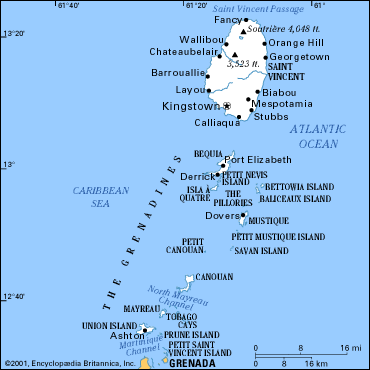
Where is Saint Vincent and the Grenadines located, and what are its main geographical features?
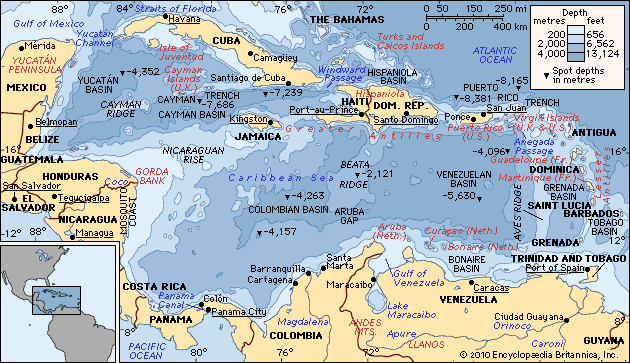
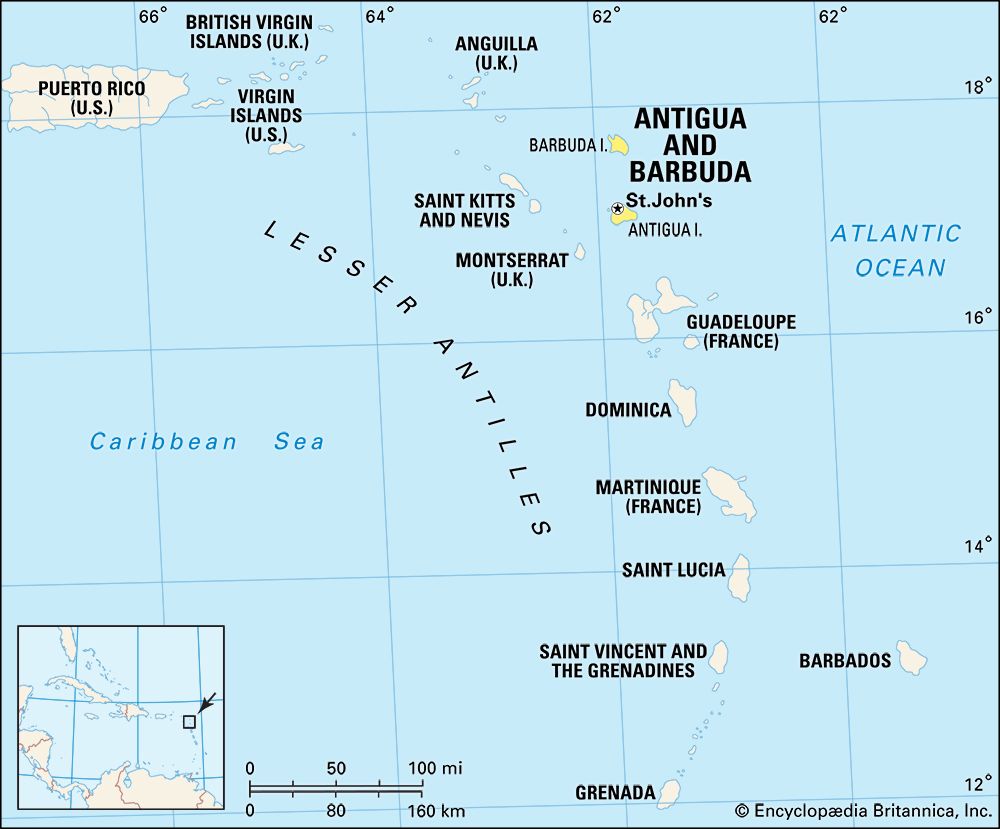
Saint Vincent and the Grenadines is an island country located in the eastern Caribbean Sea as part of the Lesser Antilles chain. It consists of the main island of Saint Vincent and the northern portion of the Grenadine Islands, which extend southward toward Grenada.23
Geographical Features
- Topography: The island of Saint Vincent is characterized by thickly wooded, north-south running volcanic mountains. The highest point is the volcano Soufrière, which reaches 4,048 feet (1,234 metres).45
- Hydrology: The main island features many short, swift streams, though there are no navigable rivers.45
- Soil and Climate: The volcanic activity has contributed to very fertile soil, which supports diverse vegetation and agriculture. The country experiences a tropical climate and is situated in the path of the northeasterly trade winds.45
- The Grenadines: This group includes islands such as Bequia, Canouan, Mayreau, Mustique, and Union Island. These islands are generally less mountainous and have been developed for tourism and yachting.23
How does tourism contribute to the economy of Saint Vincent and the Grenadines?
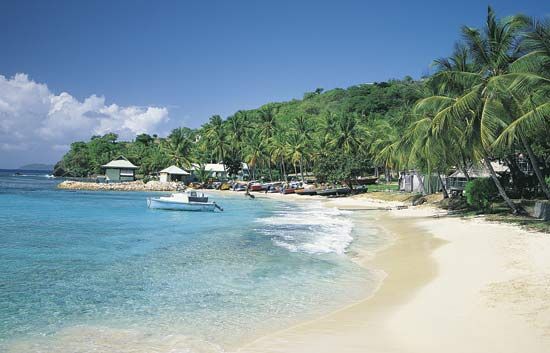
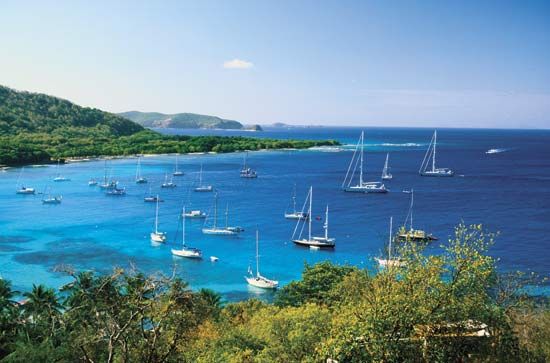
Tourism plays a significant role in the economy of Saint Vincent and the Grenadines, driven largely by the Grenadines. These islands are highly regarded for their fine beaches and coral reefs, attracting visitors who prioritize traditional Caribbean activities centered on sun, sea, and sand.7
The sector has grown in importance due to improved accessibility, facilitated by the construction of airports throughout the islands and the use of larger, more modern vessels. The Grenadines are a primary destination for those interested in sport fishing and yachting, with various islands featuring developed marinas, hotels, and resorts. Notably, the island of Mustique operates as a private consortium where landowners rent properties to vacationers.78
While the Grenadines remain the focal point for tourism, there is an increasing effort to promote ecotourism on the main island of Saint Vincent. This shift complements the country’s broader economic landscape, which also includes light manufacturing and agricultural exports like bananas and root crops.73
How does the education system work in Saint Vincent and the Grenadines?
The education system in Saint Vincent and the Grenadines is structured to provide learning opportunities from the primary level through post-secondary training.
Primary and Secondary Education
Primary education is provided free of charge, though it is not compulsory. The majority of primary schools are administered by the government, with a smaller portion operating as private institutions. Secondary education typically begins when students reach age 11. Most secondary schools are under government control, though some are managed by Catholic and Anglican religious organizations with government support.9
Higher and Specialized Education
Beyond the secondary level, the country offers several pathways for further development:
- Technical and Vocational Schools: These institutions provide specialized training to prepare students for the workforce.9
- Specialized Support: There is a dedicated school for children with special needs.9
- Community College: The Saint Vincent Community College offers a variety of subjects, including teacher training and nursing programs.9
- University Access: The University of the West Indies maintains an Open Campus location in the country, providing access to higher education.9
Sources
- Saint Vincent and the Grenadines - Cultural life — Encyclopædia Britannica
- Saint Vincent and the Grenadines — Encyclopædia Britannica
- Grenadines — Encyclopædia Britannica
- Saint Vincent and the Grenadines - Relief, soils, and drainage — Encyclopædia Britannica
- Saint Vincent — Encyclopædia Britannica
- list of islands - Saint Vincent and the Grenadines — Encyclopædia Britannica
- Saint Vincent and the Grenadines - Tourism — Encyclopædia Britannica
- Saint Vincent and the Grenadines - Manufacturing and trade — Encyclopædia Britannica
- Saint Vincent and the Grenadines - Education, health, and welfare — Encyclopædia Britannica
Published on · 3 min read