Saint Vincent
Saint Vincent’s relationship with other Caribbean nations has evolved from colonial administrative groupings to a commitment to deep regional integration.…
How has Saint Vincent’s relationship with other Caribbean nations evolved over time?
Saint Vincent’s relationship with other Caribbean nations has evolved from colonial administrative groupings to a commitment to deep regional integration. Historically, the island was part of the Windward Islands administrative union, which shared a representative assembly and seat of government in Grenada until the late 19th century.1
In the 20th century, Saint Vincent participated in the West Indies Federation (1958–1962) and later joined the Caribbean Community and Common Market (Caricom) in 1973. Following dissatisfaction among less-developed members regarding trade revenue, Saint Vincent helped form the Organisation of Eastern Caribbean States in 1981 to better address subregional economic needs while maintaining its broader Caricom membership.12
Since independence in 1979, the nation has consistently pursued regional unity, including efforts toward a Caribbean single market and economy. While voters rejected a 2009 proposal to replace the British Privy Council with the Caribbean Court of Justice, the country remains deeply engaged in regional cooperation and economic integration initiatives.34
What are some unique aspects of Saint Vincent’s culture and traditions?
Saint Vincent and the Grenadines possesses a distinct cultural identity shaped by its indigenous history, colonial legacy, and vibrant modern traditions.
Festivals and Celebrations
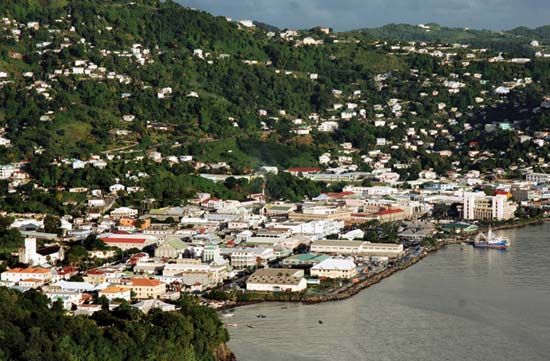
- Nine Mornings Festival: Unique to the island, this festival occurs in Kingstown during the nine days preceding Christmas. It features early-morning street concerts, a tradition that evolved from earlier street parades and caroling.6
- Carnival: This serves as the nation’s major cultural event, characterized by elaborate festivities. Similar carnival-type activities are also held during annual regattas in the Grenadine Islands.6
Cultural Practices and Arts
- Traditional Arts: Practices such as “tea meetings”—which involve ceremonial speech and singing demonstrations—are occasionally held. There is also an ongoing emphasis on local dance, drama, and music festivals.6
- Music: The local music scene is dominated by calypso and soca, the latter being a unique blend of traditional calypso and Indian rhythmic instruments.6
Culinary Traditions
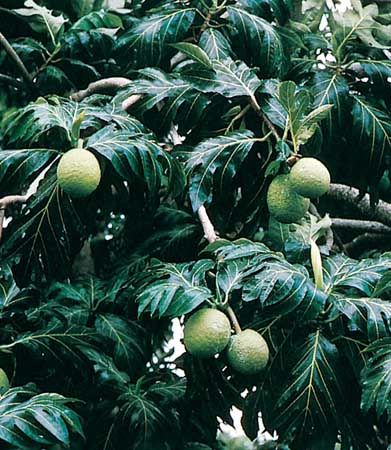
The national dish is roasted breadfruit and fried jackfish. Breadfruit has been a staple on the island since it was introduced by Capt. William Bligh in 1793.6
What is the geographical location and size of Saint Vincent in the West Indies?
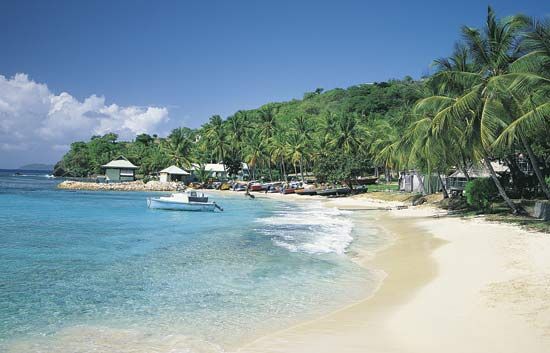
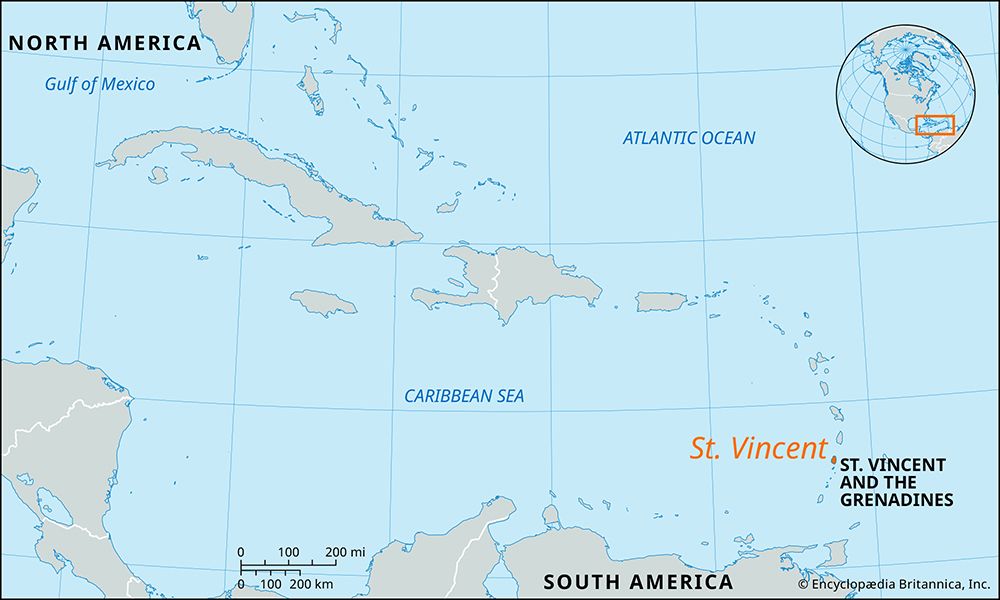
Saint Vincent is an island nation located within the Lesser Antilles in the eastern Caribbean Sea. It is situated approximately 20 miles (32 km) southwest of Saint Lucia and 100 miles (160 km) west of Barbados miles (160 km) west of Barbados.3
The country comprises the main island of Saint Vincent and the northern Grenadine Islands, which extend southward toward Grenada. The main island of Saint Vincent measures 18 miles (30 km) in length with a maximum width of 11 miles (18 km). In total, the land area of the nation is 150 square miles.93
What is the climate like on Saint Vincent, and how does it affect agriculture and tourism?
Saint Vincent experiences a tropical maritime climate influenced by the constant northeast trade winds. Temperatures remain consistent, typically ranging from the mid-60s to 90 °F (18 to 32 °C). Rainfall is dictated by elevation and geography, with coastal areas receiving 60 to 80 inches annually, while the central mountains can see up to 150 inches. A distinct dry season occurs from January to May, followed by a rainy season from June through December.10
Impact on Agriculture and Tourism
The climate is central to the island’s agricultural economy. The varied rainfall supports the cultivation of major crops such as bananas, arrowroot, sweet potatoes, and coconuts. To manage the heavy rainfall and prevent soil erosion on the island’s volcanic slopes, farmers utilize specialized terracing techniques.8
While the tropical weather is a primary draw for tourism, the island remains vulnerable to tropical cyclones. These storms can cause severe damage, periodically disrupting both agricultural output and tourism infrastructure.108
Sources
- Saint Vincent and the Grenadines - Colonization — Encyclopædia Britannica
- Saint Vincent and the Grenadines - Independence of Saint Vincent and the Grenadines — Encyclopædia Britannica
- Saint Vincent and the Grenadines — Encyclopædia Britannica
- international trade - The Caribbean Community — Encyclopædia Britannica
- Caribbean Community — Encyclopædia Britannica
- Saint Vincent and the Grenadines - Cultural life — Encyclopædia Britannica
- Saint Vincent and the Grenadines - Sports and recreation — Encyclopædia Britannica
- Saint Vincent — Encyclopædia Britannica
- Saint Vincent and the Grenadines: Country Facts — Encyclopædia Britannica
- Saint Vincent and the Grenadines - Climate — Encyclopædia Britannica
- Grenadines — Encyclopædia Britannica
Published on · 3 min read