Salado River
The name "Salado River" refers to several distinct watercourses, primarily in Argentina and Mexico. Because the name is shared, it is important to…
What is Salado River?
The name “Salado River” refers to several distinct watercourses, primarily in Argentina and Mexico. Because the name is shared, it is important to distinguish between them:
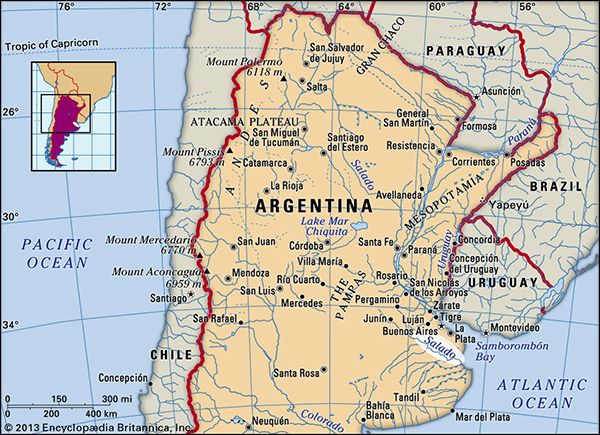
- Argentina (Buenos Aires Province): This Salado River rises at Lake El Chañar and flows southeast for about 400 miles through the Pampas to the Atlantic Ocean. Historically, it served as a frontier between Spanish colonial settlements and indigenous territories.1
- Argentina (Northern): A separate, longer river (1,120 miles), sometimes called the Juramento in its upper course, which flows from the Andes into the Paraná River.2
- Argentina (West Central): Another river (850 miles), sometimes known as the Desaguadero, which flows south into the Colorado River.2
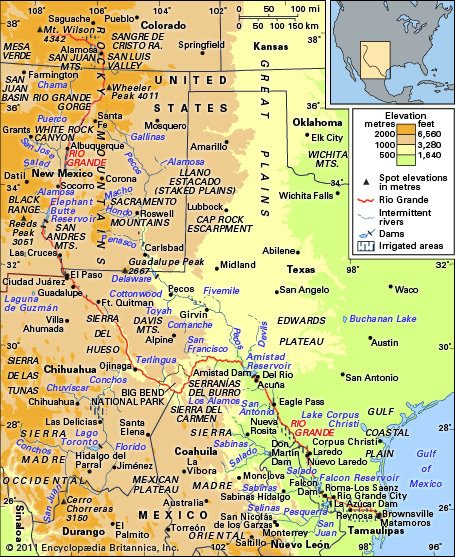
- Mexico: This Salado River flows through the states of Coahuila, Nuevo León, and Tamaulipas. It is vital for regional irrigation, particularly for cotton production, before joining the Rio Grande.3
What are the Pampas and why are they important to Argentina?
The Pampas are vast, fertile plains in central Argentina that extend from the Atlantic coast to the Andean foothills. The name is derived from a Quechua word meaning “flat surface,” reflecting the region’s characteristically level terrain.4
The region is divided into two zones: a dry, largely barren western zone and a temperate, well-watered eastern zone known as the Humid Pampa. The latter is the economic heart of Argentina and its most densely populated area.4
The Pampas are vital to Argentina for several reasons:
- Economic Hub: The region is the nation’s primary agricultural center, producing wheat, corn, soybeans, and flax.45
- Livestock Industry: Historically defined by estancias (large ranches) and the culture of the gaucho, the Pampas remain the traditional source of beef cattle, which is a key export commodity.456
- National Development: The growth of agriculture in the late 19th century spurred the development of railroads and cities, transforming Buenos Aires into a major cosmopolitan center.6
- Cultural Identity: The Pampas serve as the setting for significant gaucho literature and are a central theme in Argentine musical folklore.4
How do dams like the Venustiano Carranza affect river ecosystems?
Dams like the Venustiano Carranza Dam in Mexico, which creates a reservoir on the Salado River, significantly alter river ecosystems by transforming natural flow patterns to serve human needs such as irrigation and flood control.78
The environmental impacts of such structures are multifaceted:
- Sediment Trapping: Dams act as barriers that hold back the natural sediment load of a river within their reservoirs. This prevents nutrient-rich silt from reaching downstream areas, which can degrade soil fertility and disrupt the natural replenishment of downstream habitats.98
- Habitat Fragmentation: By blocking or impeding the flow of water, dams can obstruct the migration routes of fish and other aquatic species, often leading to population declines.210
- Altered Hydrology: The creation of large reservoirs inundates vast areas, destroying existing terrestrial flora and fauna. Furthermore, the regulation of water flow can disrupt seasonal flood cycles that are essential for maintaining riparian ecosystems.29
- Water Quality and Disease: Changes in water flow and the accumulation of nutrients from agricultural runoff can promote excessive algal growth, which may attract disease vectors such as mosquitoes.9
Why do many rivers in Spanish-speaking countries share the name Salado?
Many rivers in Spanish-speaking countries share the name Salado because the term is derived from the Spanish word salado, which is the past participle of salar (“to salt”), originating from the Latin word sal (“salt”).3
In Spanish, salado translates to “salty.” Consequently, the name is typically applied to rivers that have a high mineral or salt content, often due to the geological characteristics of the regions through which they flow. Because many different river systems across Latin America share these saline properties, the name was independently and frequently assigned to them by Spanish explorers and settlers.3112
It is important to note that while these rivers share a name, they are distinct geographical entities. For example, there are multiple prominent Salado rivers in Argentina, as well as a significant Salado River in Mexico, each serving different local ecological and economic functions.1212
Sources
- Salado River — Encyclopædia Britannica
- Salado River — Encyclopædia Britannica
- Salado — Merriam-Webster
- the Pampas — Encyclopædia Britannica
- Argentina - Agriculture, forestry, and fishing — Encyclopædia Britannica
- Argentina - The Pampas — Encyclopædia Britannica
- dam - Rise of environmental and economic concerns — Encyclopædia Britannica
- dam - Fish passes — Encyclopædia Britannica
- Akosombo Dam — Encyclopædia Britannica
- river - Environments of deposition — Encyclopædia Britannica
- Origins of agriculture - Irrigation — Encyclopædia Britannica
- salada — Merriam-Webster
- South America - Rivers of South America — Encyclopædia Britannica
Published on · 3 min read