Sand Dollar
Sand dollars are invertebrate marine animals belonging to the order Clypeastroida within the class Echinoidea and the phylum Echinodermata. They are…
What are sand dollars and how are they related to other echinoderms?
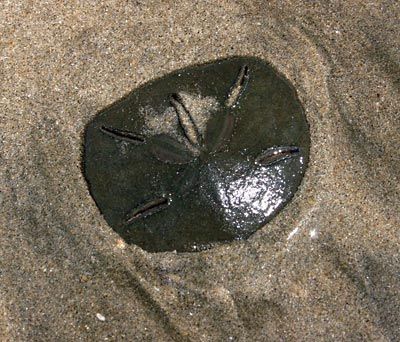
Sand dollars are invertebrate marine animals belonging to the order Clypeastroida within the class Echinoidea and the phylum Echinodermata. They are characterized by a flat, disk-shaped body covered in small spines and cilia, which they use to burrow and crawl through sandy substrates. Their upper surface typically displays pentaradiate (five-part) symmetry, often featuring a distinct “petal” pattern.12
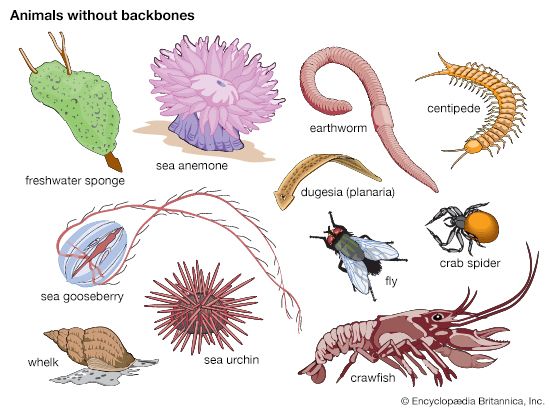
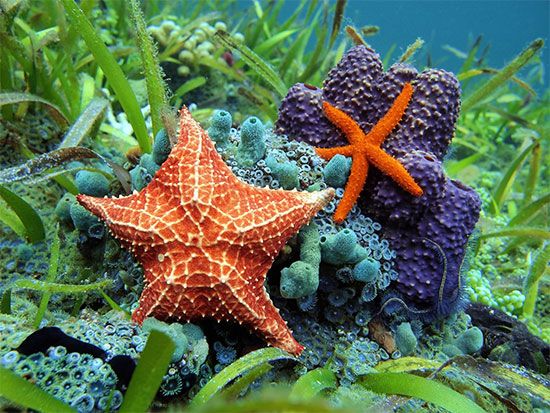
As echinoderms, sand dollars share several fundamental traits with their relatives, including sea urchins and heart urchins. All living echinoderms possess:12
- Pentamerous radial symmetry: A body plan organized into five parts.32
- Internal skeleton: A structure that, in sand dollars and sea urchins, forms a rigid “test”.3
- Water-vascular system: A specialized system derived from the coelom (central cavity) used for movement and feeding.3
While they are closely related to sea urchins, sand dollars are uniquely adapted for life on sandy seafloors, where they feed on diatoms, algae, and tiny crustaceans.2
What is the unique structure and anatomy of a sand dollar?
Sand dollars are specialized invertebrate marine animals within the order Clypeastroida that exhibit a highly distinct anatomy adapted for life on sandy seafloors.14
External Anatomy
The most recognizable feature of a sand dollar is its flat, disk-shaped body, which typically measures 5 to 10 cm (2 to 4 inches) in diameter. This body is encased in a rigid external skeleton known as a test. The entire surface is covered in very small spines and cilia (hair-like structures) that facilitate burrowing and crawling through sand.14
The upper surface displays a characteristic pentaradiate (five-part) symmetry, often featuring a pattern of five “petals” that spread from the center. In some species, the test contains slots or holes called lunules. The mouth is positioned in the center of the animal’s underside, while the anus is located at the posterior edge of the body.14
Internal Systems
Like other echinoderms, sand dollars possess a water-vascular system—a hydraulic network of fluid-filled canals. In echinoids, this system includes five structures known as Polian vesicles or spongy bodies that help maintain internal pressure. Their tube feet, which are extensions of this system, are highly modified in sand dollars to assist with feeding, burrow construction, and sensory or respiratory functions.67
What are the different species of sand dollars found around the world?
The order Clypeastroida, which comprises the animals commonly known as sand dollars, includes more than 250 distinct species. These marine invertebrates are distributed throughout shallow coastal waters globally, with the notable exception of Antarctica and Europe.14
While there is a vast diversity of species within this order, they share a common body plan characterized by a flat, disk-shaped test and pentaradiate symmetry. One of the most widely recognized species is the common sand dollar (Echinarachnius parma). This species has a broad geographic range, inhabiting coastal regions across:41
- Eastern North America1
- Alaska1
- Japan1
- Far eastern Russia1
- Various islands in the Southern Hemisphere1
Species of similar size and structure are found in shallow coastal environments worldwide, often identified by the presence or absence of lunules—the slots or holes found in the tests of certain varieties.4
How do sand dollars compare to their close relatives, the sea urchins?
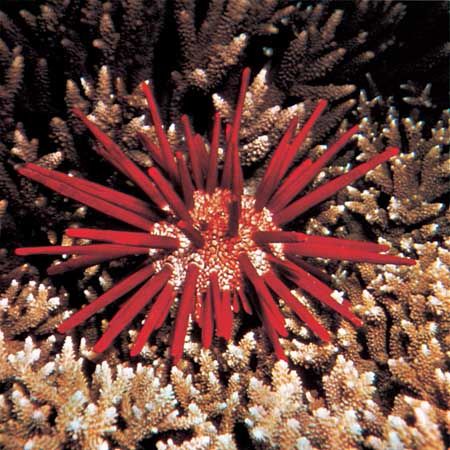
Sand dollars and sea urchins are both members of the class Echinoidea and share the same fundamental echinoderm body plan, including a hard, spiny skeleton known as a test and pentaradiate (five-part) symmetry. Despite these similarities, they exhibit distinct evolutionary adaptations based on their specific habitats and feeding behaviors.1894
Key Differences
- Body Shape: Sea urchins, particularly the “regular” species, typically possess a globular, spherical body. In contrast, sand dollars have evolved a flattened, disk-shaped body, which is a specialized adaptation for burrowing into sandy seafloor substrates.189
- Feeding Habits: Regular sea urchins are often omnivorous or vegetarian browsers that use hard teeth to scrape algae and other organisms from rocks. Sand dollars, classified as “irregular” echinoids, generally lack these teeth. Instead, they are burrowers that use their spines and tube feet to pass small organisms to their mouths, or they may feed on suspended particles carried by currents.4
- Anatomy and Symmetry: While both exhibit five-part symmetry, sand dollars display this pattern on their upper surface as a distinct “petal” design. Additionally, some sand dollar species feature slots or holes in their test called lunules, a feature not found in typical sea urchins.18
Sources
- sand dollar — Encyclopædia Britannica
- echinoderm - Extinct echinoderms — Encyclopædia Britannica
- echinoderm - Size range and diversity of structure — Encyclopædia Britannica
- Are sand dollars alive? — Encyclopædia Britannica
- sand dollar — Merriam-Webster
- Circulatory system - Echinodermata — Encyclopædia Britannica
- echinoderm - Water-vascular system — Encyclopædia Britannica
- List of echinoderms — Encyclopædia Britannica
- echinoderm - Role in nature — Encyclopædia Britannica
- echinoderm - Food and feeding habits — Encyclopædia Britannica
- echinoderm - Annotated classification — Encyclopædia Britannica
Published on · 3 min read