Scorpion
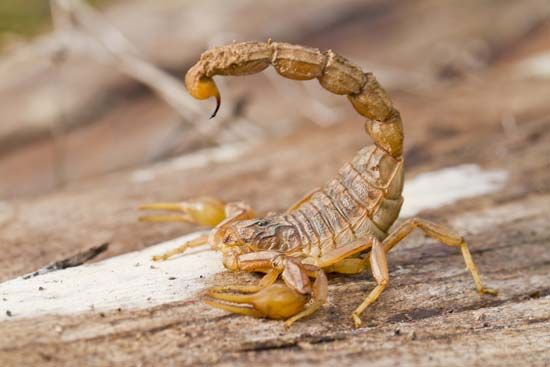
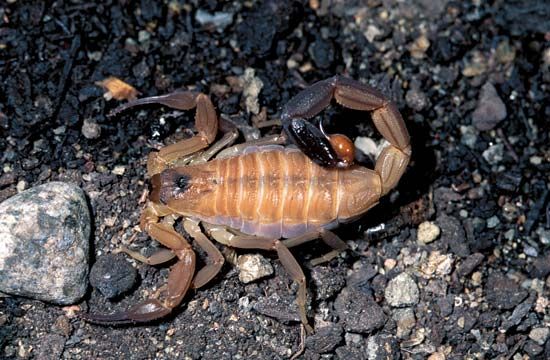
The body of a scorpion is divided into three primary regions: the prosoma (cephalothorax), the mesosoma, and the metasoma. Together, the mesosoma and…
What is the typical anatomy of a scorpion, and how do its different body parts function?
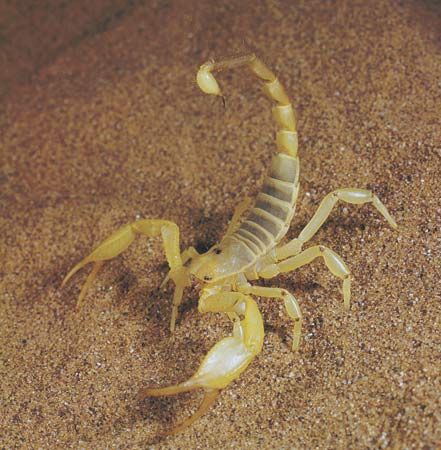
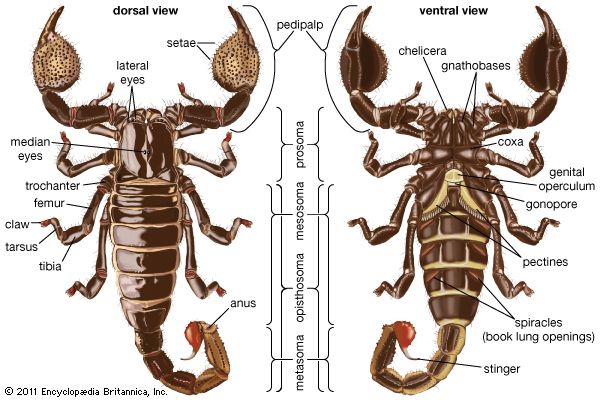
The body of a scorpion is divided into three primary regions: the prosoma (cephalothorax), the mesosoma, and the metasoma. Together, the mesosoma and metasoma constitute the abdomen.1
Prosoma
The prosoma is covered by a dorsal carapace and contains six pairs of appendages:
- Chelicerae: Pincerlike structures used to masticate food.1
- Pedipalps: Large, chelate (pincer) organs used for prey capture, defense, courtship, and burrowing.12
- Walking Legs: Four pairs of jointed legs ending in tarsal claws for locomotion.13
Abdomen
The abdomen is subdivided into two distinct sections:
- Mesosoma: Composed of seven segments, this region houses the book lungs for respiration, the genital opening, and unique comblike structures called pectines.14
- Metasoma: A five-segmented, slender “tail” that terminates in a telson, which contains the stinger and poison glands.12
Scorpions are protected by a tough exoskeleton made of chitin, which they shed through molting to allow for growth.1
How do scorpions use their venom, and what effects can it have on humans and other animals?
Scorpions utilize their venom for two primary purposes: offense and defense. The venom is a complex mixture of proteins and enzymes that functions differently depending on the target.56
Functional Roles
- Offensive Use: Scorpions employ venom to paralyze or kill prey, such as insects and other arthropods. This component of their venom is specifically toxic to arthropods, allowing the scorpion to subdue food sources efficiently.56
- Defensive Use: When threatened by predators—such as birds, lizards, or small mammals—scorpions use their stinger to deliver venom that is active against vertebrates. This serves as a deterrent to discourage predation.5
Effects on Humans and Animals
The physiological impact of scorpion venom varies based on the species and the victim’s sensitivity. While many scorpions are harmless to humans, some species, particularly those in the family Buthidae, possess venom that can be lethal.57
When introduced into human tissue, these toxins can cause severe reactions, including intense pain, inflammation, and systemic effects like muscle cramps, vomiting, or respiratory distress. The severity of an attack often depends on the victim’s age, with children typically experiencing more severe symptoms, and the location of the sting.6
What are the main characteristics that distinguish scorpions from other arachnids?
Scorpions are distinguished from other arachnids by several unique morphological and physiological traits that have remained remarkably consistent since the Silurian Period.
Key Distinguishing Characteristics
- Body Segmentation: Scorpions possess a highly segmented body plan, featuring 18 segments—more than any other arachnid group. Their abdomen is clearly divided into a seven-segmented mesosoma and a five-segmented metasoma (tail).3
- Pedipalps: Unlike the leglike pedipalps found in spiders or daddy longlegs, scorpions possess large, chelate (pincerlike) pedipalps that function as powerful prehensile organs for capturing prey.9
- Terminal Stinger: A defining feature is the telson, a specialized structure at the end of the metasoma that houses a poison gland and a sharp stinger, which is absent in other arachnid orders.910
- Pectines: Scorpions possess unique, comblike sensory structures on the underside of the mesosoma called pectines, which are used for sensing the environment and detecting pheromones.11
- Respiration: They utilize book lungs for respiration rather than the tracheae found in more highly evolved arachnids, a trait considered primitive.3
How have scorpions evolved and adapted to various environments over time?
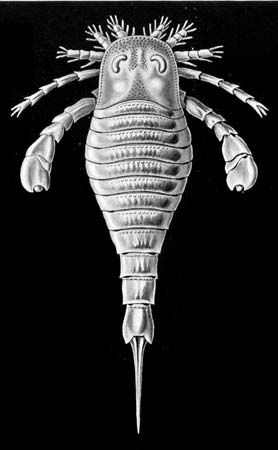
Scorpions are among the most enduring organisms on Earth, having maintained a remarkably consistent body plan since they first appeared in the Silurian Period (443 to 417 million years ago). Originally marine or amphibious creatures, they likely evolved from giant water scorpions (Eurypterida).9
Evolutionary Transitions
The most significant evolutionary shift occurred during the transition from water to land, which necessitated changes in locomotion and respiration. The development of internal book lungs to replace external book gills allowed scorpions to thrive in terrestrial environments. Despite this transition, their external morphology—including their segmented body, chelate pedipalps, and terminal stinger—has remained largely unchanged for over 400 million years.912
Environmental Adaptations
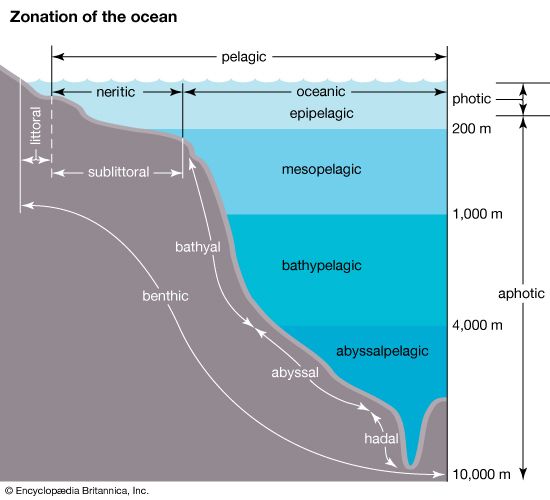
Scorpions have successfully colonized diverse habitats, from the intertidal zone to high-altitude mountains. Their success is attributed to high physiological and behavioral adaptability rather than extensive morphological change:1314
- Substrate Specialization: Sand-dwelling species use specialized bristles to navigate loose terrain, while lithophilic (rock-loving) species possess stout setae and curved claws for gripping rock surfaces.13
- Extreme Tolerance: Some species can withstand temperatures up to 47 °C (117 °F), while others can survive being supercooled below freezing or total immersion in water for days.13
Sources
- scorpion - External features — Encyclopædia Britannica
- arachnid - Respiration — Encyclopædia Britannica
- arachnid - Body and appendages — Encyclopædia Britannica
- arachnid - External features — Encyclopædia Britannica
- scorpion - Associations — Encyclopædia Britannica
- Venom — Encyclopædia Britannica
- Did you know? — Merriam-Webster
- scorpion - Annotated classification — Encyclopædia Britannica
- scorpion - Evolution and paleontology — Encyclopædia Britannica
- scorpion - Internal features — Encyclopædia Britannica
- scorpion - Form and function — Encyclopædia Britannica
- scorpion - Ecology and habitats — Encyclopædia Britannica
- scorpion - Distribution and abundance — Encyclopædia Britannica
- book lung — Encyclopædia Britannica
Published on · 4 min read