Segmented Spider
A segmented spider refers to any of more than 100 species belonging to the suborder Mesothelae. These arachnids are considered "living fossils" because they…
What is segmented spider?
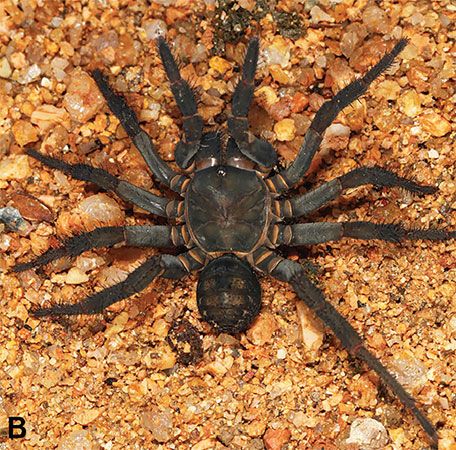
A segmented spider refers to any of more than 100 species belonging to the suborder Mesothelae. These arachnids are considered “living fossils” because they retain primitive physical traits that have remained largely unchanged for approximately 300 million years, making them the most ancient of the three major spider groups.12
Key characteristics that distinguish segmented spiders from other spiders include:
- Segmented Abdomen: Unlike most spiders, which have a completely fused abdomen, segmented spiders possess a clearly visible, segmented abdomen covered in plates, typically featuring 12–18 segments.12
- Spinneret Placement: Their silk-producing organs are located in the center of the underside of the abdomen rather than at the posterior end.1
- Primitive Anatomy: They possess two pairs of book lungs and a heart with five pairs of ostia, reflecting their ancient lineage.12
These sedentary, long-lived ambush predators are found primarily in East and Southeast Asia, where they inhabit trapdoor burrows in isolated environments like caves or mountain folds.12
Why are segmented spiders considered living fossils?
Segmented spiders (suborder Mesothelae) are considered “living fossils” because they possess primitive anatomical features that have remained largely unchanged for approximately 300 million years, representing the most ancient lineage among the three major spider groups.12
Their status as living fossils is defined by several ancestral traits that distinguish them from more highly evolved spiders:
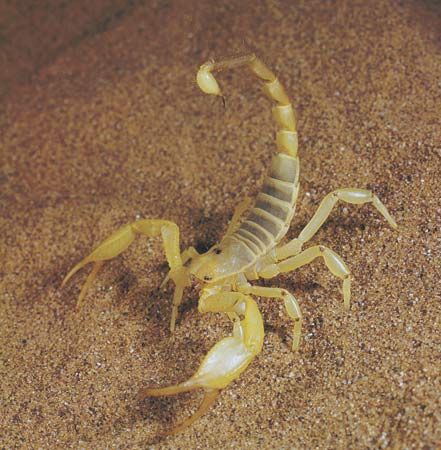
- Abdominal Segmentation: Unlike most modern spiders, which have a completely fused abdomen, segmented spiders retain visible abdominal plates, a trait reflecting their common ancestry with scorpions.512
- Primitive Anatomy: They possess two pairs of book lungs and a heart with five pairs of ostia, which are ancient physiological characteristics.12
- Spinneret Placement: Their silk-producing organs are located in the center of the underside of the abdomen, rather than at the posterior end as seen in other spiders.1
- Nervous System: Their prosoma contains 18 ganglia that are more distinctly separated than those found in other spider suborders.2
How do the spinnerets of segmented spiders differ from those of other spiders?
The spinnerets of segmented spiders (suborder Mesothelae) differ from those of other spiders in both their location and their number:
- Location: In segmented spiders, the spinnerets are positioned in the center of the underside of the abdomen. In contrast, all other spider suborders have their spinnerets located at the posterior end of the body.62
- Number: Segmented spiders are the only spiders that possess a full complement of four pairs of spinnerets (eight total) in the adult stage. Most other spiders have only three pairs, with the forward central pair having been either lost or reduced to a nonfunctional structure, such as a colulus or a cribellum.52
These silk-producing organs are modified appendages that emerge from the 10th and 11th body segments. Their unique placement is reflected in the suborder’s scientific name, Mesothelae, which is derived from the Greek words for “middle” and “teat”.56
What are some other examples of living fossils in the animal kingdom?
The term “living fossil” refers to an organism that has remained essentially unchanged from earlier geologic times and whose close relatives are typically extinct. Beyond the segmented spider, several other animals are recognized for this status:9
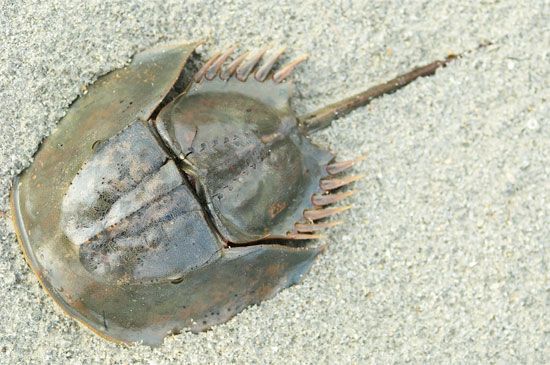
- Horseshoe Crab: These marine arthropods have an ancient lineage dating back to the Ordovician Period. Despite their name, they are not crabs but are related to scorpions and spiders. They are highly valued in the biomedical industry for their blood, which contains a primitive clotting agent used to detect bacterial contamination.10
- Tuatara: Endemic to New Zealand, the tuatara is the sole survivor of the order Rhynchocephalia, a group of reptiles that diverged from lizards and snakes approximately 250 million years ago. They possess unique features, such as a third “parietal” eye used for hormone regulation and an ability to remain active at low body temperatures.11
- Coelacanth: Once thought to have gone extinct 66 million years ago, this lobe-finned fish was rediscovered in 1938. They appeared about 400 million years ago and are considered significant because their extinct relatives are believed to be the ancestors of land vertebrates.12
- Platypus: This unique Australian mammal belongs to the order Monotremata, a group with an exceptionally ancient history. It exhibits a combination of primitive features—such as laying eggs—and specialized adaptations like an electromechanical system for navigation.13
Sources
- arachnid - Evolution and paleontology — Encyclopædia Britannica
- segmented spider — Encyclopædia Britannica
- spider - Annotated classification — Encyclopædia Britannica
- segmented spider: Top Questions — Encyclopædia Britannica
- spider - Distinguishing taxonomic features — Encyclopædia Britannica
- spider - External features — Encyclopædia Britannica
- spider - Silk — Encyclopædia Britannica
- spinneret — Encyclopædia Britannica
- living fossil — Merriam-Webster
- platypus — Encyclopædia Britannica
- tuatara — Encyclopædia Britannica
- coelacanth — Encyclopædia Britannica
- horseshoe crab — Encyclopædia Britannica
- Vertebrate - Evolution and paleontology — Encyclopædia Britannica
- fossil — Merriam-Webster
Published on · 3 min read