Sea Lion
A sea lion is any of six species of eared seals belonging to the family Otariidae, primarily found in Pacific waters. Unlike "true" or earless seals (family…
What is a sea lion?
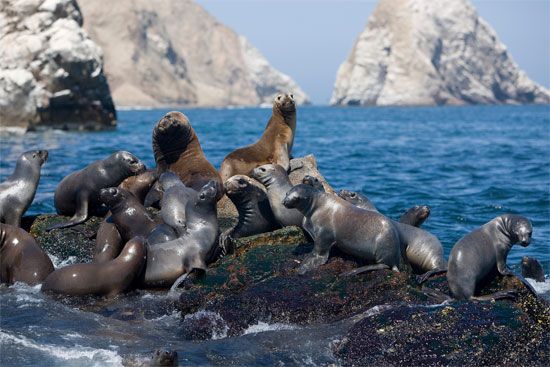
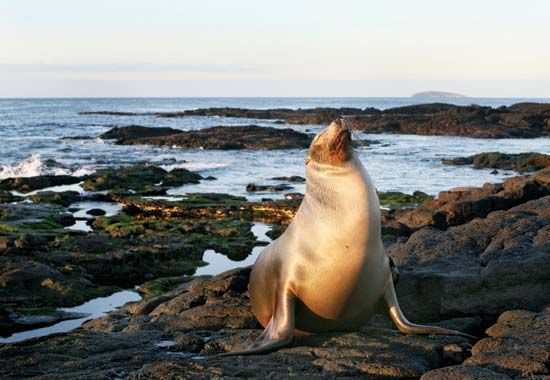
A sea lion is any of six species of eared seals belonging to the family Otariidae, primarily found in Pacific waters. Unlike “true” or earless seals (family Phocidae), sea lions possess external ear flaps and long front flippers that they can rotate under their bodies, allowing them to walk on land.12
Sea lions are characterized by a coat of short, coarse hair lacking a distinct undercoat. They are highly social, often congregating in large herds where males establish harems and communicate through loud barking or bellowing. These marine mammals are skilled swimmers, propelling themselves with their front flippers, and they feed primarily on fish, crustaceans, and cephalopods.12
The six species include:
- California sea lion (Zalophus californianus)1
- Galapagos sea lion (Z. wollebaeki)1
- Northern (Steller) sea lion (Eumetopias jubatus)1
- Southern (South American) sea lion (Otaria byronia)1
- Australian sea lion (Neophoca cinerea)1
- New Zealand (Hooker’s) sea lion (Phocarctos hookeri)1
How is a sea lion different from a seal?
While both seals and sea lions belong to the suborder of pinnipeds, they belong to different families—Phocidae (true seals) and Otariidae (eared seals)—and exhibit distinct anatomical and behavioral differences.3
Key Differences
- Ears: Sea lions have visible external ear flaps, whereas true seals lack these flaps and have only small ear holes.3
- Flippers and Locomotion: Sea lions possess long front flippers and can rotate their back flippers under their bodies, allowing them to walk on land. In contrast, seals have short front flippers and cannot rotate their back flippers, forcing them to move on land by flopping on their bellies like a caterpillar.3
- Swimming Style: When swimming, sea lions use their long front flippers like oars to propel themselves, while seals move their back flippers side to side like a fish tail.3
- Social Behavior and Sound: Sea lions are highly social, congregate in large groups, and communicate with loud barks or bellows. Seals are generally quieter, preferring to grunt, and spend more time in the water.3
Where do sea lions live?
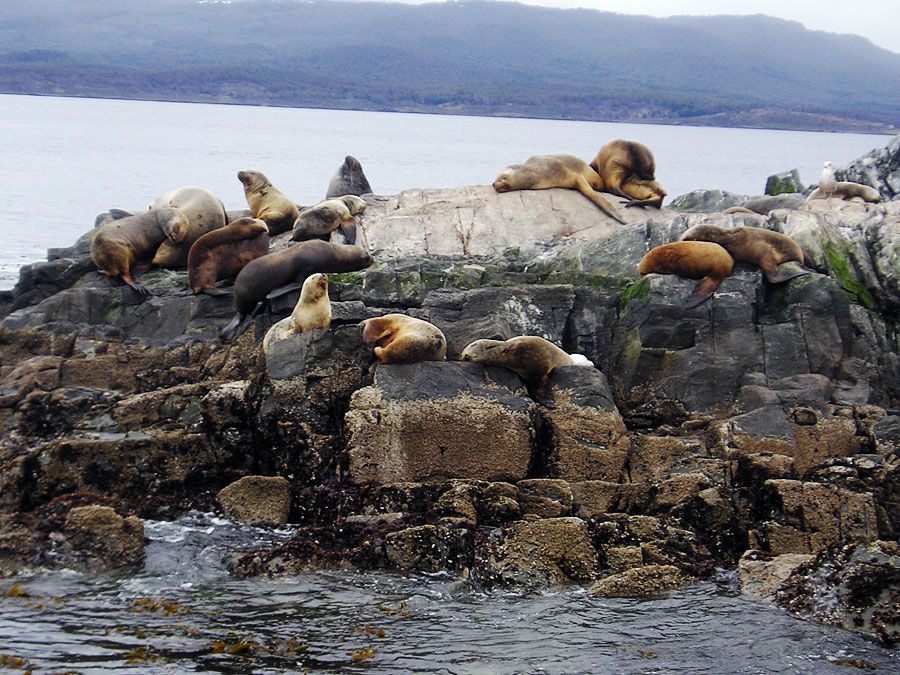
Sea lions are found primarily in Pacific waters, though their specific ranges vary by species:1
- California sea lion: Inhabits the western coast of North America, ranging from the Gulf of Alaska to Costa Rica.1
- Galapagos sea lion: Concentrated around the Galapagos archipelago, with some individuals found at Isla de la Plata near the coast of Ecuador.1
- Northern (Steller) sea lion: Found in the Bering Sea and across both sides of the North Pacific Ocean.1
- Southern (South American) sea lion: Inhabits coastal waters from northern Peru southward to Tierra del Fuego and around the Falkland Islands in the South Atlantic.1
- Australian sea lion: Located along the southern coast of Western Australia into South Australia.1
- New Zealand (Hooker’s) sea lion: Found exclusively in New Zealand.1
What do sea lions eat?
Sea lions are opportunistic predators that primarily feed on a variety of marine life. Their diet generally consists of:
- Fish: A staple food source for all sea lion species.1
- Cephalopods: They frequently hunt squid and octopus.1
- Crustaceans: Various types of crustaceans are commonly consumed.1
- Mollusks: Species like the northern (Steller) sea lion also include bivalves and other mollusks in their diet.1
In addition to these primary food sources, some sea lions exhibit more varied hunting behaviors. For instance, they will occasionally consume penguins, and the southern (South American) sea lion has been known to kill and eat other seals.1
Sources
- sea lion — Encyclopædia Britannica
- sea lion — Merriam-Webster
- What’s the Difference Between Seals and Sea Lions? — Encyclopædia Britannica
- sound reception - Marine mammals — Encyclopædia Britannica
Published on · 3 min read