Pinniped
Pinnipeds—a group comprising seals, sea lions, and walruses—serve as vital, strictly carnivorous predators within marine ecosystems.
What role do pinnipeds play in marine ecosystems?
Pinnipeds—a group comprising seals, sea lions, and walruses—serve as vital, strictly carnivorous predators within marine ecosystems.1
As agile, visual hunters, they occupy a significant position in the food web by consuming a diverse array of prey, including krill, crustaceans, cephalopods, mollusks, and various fish species. Some specialized species, such as the leopard seal, even prey upon penguins and other pinnipeds.1
Conversely, these mammals are themselves integrated into the ecosystem as prey for sharks, killer whales, and polar bears-whale), and polar bears. Their evolutionary history, dating back to the Oligocene Epoch, highlights their development alongside increasing biological productivity in the oceans, where they adapted to thrive in rich marine environments.12
What are the main characteristics that define pinnipeds as a group?
Pinnipeds, a group comprising seals, sea lions, and walruses, are defined by several distinct physical and behavioral characteristics:
- Body Morphology: They possess torpedo-shaped bodies with wide torsos and narrower hindquarters. Their limbs are modified into winglike flippers—the name pinniped is Latin for “feather-foot”—which make them swift and graceful in the water but often awkward on land.1
- Sensory Adaptations: Pinnipeds are visual predators with excellent underwater hearing, despite having small or absent external ears. They also utilize sensitive whiskers to detect prey and have slitlike nostrils that can be closed while submerged.1
- Dietary Habits: All species are strictly carnivorous, feeding on a variety of prey including fish, crustaceans, cephalopods, and mollusks.1
- Social and Reproductive Behavior: Most are gregarious, often congregating in large numbers during breeding seasons on coastal land or ice. They typically give birth to single offspring, and their gestation periods are often extended due to delayed implantation of fertilized eggs.1
What are the three main families of pinnipeds, and how do they differ?
The suborder Pinnipedia is divided into three distinct families, each with unique anatomical and behavioral traits:
Family Phocidae (True or Earless Seals)
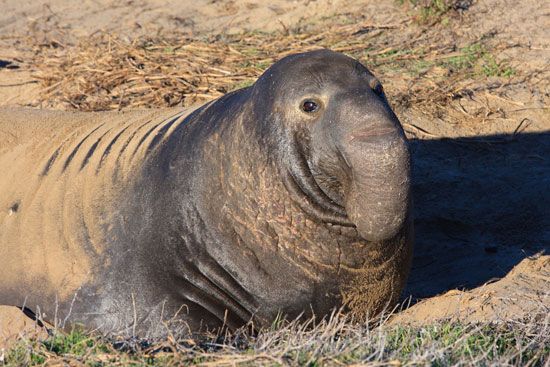
These are often called “earless” because they lack external ear flaps, possessing only small ear holes.3
- Locomotion: They have short front flippers and hind flippers that cannot rotate forward. Consequently, they are unable to walk on land and must move by flopping on their bellies. In the water, they swim by moving their hind flippers side to side like a fish tail.3
- Social Behavior: They are generally less social than other pinnipeds and spend more time in the water.3
Family Otariidae (Eared Seals: Sea Lions and Fur Seals)
This family is characterized by the presence of visible external ear flaps.3
- Locomotion: They possess long front flippers used for propulsion in the water. Crucially, they can rotate their hind flippers forward under their bodies, allowing them to walk on land.134
- Social Behavior: They are highly gregarious and known for being noisy, communicating through loud barking or bellowing.3
Family Odobenidae (Walrus)
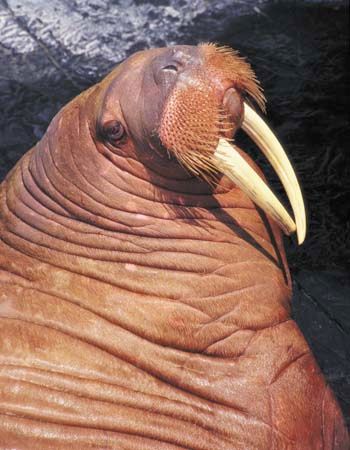
The walrus is the sole living member of this family.4
- Distinctive Features: They are easily identified by their large, downward-projecting ivory tusks. Like otariids, they can rotate their hind flippers forward to walk on land.34
- Diet and Habitat: They inhabit Arctic seas and use their sensitive whiskers to forage for clams and mussels on the ocean floor.4
How do pinnipeds’ diets and feeding habits vary across species?
Pinnipeds are strictly carnivorous, though their specific diets and feeding strategies vary significantly across species depending on their size, habitat, and specialized adaptations.1
Dietary Diversity
While most pinnipeds rely primarily on fish, their diets often include a wide range of marine life, such as:
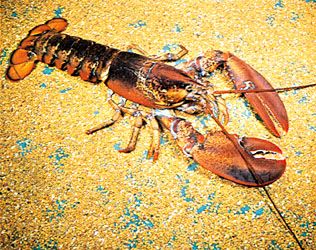
- Crustaceans: Including crabs, lobsters, and shrimp.1
- Cephalopods: Such as squid and octopus.17
- Mollusks: Various types of shellfish.1
Some species exhibit highly specialized feeding habits. For example, the leopard seal is a notable predator that consumes penguins, seabirds, and even other pinnipeds in addition to fish and krill. Conversely, walruses are known to forage on the ocean floor, using their sensitive whiskers to locate clams and mussels.178
Feeding Adaptations
Pinnipeds are visual predators that utilize their excellent underwater hearing and sensitive whiskers to detect prey. Their teeth are adapted for their carnivorous lifestyle; unlike many terrestrial carnivores, they generally lack specialized shearing teeth, as they typically swallow their prey whole or in large chunks. Some species, such as those that consume krill, possess complex cheek teeth that allow them to filter small prey directly from the water.19
Sources
- pinniped — Encyclopædia Britannica
- Enaliarctos — Encyclopædia Britannica
- list of seals, sea lions, and walruses — Encyclopædia Britannica
- What’s the Difference Between Seals and Sea Lions? — Encyclopædia Britannica
- walrus — Encyclopædia Britannica
- Otariidae — Merriam-Webster
- seal — Encyclopædia Britannica
- mammal - Teeth — Encyclopædia Britannica
- ostariophysan - Feeding habits — Encyclopædia Britannica
- carnivore - Form and function — Encyclopædia Britannica
- Feeding behaviour - Relation of feeding to other functions — Encyclopædia Britannica
- Migration - Marine mammals — Encyclopædia Britannica
Published on · 4 min read