Seal
Seals have evolved specialized anatomical and physiological traits to thrive in both aquatic and terrestrial environments. Their bodies are tapered at the…
How have seals adapted to life in both water and on land?
Seals have evolved specialized anatomical and physiological traits to thrive in both aquatic and terrestrial environments. Their bodies are tapered at the ends and round in the middle, a shape optimized for graceful and efficient swimming. To survive in cold waters, they possess a thick layer of fat known as blubber, which provides essential insulation, serves as a food reserve, and aids in buoyancy.1
For deep-sea diving, seals have developed adaptations to manage pressure and oxygen consumption. Unlike humans, who suffer from thoracic squeeze during deep dives, seals possess elastic chest cavities that prevent lung collapse and allow them to use blood-stored oxygen conservatively.2
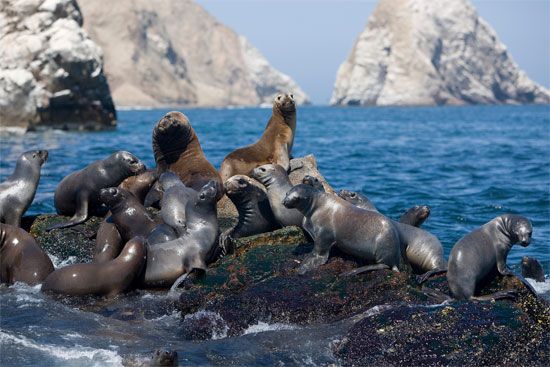
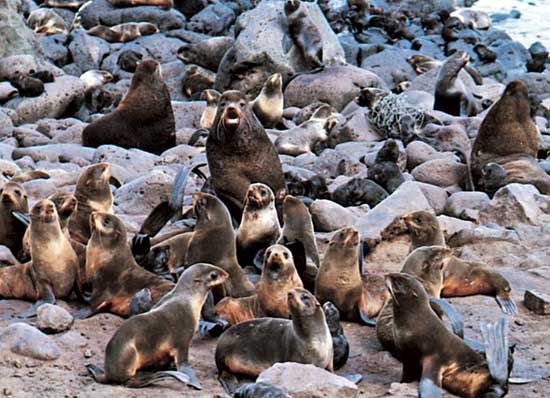
On land, their mobility depends on their classification. “True” seals (family Phocidae) have short front flippers and hind flippers that cannot rotate forward, forcing them to move by wriggling on their bellies. In contrast, “eared” seals (family Otariidae), such as sea lions and fur seals, have longer flippers and can rotate their hind limbs under their bodies to walk on land.31
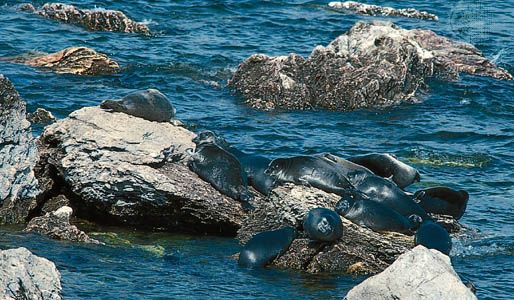
What are the different types of seals, and how are they classified?
Seals are aquatic mammals belonging to the suborder Pinnipedia, a group that also includes sea lions and walruses. While the term “seal” is often used broadly, scientists classify these animals into two distinct families based on key anatomical differences, particularly regarding their ears and flipper mobility.12
The Two Main Families of Seals
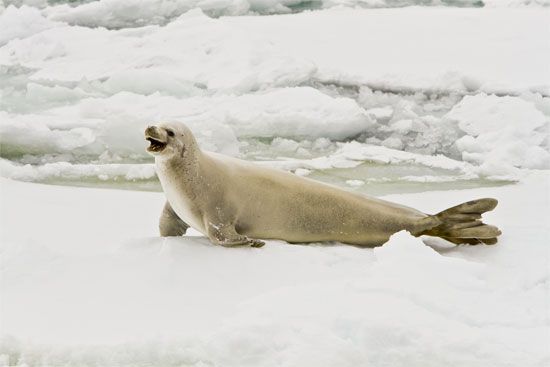
- Family Phocidae (True or Earless Seals): These are often referred to as “true” seals. They lack external ear flaps, possessing only small ear holes. Their hind flippers cannot rotate forward, which makes them quite awkward on land; they move by wriggling on their bellies or pulling themselves forward with their front limbs. In the water, they swim by moving their hind flippers side-to-side like a fish tail.127
- Family Otariidae (Eared Seals): This family includes sea lions and fur seals. They are distinguished by visible external ear flaps. Unlike true seals, they have long front flippers and can rotate their hind flippers under their bodies, allowing them to “walk” on land. When swimming, they primarily use their long front flippers to propel themselves, similar to rowing.12
Classification Summary
The suborder Pinnipedia comprises 34 species across three families:7
Family
Common Name
Key Characteristics
Phocidae
True/Earless Seals
No external ears; hind flippers cannot rotate; move by wriggling on land.
Otariidae
Eared Seals
External ear flaps; hind flippers rotate; can walk on land; use front flippers to swim.
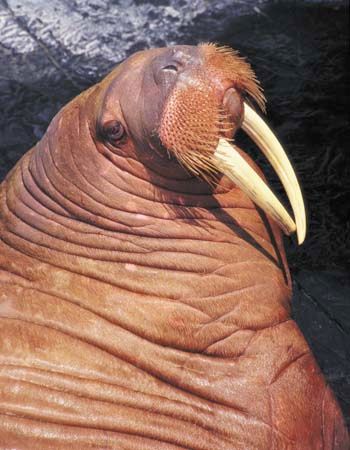
Odobenidae
Walrus
Large tusks; distinct from seals and sea lions.
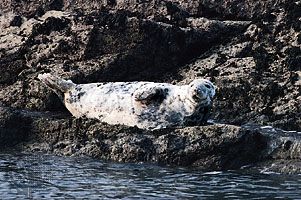
What are some of the main predators of seals in different parts of the world?
Seals face a variety of predators across different marine and polar environments. Their primary natural threats include:
- Killer Whales: These highly intelligent cetaceans are major predators of seals. Certain populations, such as “transient” pods in the North Pacific, specialize in hunting mammals, including seals, sea lions, and other marine life.9
- Polar Bears: In the Arctic, the polar bear is the primary predator of seals. They rely on ringed seals and bearded seals as their main food source, often ambushing them at breathing holes or hunting them on sea ice.10
- Large Sharks: The white shark (great white shark) is a significant predator that frequently targets seals and sea lions. They typically hunt using an ambush strategy, delivering a massive, sudden bite to their prey.211
- Leopard Seals: In Antarctic regions, the leopard seal is a unique predator that feeds on penguins, fish, and even other species of seals.1213
- Humans: Historically, humans have been a major threat to seal populations through seal hunting for meat, hides, oil, and fur. While international regulations have helped many species recover, human activity remains a factor in seal mortality.13
How does blubber help seals survive in freezing ocean temperatures?
Blubber is a thick layer of fat and collagen that serves as a vital adaptation for seals and other marine mammals living in frigid environments. Because water has a much higher thermal conductivity than air, marine mammals lose body heat significantly faster in water than terrestrial mammals do in air.1415
Blubber helps seals survive these conditions through several key functions:
- Insulation: As a substance rich in fats and oils, blubber conducts heat poorly, acting as an effective insulating blanket that covers the animal’s body and prevents internal heat from escaping into the cold surrounding water.15
- Energy Storage: Beyond its role in thermoregulation, this layer serves as a significant energy reserve, which is crucial for seals during periods of fasting, such as during the breeding or molting seasons.1615
- Specialized Circulation: Blubber allows for a specialized network of blood vessels that supports thermoregulation. This system enables seals to manage their body temperature by either conserving heat or shedding excess heat as needed, depending on their activity level and the environment.1415
Sources
- What’s the Difference Between Seals and Sea Lions? — Encyclopædia Britannica
- seal — Encyclopædia Britannica
- thoracic squeeze — Encyclopædia Britannica
- bearded seal — Encyclopædia Britannica
- cetacean - Circulation and thermoregulation — Encyclopædia Britannica
- Anseriform - Physiology — Encyclopædia Britannica
- pinniped — Encyclopædia Britannica
- perciform - Annotated classification — Encyclopædia Britannica
- polar bear — Encyclopædia Britannica
- leopard seal — Encyclopædia Britannica
- killer whale — Encyclopædia Britannica
- 10 of the World’s Most Dangerous Fish - Great White Shark — Encyclopædia Britannica
- white shark - Feeding habits — Encyclopædia Britannica
- blubber — Merriam-Webster
- Ectotherm — Encyclopædia Britannica
- hooded seal — Encyclopædia Britannica
- blubber oil — Merriam-Webster
- How do sea otters stay warm? — Encyclopædia Britannica
Published on · 4 min read