Sei Whale
The sei whale (Balaenoptera borealis) is a wide-ranging species found in oceans across the globe, inhabiting waters that span from the Arctic to the…
Where are sei whales typically found, and what is their migration pattern?
The sei whale (Balaenoptera borealis) is a wide-ranging species found in oceans across the globe, inhabiting waters that span from the Arctic to the Antarctic.1
Regarding their movement, sei whales follow a seasonal migration pattern typical of many large baleen whales. They spend the summer months feeding in cold and temperate waters, where biological productivity is high, before migrating toward warmer regions during the fall to reach their winter breeding grounds. While this seasonal shift between high latitudes and equatorial regions is standard for the species, it is worth noting that some whale populations may reside in a single locality throughout the year.12
Because of their historical exploitation by commercial whalers and the difficulty of identifying them at sea, the sei whale is currently classified as an endangered species1.
How fast can sei whales swim, and are they known for any particular behaviors?
The sei whale (Balaenoptera borealis) is recognized as the fastest of all rorquals. While most cetaceans maintain a consistent cruising speed of approximately 7 km/hr (4 mph), the sei whale is capable of impressive short bursts of speed, having been recorded moving at up to 65 km/hr (about 40 mph) along the ocean surface.13
Regarding their behavior, sei whales are filter feeders that utilize extremely fine baleen bristles—roughly the diameter of a human hair—to strain small crustaceans such as copepods and krill from the water. Their common name originates from the Norwegian word for “pollack,” a reference to the fact that these whales were historically observed appearing in the same waters as these fish off the coast of Norway.1
What are the distinguishing physical characteristics of sei whales?
The sei whale (Balaenoptera borealis) possesses several distinct physical characteristics that identify it as a member of the rorqual family:
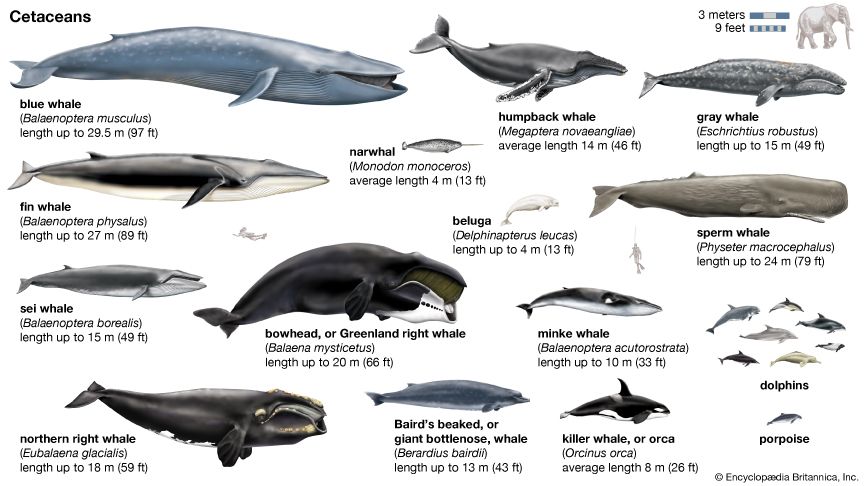
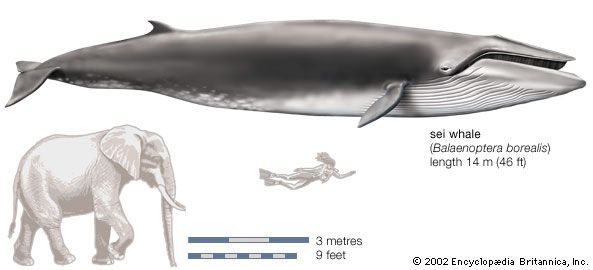
- Size and Coloration: These cetaceans typically reach lengths of 13–15 metres (43–49 feet), though some may grow up to 18 metres (nearly 60 feet). Their bodies are generally bluish gray or blackish on the upper side with paler underparts.14
- Dorsal Fin: They feature a relatively large, hook-shaped (falcate) dorsal fin.1
- Head and Throat: A notable ridge is present on the top of the head. Additionally, the throat and chest area contain approximately 50 short ventral grooves that allow the mouth cavity to expand during feeding.415
- Baleen Structure: Sei whales possess dark baleen plates with pale, silky inner fringes. These bristles are exceptionally fine—roughly the diameter of a human hair—which enables them to strain small prey like copepods and krill from the water.1
How did the sei whale get its name, and what does it mean?
The name “sei whale” is a partial translation of the Norwegian term seihval. The name is derived from the Norwegian word sei, which means “pollack”.41
This name was applied to the species because these whales were historically observed appearing in the same waters as schools of pollack along the northern coast of Norway.1
Sources
- sei whale — Encyclopædia Britannica
- cetacean - Distribution and migration — Encyclopædia Britannica
- cetacean - Swimming — Encyclopædia Britannica
- sei whale — Merriam-Webster
- baleen whale — Encyclopædia Britannica
- rorqual — Encyclopædia Britannica
Published on · 2 min read