Rorqual
A rorqual is any member of the family Balaenopteridae, a group of large baleen whales characterized by relatively small heads, short baleen plates, and deep…
What is the etymology of the word ‘rorqual’ and what does it mean?
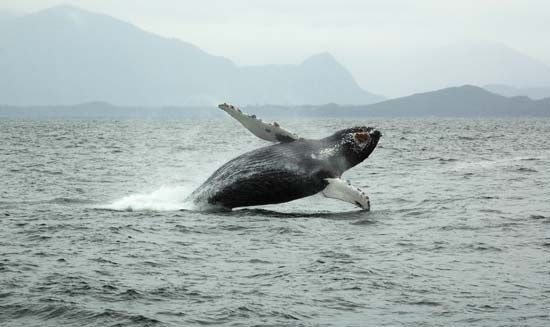
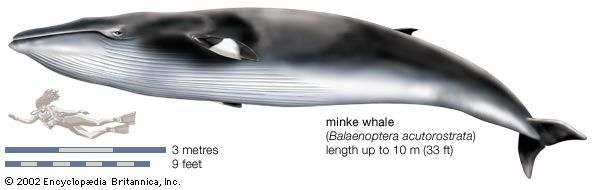
A rorqual is any member of the family Balaenopteridae, a group of large baleen whales characterized by relatively small heads, short baleen plates, and deep longitudinal furrows along the throat. These ventral grooves allow the whale’s mouth cavity to expand, facilitating a specialized hunting technique known as gulp-feeding. This family includes well-known species such as the blue whale, fin whale, sei whale, minke whale, and humpback whale.12
Regarding its etymology, the term is derived from the French rorqual, which traces back to the Norwegian rørhval and the Old Norse reytharhvalr (composed of reythr, meaning rorqual, and hvalr, meaning whale). While some sources identify this Scandinavian origin, others note that the specific roots of the word remain of uncertain origin. The term was first recorded in use in 1824.12
Which species are classified as rorquals, and what are their conservation statuses?
Rorquals are members of the family Balaenopteridae, which includes several species of large baleen whales. These whales are characterized by their throat grooves, which allow for expansive feeding, and they are classified within the genera Balaenoptera and Megaptera.34
Classified Species and Conservation Status
Many rorqual species were historically subjected to intensive commercial whaling, leading to significant population declines during the 20th century. While international protections have been implemented, several remain classified as endangered by the International Union for Conservation of Nature (IUCN):
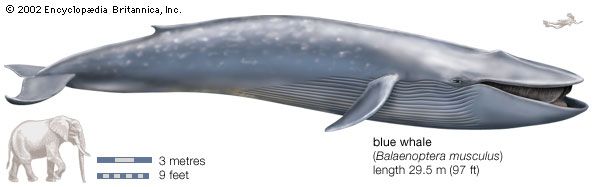
- Blue whale (Balaenoptera musculus): Once the primary target of commercial whaling, this species is listed as endangered. While populations appear to be recovering, they remain far below historical levels.3
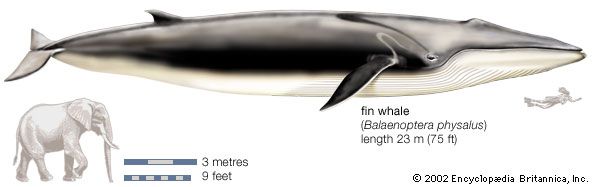
- Fin whale (Balaenoptera physalus): Also listed as an endangered species, this whale suffered from severe overhunting. While it is commonly sighted in the Northern Hemisphere today, encounters in the Southern Hemisphere remain rare.5
- Sei whale (Balaenoptera borealis): This species is classified as endangered. Recovery evidence remains limited, and population estimates are difficult to verify due to challenges in identifying the species at sea.6
- Humpback whale (Megaptera novaeangliae): This species was granted protection from commercial whaling in 1963 following significant population depletion.7
What are the distinctive physical characteristics of rorqual whales?
Rorqual whales, which belong to the family Balaenopteridae, are distinguished from other baleen whales by several key physical characteristics:
- Ventral Grooves: The most defining feature of rorquals is the presence of longitudinal folds or grooves that extend from the chin and lower jaw down the throat to the belly. These gular folds allow the mouth cavity to expand significantly, which is essential for their specialized gulp-feeding strategy.28
- Dorsal Fin: Unlike right whales, rorquals possess a dorsal fin, a feature reflected in their genus name, Balaenoptera, which combines the Latin balaena (“whale”) with the Greek pteron (referring to the fin).28
- Baleen Plates: Rorquals have relatively short baleen plates located only in their upper jaws, which they use to filter large quantities of small prey from the water.29
These physical adaptations, combined with their large oral cavities, allow rorquals to consume vast amounts of food in a single mouthful, distinguishing them from other cetacean groups.29
How large can rorqual whales grow, and which species is considered the largest?
The blue whale (Balaenoptera musculus) is the largest rorqual and holds the distinction of being the largest animal to have ever existed on Earth.124
These marine giants typically reach lengths of over 30 meters (98 feet) and weigh approximately 150 metric tons. While some reports suggest individuals may reach up to 33 meters and 200 metric tons, the largest accurately measured specimen was a 29.5-meter female weighing 180 metric tons. Within the family Balaenopteridae, rorquals exhibit significant size, though the blue whale remains the most massive member of the group.1241
Sources
- rorqual — Merriam-Webster
- rorqual — Encyclopædia Britannica
- sei whale — Encyclopædia Britannica
- blue whale — Encyclopædia Britannica
- fin whale — Encyclopædia Britannica
- What Is a Marine Mammal? — Encyclopædia Britannica
- whaling - Regulation — Encyclopædia Britannica
- Balaenopteridae — Merriam-Webster
- cetacean - Feeding adaptations — Encyclopædia Britannica
- Locomotion - Carangiform and ostraciiform locomotion — Encyclopædia Britannica
- Balaenoptera — Merriam-Webster
- What is the largest animal on Earth? — Encyclopædia Britannica
- cetacean - Age and growth — Encyclopædia Britannica
Published on · 3 min read