Serpukhovian Stage
The Serpukhovian Stage is named after the Russian city of Serpukhov, which is located near Moscow in the Moscow Basin.
How was the Serpukhovian Stage named, and where is its type section located?
The Serpukhovian Stage is named after the Russian city of Serpukhov, which is located near Moscow in the Moscow Basin.1
While the name originates from this region, the type section is not considered complete there. Consequently, the principal reference exposures for the stage are located in the Ural Mountains of Russia. This stage represents the final interval of the Mississippian Subsystem within the Carboniferous System1.1
What are the key characteristics of the rocks and fossils found in Serpukhovian strata?
Serpukhovian strata, which represent the final interval of the Mississippian Subsystem, are characterized by abundant and diverse fossil assemblages that have been extensively documented in Russia.1
Key Fossil Indicators
The identification and correlation of these rocks rely heavily on specific index fossils:
- Conodonts: The base of the stage is generally approximated by the first appearance of the conodont Lochriea ziegleri. The top of the stage is defined by the appearance of the conodont Declinognathodus noduliferus.1
- Foraminiferans: In the Moscow Basin, the base of the stage is associated with the appearance of the foraminiferans Pseudoendothyra globosa and Neoarchaediscus parvus.1
Geological Context
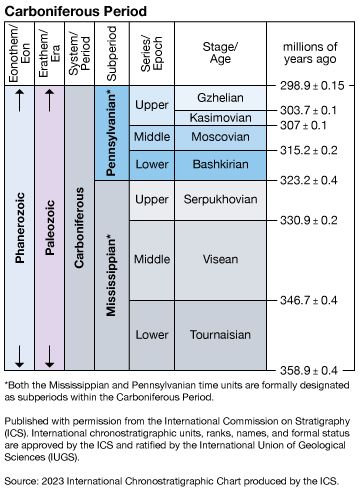
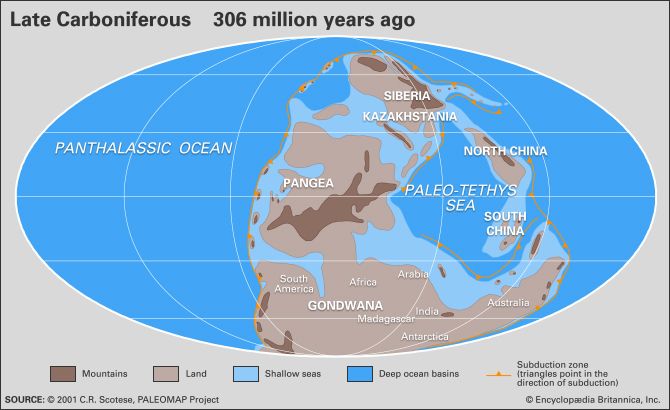
The deposition of these rocks occurred between 330.9 million and 323.2 million years ago, making the Serpukhovian the shortest stage of the Carboniferous System. The boundary at the top of the stage reflects a significant global drop in sea level, which was driven by extensive glaciation on the ancient supercontinent of Gondwana.1
What is the Serpukhovian Stage, and where does it fit in the geological time scale?
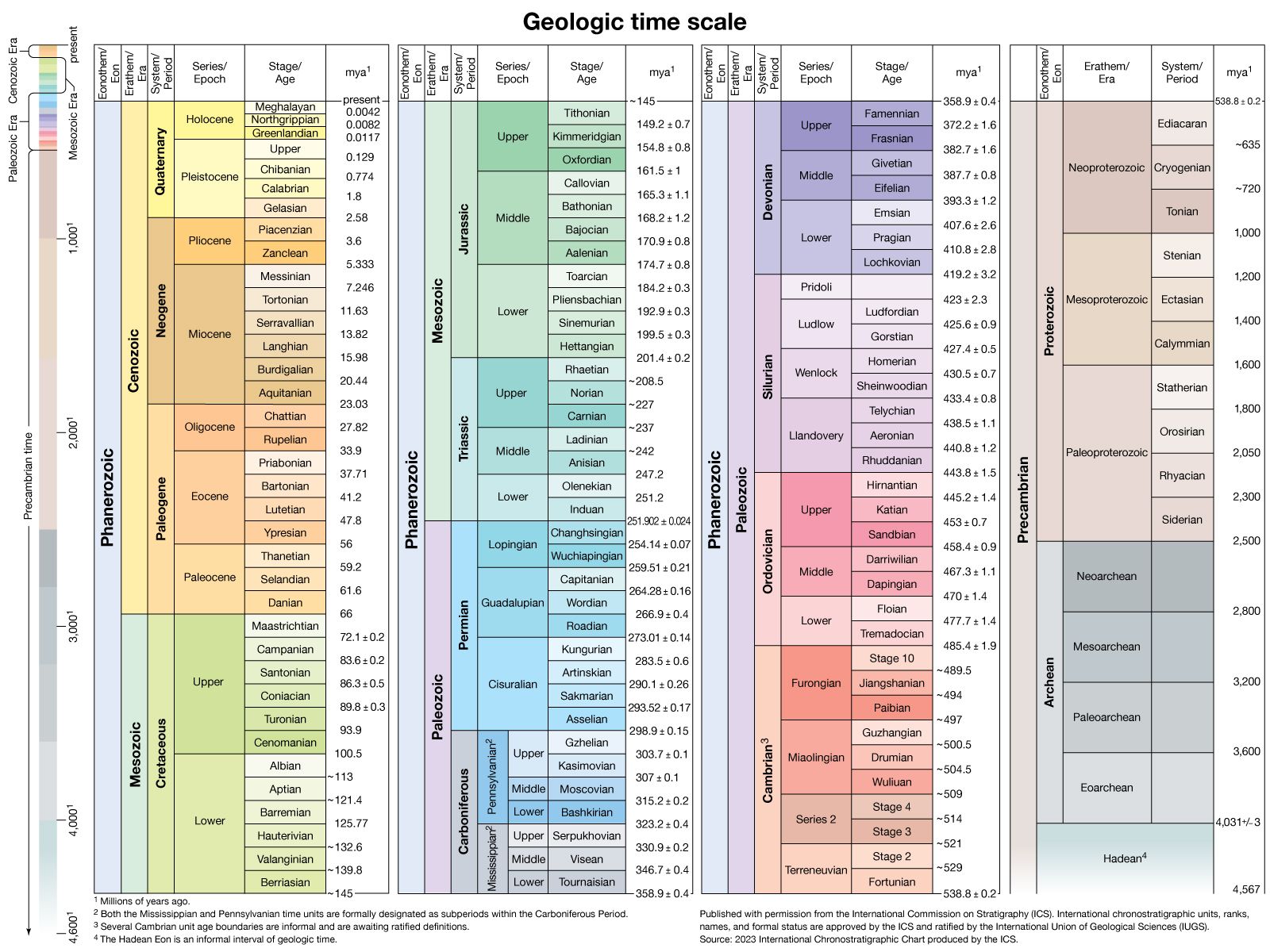
The Serpukhovian Stage is the third and final internationally defined stage of the Mississippian Subsystem within the Carboniferous System. It encompasses all rocks deposited during the Serpukhovian Age, which lasted from approximately 330.9 million to 323.2 million years ago, making it the shortest stage of the Carboniferous period.1
In the geological time scale, the Serpukhovian Stage serves as the transition between the Mississippian and Pennsylvanian Subsystems. Its upper boundary is marked by the appearance of the conodont Declinognathodus noduliferus, which also defines the base of the overlying Bashkirian Stage. This boundary is globally significant, as it reflects a major drop in sea level caused by extensive glaciation on the supercontinent of Gondwana.13
The stage is named after the Russian city of Serpukhov, though its principal reference exposures are located in the Ural Mountains. in the Ural Mountains.1
How does the Serpukhovian Stage compare to the stages immediately before and after it?
The Serpukhovian Stage serves as the critical bridge between the Mississippian and Pennsylvanian subsystems of the Carboniferous System. Its position and characteristics are defined by its relationship to the stages immediately preceding and following it:
- Preceding Stage (Viséan): The Viséan Stage (346.7–330.9 million years ago) underlies the Serpukhovian. The boundary between them is currently approximated by the first appearance of the conodont Lochriea ziegleri. Like the transition into the following stage, this boundary is associated with evidence of significant glaciation on the supercontinent Gondwana.
- The Serpukhovian Stage: Spanning 330.9–323.2 million years ago, it is the shortest stage of the Carboniferous. It represents the final phase of the Mississippian Subsystem.
- Following Stage (Bashkirian): The Bashkirian Stage (323.2–315.2 million years ago) marks the beginning of the Pennsylvanian Subsystem. The boundary is defined by the appearance of the conodont Declinognathodus noduliferus and coincides with a major global drop in sea level driven by further Gondwanan glaciation.1134
Sources
- Serpukhovian Stage — Encyclopædia Britannica
- Viséan Stage — Encyclopædia Britannica
- Bashkirian Stage — Encyclopædia Britannica
- Carboniferous Period - Major subdivisions of the Carboniferous System — Encyclopædia Britannica
Published on · 3 min read