Mississippian Subperiod
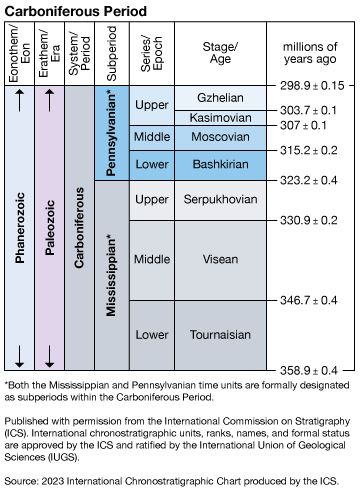
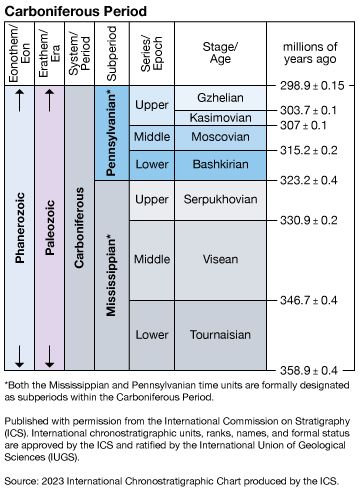
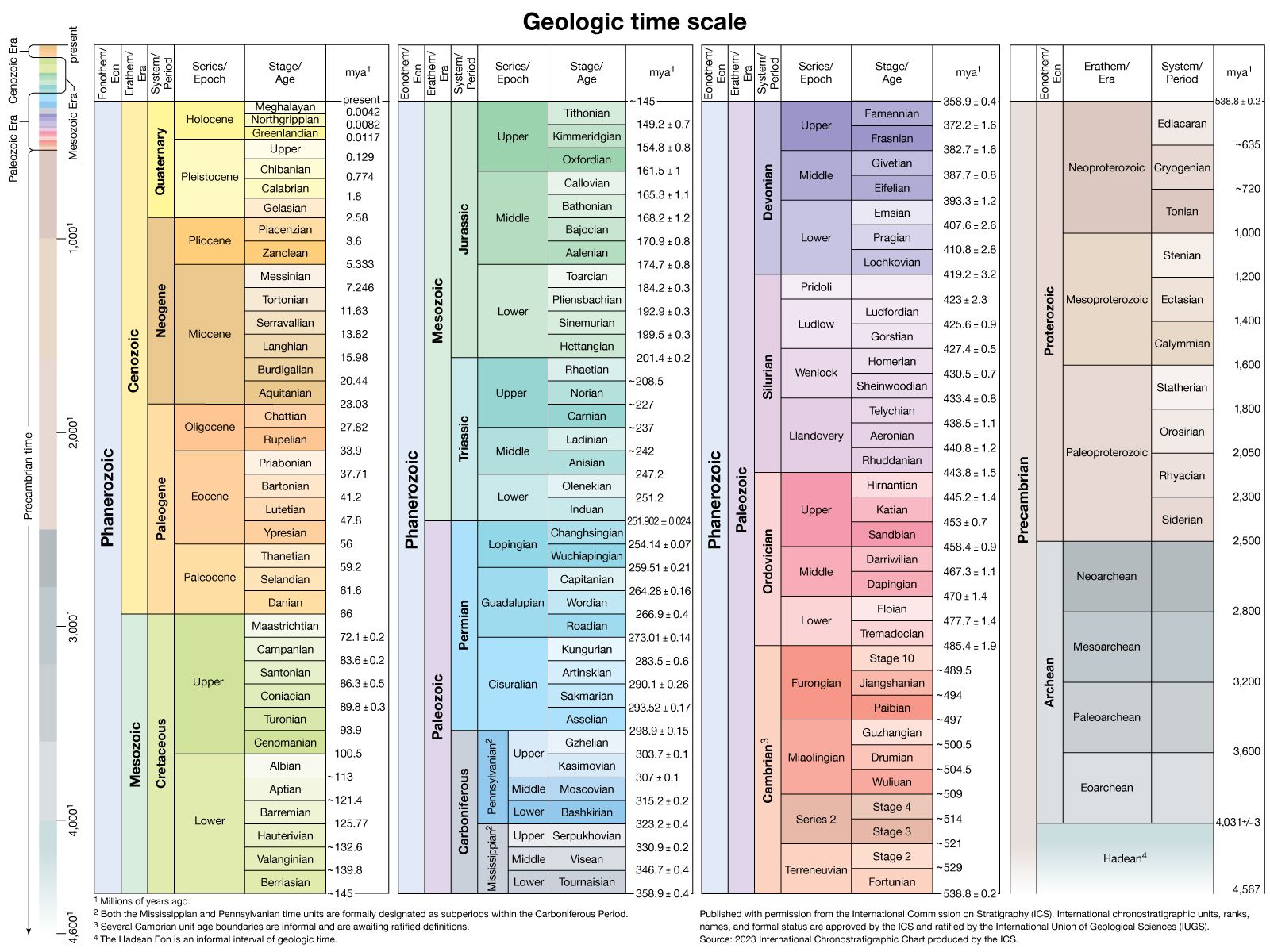
The Mississippian Subperiod is the first major subdivision of the Carboniferous Period, spanning from 358.9 to 323.2 million years ago. It is geologically…
What is Mississippian Subperiod?
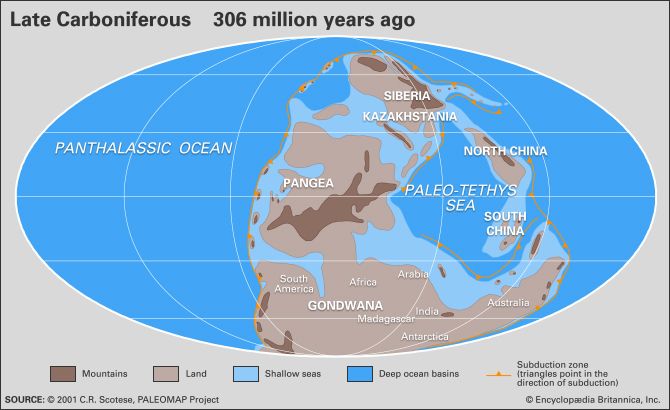
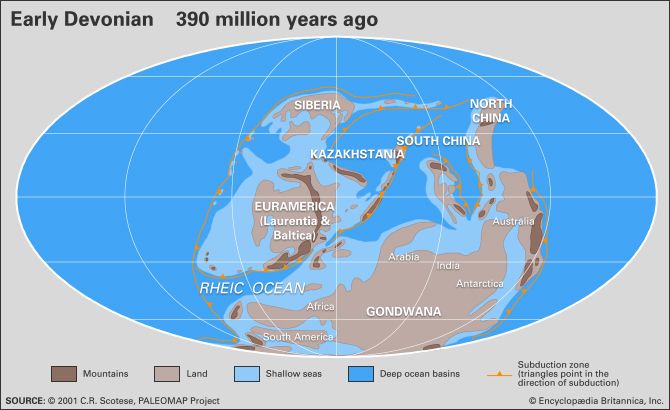
The Mississippian Subperiod is the first major subdivision of the Carboniferous Period, spanning from 358.9 to 323.2 million years ago. It is geologically defined by the widespread deposition of shallow-water limestone across continental interiors, particularly in the Northern Hemisphereestone](https://www.britannica.com/science/limestone) across continental interiors, particularly in the Northern Hemisphere.1
This era saw a shift from calcite-dominated to aragonite-dominated grains and cements, a change driven by an increased magnesium-to-calcium ratio in seawater resulting from decreased seafloor spreading. Additionally, the subperiod was marked by a cyclic retreat of sea level and the widespread extinction of armoured fishes that had flourished during the Devonian Period flourished during the Devonian Period.1
It is important to distinguish this geological timeframe from the Mississippian culture, a complex Native American civilization that emerged around 700 CE in the Mississippi River valley. While the geological subperiod concerns ancient Earth history, the Mississippian culture is defined by its sophisticated temple mounds, corn-based agriculture, and complex social organization.2
What is the difference between the Mississippian and Pennsylvanian subperiods?
The Carboniferous Period is divided into two major subperiods, the Mississippian and the Pennsylvanian, which represent distinct geological and environmental conditions.3
Key Differences
Feature
Mississippian Subperiod
Pennsylvanian Subperiod
Timeframe
358.9 to 323.2 million years ago
323.2 to 298.9 million years ago
Primary Deposits
Shallow-water [limestones]
Cyclical
sedimentary deposits
and [coal]
Biological Focus
Crinoids
,
bryozoans
, and
brachiopods
Vascular plants
(lycopods, sphenopsids, seed ferns)
Environment
Marine-dominated in the Northern Hemisphere
Extensive
coal
swamps and fluctuating sea levels
Geological Context
The Mississippian is characterized by the accumulation of limestone, often composed of the remains of stalked echinoderms known as crinoids. In contrast, the Pennsylvanian is defined by its vast coal-bearing strata, as more coal was formed during this time than at any other point in the geologic record. While the Mississippian reflects more stable shallow marine settings in the Northern Hemisphere, the Pennsylvanian is marked by frequent alternations between marine and nonmarine conditions.5
How did the Carboniferous Period get its name?
The Carboniferous Period derives its name from the Latin words for “coal-bearing,” as the term refers to the extensive coal-bearing strata that characterize the upper portion of the period’s rock series throughout the world.4
Geologically, this period—which lasted from approximately 358.9 to 298.9 million years ago—is defined by the massive accumulation of organic material that eventually formed these coal beds. Because the period is synonymous with the production or containment of coal, the name serves as a direct descriptor of the significant sedimentary deposits found within the rock systems formed during this interval of the Paleozoic Era.478
What are some other major geological periods in Earth’s history?
Earth’s history is organized into a hierarchical geologic time scale, which subdivides the planet’s history into eons, eras, and periods based on stratigraphy and the fossil record.11
The Phanerozoic Eon—the eon of visible life—is divided into three major eras, each containing several periods:12
The Paleozoic Era (542–251 Million Years Ago)
Known as the era of “ancient life,” it includes periods such as the Cambrian, Ordovician, Silurian, Devonian, Carboniferous, and PermianPeriod), and Permian.11
The Mesozoic Era (251–66 Million Years Ago)
Often called the “middle life” era and famous for the dinosaurs, it consists of three periods:13
The Cenozoic Era (66 Million Years Ago–Present)
The “recent life” era, during which continents reached their modern positions, is divided into three periods:14
Before the Phanerozoic, Earth’s history includes the Archean Eon and the informal Hadean Eon, which dates back to the planet’s formation approximately 4.6 billion years ago.11
Sources
- Mississippian Subperiod — Encyclopædia Britannica
- Native American - Mississippian cultures — Encyclopædia Britannica
- Pennsylvanian Subperiod — Encyclopædia Britannica
- Carboniferous Period — Encyclopædia Britannica
- Carboniferous Period - Major subdivisions of the Carboniferous System — Encyclopædia Britannica
- Carboniferous Period - Distinctive features — Encyclopædia Britannica
- coal - The fossil record — Encyclopædia Britannica
- Carboniferous Period - Paleogeography — Encyclopædia Britannica
- carboniferous — Merriam-Webster
- A Journey Through Time Since the Precambrian - Carboniferous Period: 358.9 million to about 298.9 million years ago — Encyclopædia Britannica
- A Journey Through Time Since the Precambrian — Encyclopædia Britannica
- geologic time — Encyclopædia Britannica
- Mesozoic Era — Encyclopædia Britannica
- Cenozoic Era — Encyclopædia Britannica
- How was Earth created? — Encyclopædia Britannica
Published on · 3 min read