Bashkirian Stage
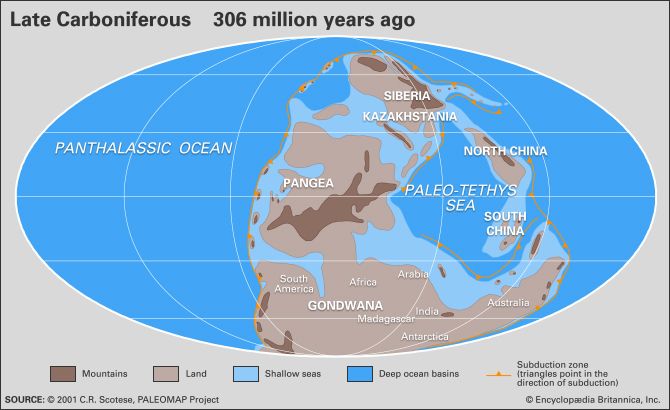
The Bashkirian Stage is the inaugural stage of the Pennsylvanian Subsystem, which is the younger of the two subsystems comprising the Carboniferous Period.…
How does the Bashkirian Stage relate to important events in Earth’s history, such as the Carboniferous Period?
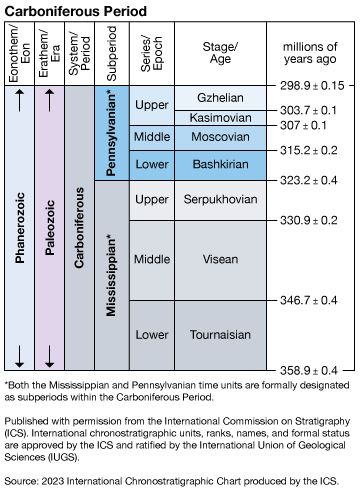
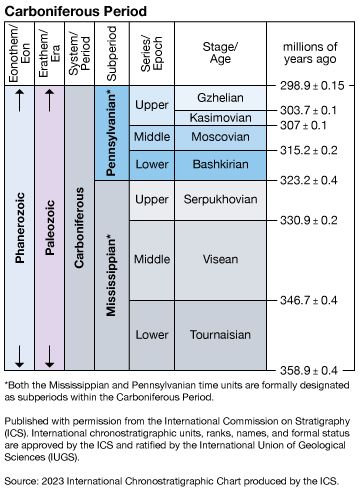
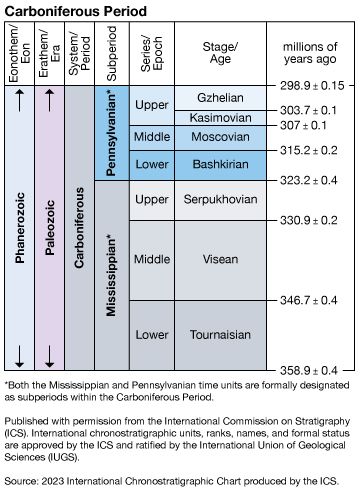
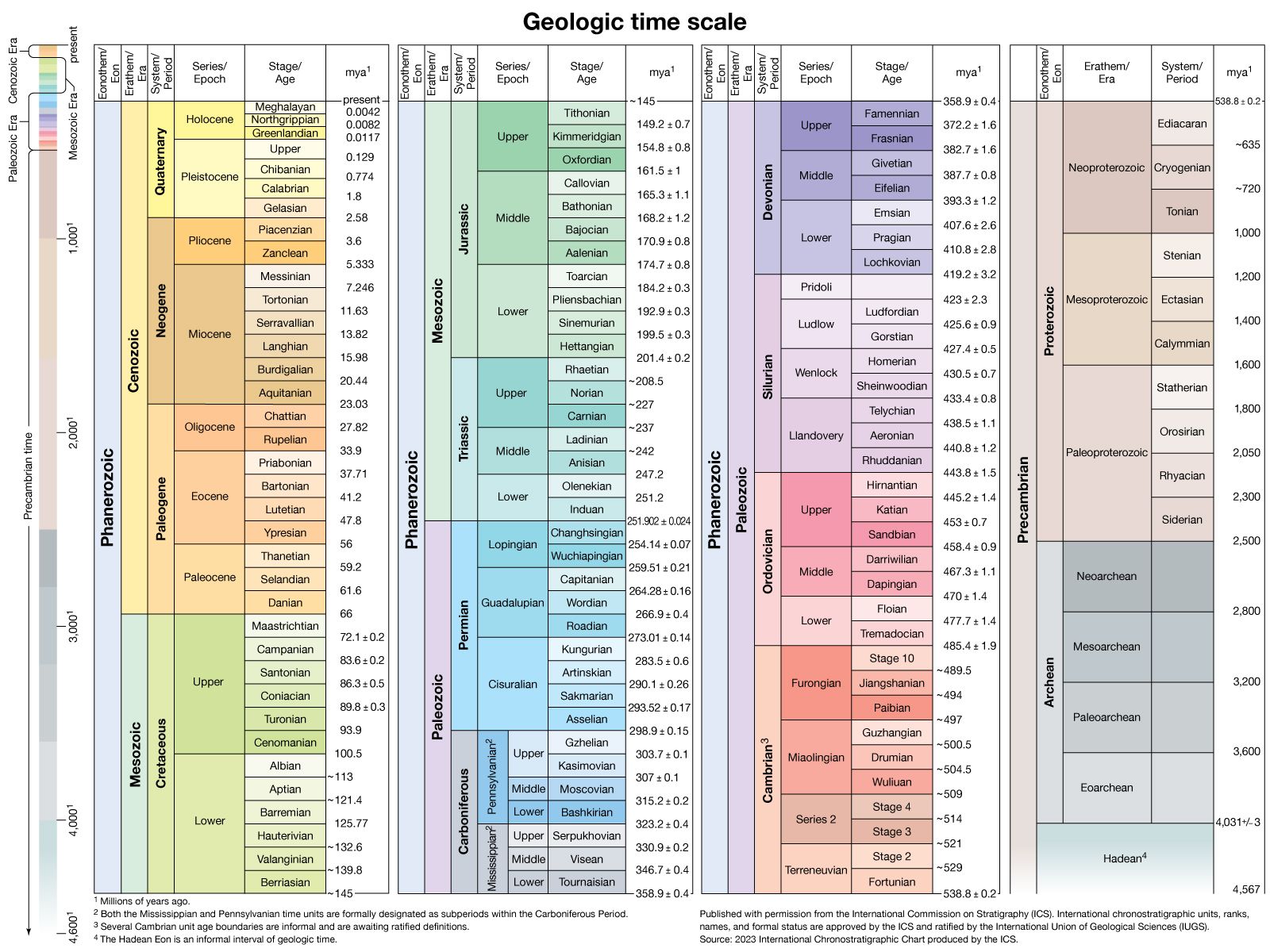
The Bashkirian Stage is the inaugural stage of the Pennsylvanian Subsystem, which is the younger of the two subsystems comprising the Carboniferous Period. Spanning from approximately 323.2 million to 315.2 million years ago, this stage marks a critical transition in Earth’s geological history.1
The base of the Bashkirian Stage is significant because it defines the internationally recognized boundary between the Mississippian Subsystem and the Pennsylvanian Subsystem. This boundary is geologically identified by the first appearance of the conodont species Declinognathodus noduliferus. The Global Standard Section and Point (GSSP) for this transition is located at Arrow Canyon in the United States.1
Throughout this age, the stage is characterized by the presence of specific microfossils and organisms, including foraminiferans and ammonoid cephalopods, which allow scientists to correlate these rock layers globally. The Bashkirian sits chronologically between the Serpukhovian Stage and the Moscovian Stage.1
What is the Bashkirian Stage, and where does it fit in the geological time scale?
The Bashkirian Stage is the first of four internationally defined stages of the Pennsylvanian Subsystem, which is the younger half of the Carboniferous System. It encompasses all geological deposits from the Bashkirian Age, occurring approximately 323.2 million to 315.2 million years ago.1
In the geological time scale, the Bashkirian Stage occupies a pivotal position:
- Placement: It directly overlies the Serpukhovian Stage of the Mississippian Subsystem and is followed by the Moscovian Stage.1
- Boundary Definition: The base of the Bashkirian Stage marks the internationally recognized boundary between the Mississippian and Pennsylvanian subsystems. This transition is defined by the first appearance of the conodont species Declinognathodus noduliferus, with the official Global Standard Section and Point (GSSP) located at Arrow Canyon in the United States1.
The stage is named after Gornaya Bashkiriya in the Ural Mountains of Russia and is correlated globally using microfossils such as foraminiferans and ammonoid cephalopods.1
What are the key characteristics of the rocks and fossils found in the Bashkirian Stage?
The Bashkirian Stage is defined by a distinct assemblage of microfossils that allow geologists to correlate rock layers on a global scale. Because these organisms evolved rapidly and were widespread, they serve as essential tools for identifying and subdividing the strata deposited between 323.2 and 315.2 million years ago.1
Key fossil groups found in the Bashkirian Stage include:
- Conodonts: These primitive, eel-like chordates are critical for stratigraphy. The base of the stage is defined by the first appearance of Declinognathodus noduliferus, while the top is marked by the emergence of Idiognathoides postsulcatus, Declinognathus donetzianus, and advanced forms of Neognathodus nataliae.1
- Foraminiferans: These unicellular organisms, protected by complex shells or tests, are used to identify and subdivide the stage globally.1
- Ammonoid Cephalopods: These marine mollusks are also key index fossils for this period.1
- Palynomorphs: These include tiny, resilient remnants of plant and animal structures, such as spores and pollen, which provide further evidence for dating the rock layers.1
What economic resources, if any, are associated with Bashkirian Stage rocks?
The Bashkirian Stage, as part of the Pennsylvanian Subsystem, is associated with significant economic resources characteristic of the broader Carboniferous System.
The strata deposited during this time are globally recognized for their wealth of energy and industrial materials:
- Fossil Fuels: The Carboniferous Period is famous for its vast coal basins, which fueled the Industrial Revolution. Major accumulations of natural gas and liquid petroleum are also frequently found within these strata throughout the Northern Hemisphere.1
- Construction Materials: Where these rocks—specifically limestones and sandstones—are found near the surface, they are extracted for use as high-quality building stone and as aggregate for concrete and asphalt.5
- Industrial Minerals: Other commercially valuable materials derived from these geological deposits include gypsum and various types of fertilizer and refractory clays.1
Sources
- Bashkirian Stage — Encyclopædia Britannica
- Carboniferous Period — Encyclopædia Britannica
- Carboniferous Period - Major subdivisions of the Carboniferous System — Encyclopædia Britannica
- Moscovian Stage — Encyclopædia Britannica
- Carboniferous Period - Economic significance of Carboniferous deposits — Encyclopædia Britannica
- Carboniferous Period - Pennsylvanian subsystem — Encyclopædia Britannica
- Pennsylvania - Resources and power — Encyclopædia Britannica
Published on · 3 min read