Short-tailed Shrew
A short-tailed shrew (genus Blarina) is a group of three North American insectivores known for their dense, velvety fur and reddish-tipped teeth. These…
What is a short-tailed shrew?
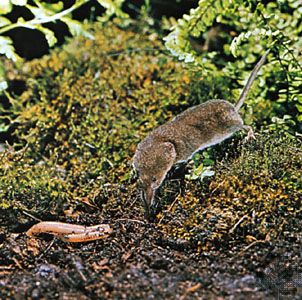
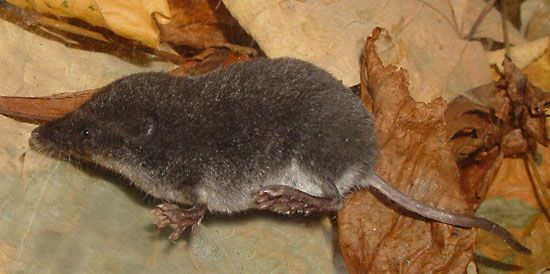
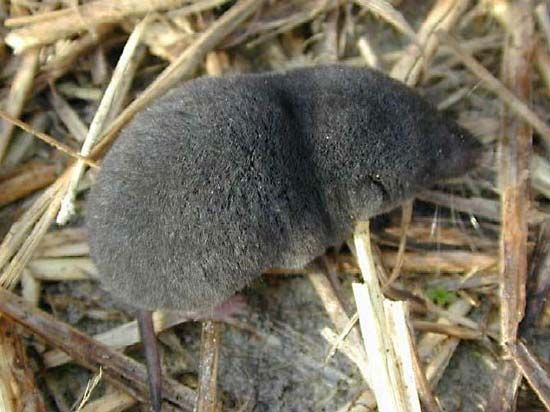
A short-tailed shrew (genus Blarina) is a group of three North American insectivores known for their dense, velvety fur and reddish-tipped teeth. These animals are among the largest North American shrews, typically weighing up to 30 grams with a body length of 8 to 11 cm. They are characterized by minute eyes, small ears hidden in their fur, and a tail that is less than half their body length.12
These voracious eaters consume nearly half their weight daily, foraging for invertebrates, small vertebrates, and plant matter. Notably, their saliva contains neurotoxins and hemotoxins used to immobilize prey. They are active year-round, spending much of their time in burrows where they navigate using echolocation and scent markings. The three recognized species are the northern, southern, and Elliot’s short-tailed shrew, all of which belong to the family Soricidae.1
Where does the short-tailed shrew live?
The short-tailed shrew (genus Blarina) is native to North America, with a range extending from southern Canada through the north-central and northeastern United States, reaching as far south as eastern Texas and Florida.1
These animals are highly adaptable to various environments, provided the habitat offers sufficient cover and soil that is well-drained yet moist enough to maintain humid burrows. Their specific environments vary by region:
- Western range: They inhabit areas with tall or dense grass.1
- Eastern range: They are found in hardwood and coniferous forests.1
- Gulf of Mexico: They occupy palmetto groves.1
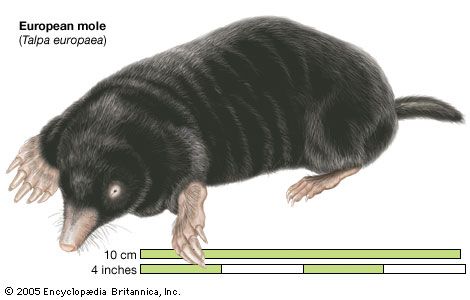
Short-tailed shrews spend the majority of their time underground in tunnel systems they excavate themselves or occupy from other burrowing mammals, such as moles or voles. They also frequently nest in crevices found beneath rotting logs, tree stumps, rocks, or building foundations.1
What does a short-tailed shrew eat?
The short-tailed shrew is a voracious eater that must consume nearly half of its body weight in food every day. Its diet is diverse, consisting of both animal and plant matter:4
- Invertebrates: They primarily forage in leaf litter and grass for earthworms, slugs, snails, and various insects.4
- Small Vertebrates: They actively hunt small mice, salamanders, and reptiles.4
- Plant Matter: Their diet also includes roots, beechnuts, berries, sunflower seeds, and fungi.4
To assist in hunting, the short-tailed shrew’s saliva contains neurotoxins and hemotoxins. When the shrew bites its prey, these toxins are introduced into the wound, effectively immobilizing invertebrates and mice. The shrew often stores these paralyzed prey items to consume later. Because of their high metabolic rate, they must also drink water frequently.4
How does a short-tailed shrew find its food?
The short-tailed shrew (Blarina) employs a combination of acute senses and specialized behaviors to locate its food. Because their eyesight is limited to light detection, they rely heavily on other sensory inputs to navigate their environment and find prey.4
Key methods used by the short-tailed shrew to find food include:
- Sensory Perception: These shrews possess an enhanced sense of smell and rely on sensitive whiskers to probe through leaf litter and soil for invertebrates.13
- Echolocation: They utilize a large repertoire of sounds, including squeaks, clicks, twitters, and ultrasonic vocalizations, to navigate their surroundings and pinpoint the location of prey.43
- Foraging Behavior: They actively travel along the ground using runways through surface litter and snow, as well as within subsurface tunnel systems, to search for food.4
- Physical Probing: When hunting, they use their mobile snouts to probe the ground, and they are capable of digging out prey detected by their keen sense of smell and touch.3
Once prey is located, the short-tailed shrew uses its hooked incisor teeth to grab the animal and introduces neurotoxins and hemotoxins through its saliva to immobilize it.14
Sources
- short-tailed shrew — Encyclopædia Britannica
- short-tailed shrew — Merriam-Webster
- shrew - Natural history — Encyclopædia Britannica
- shrew — Encyclopædia Britannica
- shrew - Form and function — Encyclopædia Britannica
Published on · 3 min read