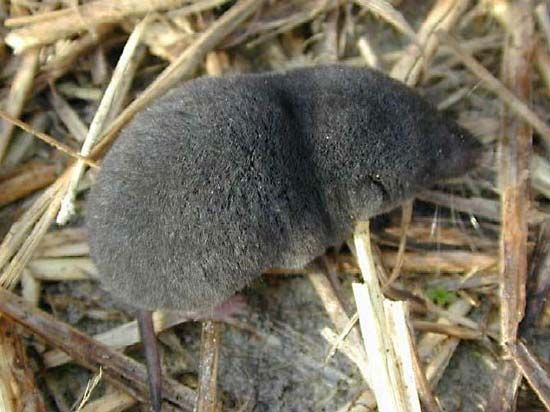
Shrew
While both bats and certain shrews utilize echolocation to navigate and locate prey, their systems differ significantly in complexity and specialization.
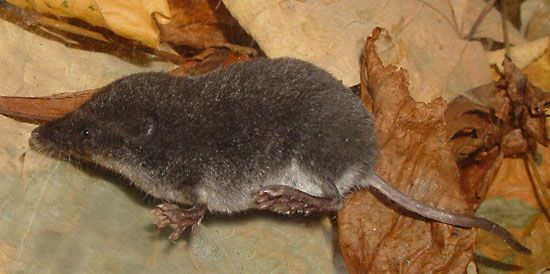
How do shrews’ echolocation abilities compare to those of bats?
While both bats and certain shrews utilize echolocation to navigate and locate prey, their systems differ significantly in complexity and specialization.
Bats, particularly those in the suborder Microchiroptera, possess highly sophisticated sonar systems. They emit high-frequency pulses—ranging from 12 kHz to over 150 kHz—produced by the larynx and emitted through the mouth or nose. These pulses are intricately modulated in frequency and duration to track moving targets, avoid obstacles, and distinguish between objects with remarkable precision. Their auditory systems are specialized for high-frequency sensitivity, often featuring large external ears and an acoustically isolated otic complex to enhance signal processing.1
In contrast, the use of echolocation by shrews, such as the short-tailed shrew, is less extensively documented. Shrews utilize a repertoire of squeaks, clicks, and ultrasonic sounds to navigate their environment and locate prey. While evidence of their echolocation capabilities exists, it is considered more limited compared to the highly evolved systems found in bats and toothed whales.23

What are the key physical characteristics that distinguish shrews from other small mammals?
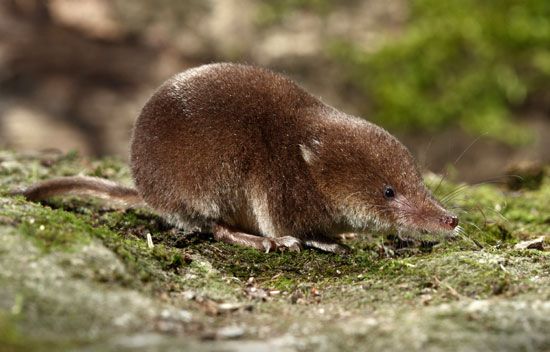
“True” shrews (family Soricidae) are small insectivores distinguished by several specific physical traits that set them apart from other small mammals:
- Mobile Snout: They possess a flexible, elongated snout covered with long, sensitive whiskers that overhangs the lower lip.5
- Specialized Dentition: Shrews have 26 to 32 teeth that are never replaced during their lifetime. Their large incisors are uniquely adapted for grabbing prey, with the upper pair hooked and the lower pair extending forward. These teeth may be white or red-tipped.56
- Scent Glands: Many species produce a foul odor, which is secreted by scent glands located on their flanks and other parts of the body.5
- Body Structure: They typically have cylindrical bodies, short limbs, and clawed digits. While their eyes are generally small, they are often visible within the fur, and their ears are usually rounded and moderately large, though these features are reduced in burrowing or aquatic species.57
- Internal Anatomy: The male’s testes are retained within the abdominal cavity rather than descending. Additionally, while their cerebral hemispheres are small, their olfactory lobes are prominent, indicating an enhanced sense of smell.5
How do shrews’ metabolic rates compare to other mammals, and what impact does this have on their behavior?
Shrews are characterized by exceptionally high metabolic rates compared to many other mammals. This physiological intensity is so extreme that these animals may consume more than their own body weight in food every single day to sustain their energy needs. Because of this rapid rate of living, shrews cannot survive for more than a few hours without eating, which dictates a lifestyle defined by a constant, frenetic search for prey.8
This high metabolic demand is a key factor in the biological constraints of the species. In the broader context of mammalian biology, there is a known inverse relationship between metabolic rate and longevity: as the rate of living increases, life span tends to decrease when other factors like brain and body size are held constant. Consequently, the shrew’s need for near-continuous foraging is not merely a behavioral preference but a fundamental requirement for survival, leaving them little time for rest and driving their highly active, year-round existence.108
How have shrews evolved over time, and what are their closest living relatives?
The evolutionary history of “true” shrews (family Soricidae) is extensive, with fossil records dating back to the Middle Eocene Epoch (approximately 48 to 41.3 million years ago) in North America. Over millions of years, these insectivores have successfully diversified and spread across most of the globe, with fossils subsequently appearing in Asia, Europe, Africa, and South America.5
Regarding their classification and relationships, it is important to distinguish true shrews from other small mammals that share the name but are not closely related. For instance, elephant shrews belong to the order Macroscelidea and are not true insectivores. Similarly, otter shrews are members of the family Tenrecidae, and tree shrews are also distinct from the Soricidae family.7512
True shrews are classified within the order Soricimorpha. While their specific evolutionary lineage remains a subject of study, they are grouped among other insectivores, a category that historically included various small, primitive-looking mammals. However, the exact evolutionary relationships between shrews and other groups—such as moles, solenodons, and hedgehogs—often remain unresolved in scientific literature.513
Sources
- bat - Orientation — Encyclopædia Britannica
- short-tailed shrew — Encyclopædia Britannica
- Echolocation — Encyclopædia Britannica
- sound reception - Echolocation in other mammals — Encyclopædia Britannica
- shrew — Encyclopædia Britannica
- tree shrew — Encyclopædia Britannica
- shrew - Classification and paleontology — Encyclopædia Britannica
- shrew - Form and function — Encyclopædia Britannica
- white-toothed shrew — Merriam-Webster
- shrew - Natural history — Encyclopædia Britannica
- aging - Species differences in longevity and aging — Encyclopædia Britannica
- mole shrew — Merriam-Webster
- elephant shrew — Encyclopædia Britannica
- hedgehog — Encyclopædia Britannica
- white-toothed shrew — Encyclopædia Britannica
- otter shrew — Encyclopædia Britannica
Published on · 3 min read