Mole
Moles have evolved a suite of specialized physical and sensory adaptations to thrive in an underground environment. Their bodies are typically cylindrical…
How have moles adapted to their underground lifestyle?
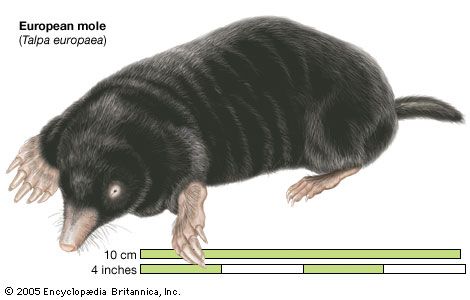
Moles have evolved a suite of specialized physical and sensory adaptations to thrive in an underground environment. Their bodies are typically cylindrical with short, stocky limbs, and they are covered in short, dense, velvety fur that offers no resistance when moving forward or backward through narrow tunnels.12
Key adaptations include:
- Locomotion: Most moles possess powerful, outward-rotated forelimbs equipped with broad, spadelike claws for efficient digging. They move through soil using a breaststroke-like motion, shearing earth from the tunnel face.13
- Sensory Systems: Because vision is of limited use underground, moles have tiny, often hidden eyes and lack external ears. Instead, they rely on acute senses of touch and hearing. Their muzzles are highly mobile and covered in thousands of microscopic tactile structures called Eimer’s organs, which help them navigate and detect prey.12
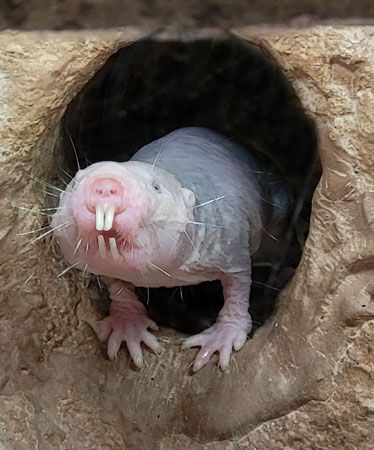
- Physiological Resilience: Some species, such as the naked mole rat, have evolved unique metabolic pathways to survive in low-oxygen, high-carbon-dioxide environments, allowing them to remain active even when oxygen levels are insufficient for other mammals.4
What different species of moles exist, and where are they found?
There are 42 recognized species of “true” moles belonging to the family Talpidae, which are categorized into three subfamilies. These animals are primarily found in temperate regions across the Northern Hemisphere, ranging from North America to Europe and eastward through Asia to Japan and the Malayan Peninsula.2
Classification and Distribution
The family Talpidae is divided into the following groups:
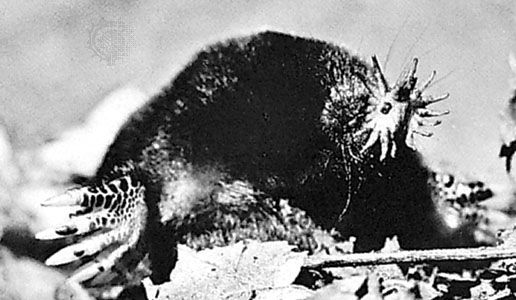
- Subfamily Talpinae: This is the largest group, containing 36 species across 14 genera found in Asia and North America. It includes the European mole (Talpa), East Asian moles (Mogera), western American moles (Scapanus), and the unique star-nosed mole (Condylura), among others.2
- Subfamily Uropsilinae: This group consists of 4 species of Asiatic shrew moles (Uropsilus) found in central China and Myanmar.2
- Subfamily Desmaninae: Comprising 2 species, the Russian desman and the Pyrenean desman, these amphibious moles are native to Europe and western Asia.2
While many species are highly specialized for burrowing, others like the shrew moles are less specialized and spend more time aboveground. Desmans are uniquely adapted for an aquatic lifestyle, foraging underwater.2
How do moles’ sensory systems differ from other mammals?
Moles possess sensory systems highly specialized for their subterranean existence, differing significantly from most other mammals that rely primarily on vision. Because they live in dark, underground environments, moles have evolved to prioritize touch and hearing over sight.1
Key differences in their sensory adaptations include:
- Tactile Specialization: Moles possess a highly mobile, piglike muzzle tipped with thousands of microscopic tactile structures known as Eimer’s organs. These organs, along with sensory hairs located on the muzzle and across the body, allow them to detect and differentiate minute details of their environment and prey.1
- Unique Sensory Capabilities: The star-nosed mole exhibits an extraordinary adaptation: its muzzle features 22 fleshy, constantly moving tentacles. These are sensitive not only to touch and ground vibrations but also to the electricity generated by the bodies of their prey.1
- Vision and Hearing: Unlike many surface-dwelling mammals, moles have poorly developed, tiny eyes often hidden within their fur. Most species also lack external ears, relying instead on acute hearing and a keen sense of smell to navigate and communicate, often marking their tunnels with scent-gland secretions.1
What do moles typically eat, and how do they find their food?
Moles are primarily insectivores that rely on their acute senses of touch and smell to locate food in their subterranean environments. Their diet and foraging methods vary by species and habitat:1
- Terrestrial Moles: These moles primarily consume earthworms, but their diet also includes other invertebrates, small mammals, seeds, fungi, and succulent plant parts like roots, tubers, and bulbs. They detect and differentiate their prey using thousands of microscopic tactile structures called Eimer’s organs located on their highly mobile, piglike muzzles, as well as sensory hairs on their bodies.1
- Amphibious Moles: Species such as desmans forage underwater, feeding on aquatic invertebrates, fish, and amphibians.1
- Specialized Hunters: The star-nosed mole uses its unique muzzle, which features 22 constantly moving, highly sensitive tentacles, to detect not only touch and vibrations but also the electricity generated by the bodies of its prey.1
Some moles are so active that they can consume more than their own body weight in food every day. While they typically hunt within their tunnel systems, some species occasionally venture to the surface to forage.1
Sources
- marsupial mole — Encyclopædia Britannica
- mole — Encyclopædia Britannica
- The Naked Mole Rat’s Latest Superpower — Encyclopædia Britannica
- Burrowing — Encyclopædia Britannica
- Locomotion - Fossorial vertebrates — Encyclopædia Britannica
- life - Photosensitivity , audiosensitivity, thermosensitivity, chemosensitivity, and magnetosensitivity — Encyclopædia Britannica
- mammal - Food habits — Encyclopædia Britannica
Published on · 3 min read