Silk Spider
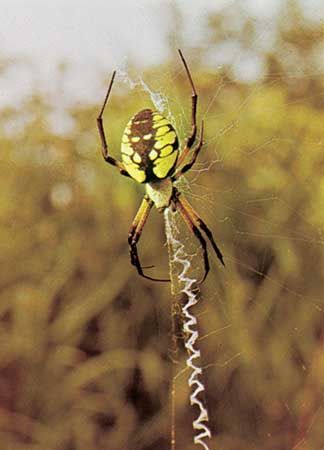
Silk spiders, which belong to the genera Nephila and Trichonephila, are primarily found in the warmer regions of the world. Their distribution is widespread…
Where are silk spiders typically found and what is their habitat like?
Silk spiders, which belong to the genera Nephila and Trichonephila, are primarily found in the warmer regions of the world. Their distribution is widespread, with various species inhabiting areas such as sub-Saharan Africa, Madagascar, Asia, the southeastern United States, and regions of Central and South America.12
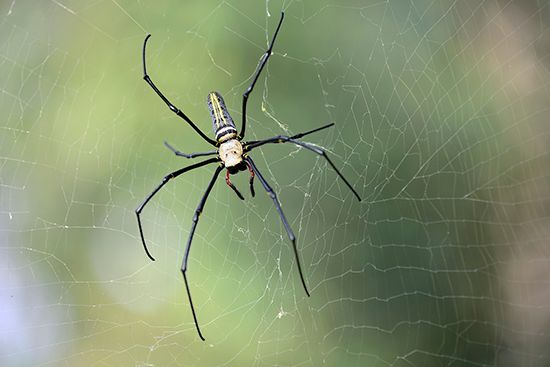
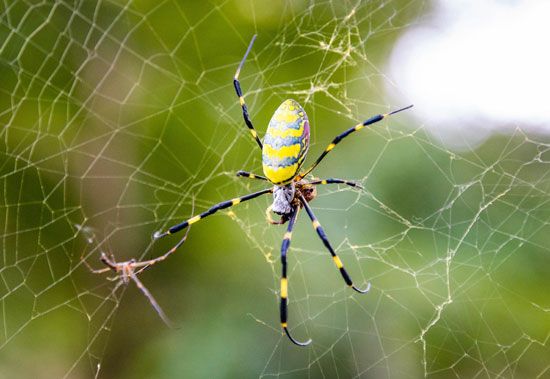
Regarding their habitat, these spiders are typically found in humid environments, such as forests, where they often construct their webs along trails. They are well-known for creating massive, golden-colored orb webs that can measure one meter or more in diameter. These impressive structures are suspended between trees using strong guy lines. While juvenile silk spiders build complete orb webs, older individuals often construct only the bottom portion of the web, which they maintain and repair regularly.31
What are the different species of silk spiders and how are they classified?
Silk spiders are classified within the genera Nephila and Trichonephila. These spiders are recognized for their significant sexual dimorphism, where females are substantially larger and more colorful than the dwarf males.1
Several notable species within these genera include:
- Nephila komaci: Identified in 2009, this species is among the largest known silk spiders, with females possessing a leg span of approximately 12 cm (4.7 inches).1
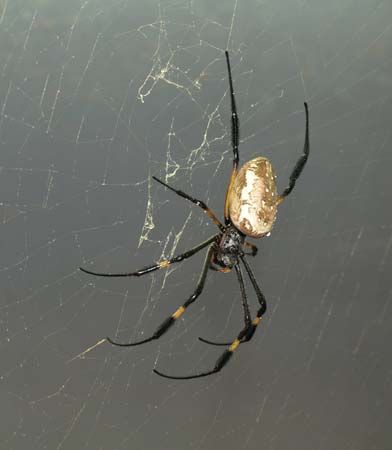
- Nephila senegalensis: Commonly known as the banded-legged golden orb-web spider, it is widely distributed across sub-Saharan Africa.1
- Trichonephila clavipes: Often called the banana spider or golden silk spider, this species is native to the southeastern United States and regions of Central and South America.12
- Trichonephila clavata: Known as the joro spider, this species is native to Asia and has been introduced to other regions.1
These spiders are categorized as orb weavers, a group characterized by their ability to produce at least seven different types of silk from specialized glands.13
What is the life cycle of a silk spider, from egg to adult?
The life cycle of a silk spider follows the general developmental pattern of most spiders, progressing from egg to maturity through a series of growth stages.
Eggs and Development
Female silk spiders produce egg sacs constructed from thick layers of silk. These sacs protect the eggs until they hatch. Upon emerging, the young spiderlings are independent and resemble miniature versions of adults, though they lack developed reproductive organs.56
Growth and Maturation
As they grow, spiderlings must molt—shedding their old exoskeleton—to increase in size. This process is hazardous, as the spider is vulnerable until its new cuticle hardens.6
- Sexual Dimorphism: Silk spiders exhibit significant size differences. Males are dwarfs, typically maturing faster with fewer molts (2 to 8) compared to females, which require more molts (6 to 12) to reach their larger adult size.61
- Behavioral Shifts: Juvenile silk spiders build complete orb webs, but as they age, they transition to constructing only the bottom portion of the web. Adult males stop building webs entirely, instead living within the webs of females to attempt mating.1
What is a silk spider and how does it differ from other arachnids?
A silk spider is any member of the genera Nephila and Trichonephila, which are renowned for producing exceptionally strong, golden-colored silk used to construct massive orb webs that can exceed one meter in diameter.1
Differences from Other Arachnids
While all spiders are arachnids, silk spiders possess distinct characteristics that set them apart from other members of the order Araneae and the broader arachnid class:
- Sexual Dimorphism: Silk spiders exhibit extreme size differences. Females are large and colorful, while males are dwarfs—often measuring only a fraction of the female’s size—and do not build webs as adults, instead living within the female’s web.1
- Web Construction: Unlike most orb weavers that rebuild their webs daily, adult silk spiders often construct only the bottom portion of their webs, which they repair rather than replace entirely.1
- Silk Specialization: While many arachnids produce silk, silk spiders are true specialists. They possess at least seven different types of silk glands, allowing them to produce varied silk types for specific functions, such as wrapping prey, creating structural frame threads, or forming egg sacs.7
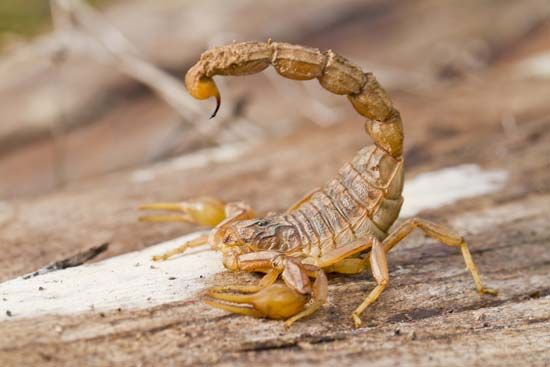
- Anatomy: Like all spiders, they are distinguished from other arachnids (such as scorpions or ticks) by having two main body sections—the cephalothorax and the abdomen—connected by a narrow stalk called the pedicel, and they possess specialized silk-producing organs known as spinnerets.38
Sources
- silk spider — Encyclopædia Britannica
- golden silk spider — Merriam-Webster
- spider - Silk — Encyclopædia Britannica
- Nephila — Merriam-Webster
- spider - Eggs and egg sacs — Encyclopædia Britannica
- spider - Maturation — Encyclopædia Britannica
- list of spiders — Encyclopædia Britannica
- spider: Top Questions — Encyclopædia Britannica
- spider - External features — Encyclopædia Britannica
- orb weaver — Encyclopædia Britannica
- sericulture — Encyclopædia Britannica
Published on · 4 min read