Orb Weaver
An orb weaver is any spider belonging to the family Araneidae (also known as Argiopidae or Epeiridae). This group is widely distributed and includes more…
What is orb weaver?
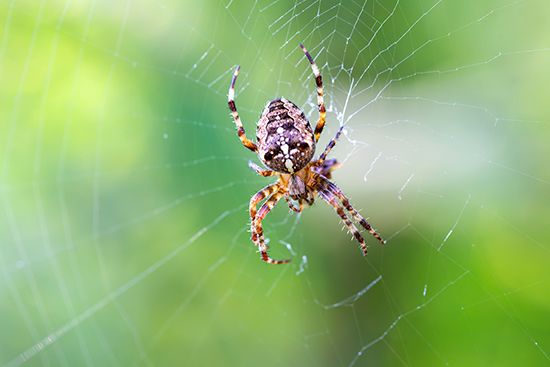
An orb weaver is any spider belonging to the family Araneidae (also known as Argiopidae or Epeiridae). This group is widely distributed and includes more than 2,840 known species across approximately 167 genera.1
These spiders are best known for constructing elaborate, circular, wheel-shaped webs that are often visible on dewy mornings. This design is highly efficient, allowing the spider to cover a large area using a minimal amount of silk. Most orb weavers rebuild these webs daily, as the sticky ensnaring threads lose their effectiveness over time.23
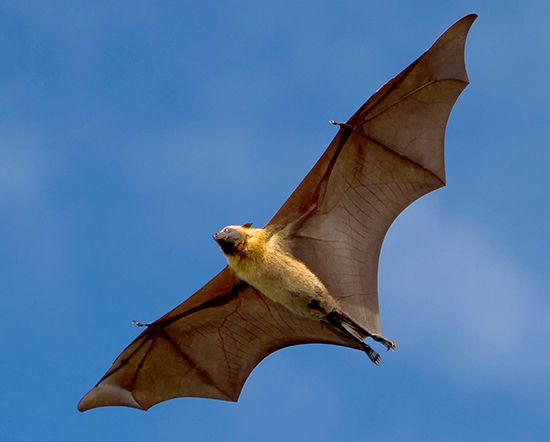
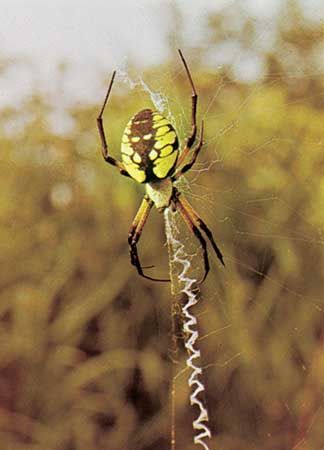
While they primarily feed on insects, some large species—such as those in the genera Araneus, Eriophora, and Parawixia—are known to prey on small vertebrates, including bats. Notable members of the family include the brightly colored garden spiders, which are commonly found in grassy areas colored garden spiders, which are commonly found in grassy areas.14
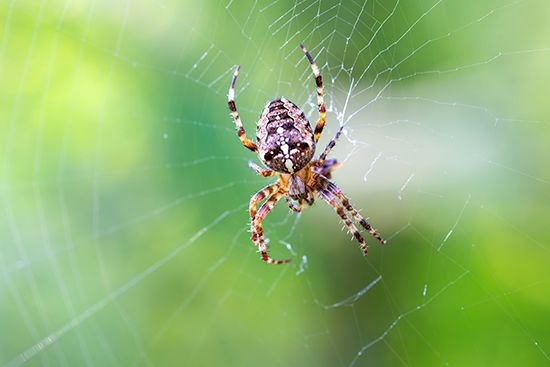
How do spiders avoid getting stuck in their own webs?
The exact mechanisms that allow spiders to avoid becoming entangled in their own webs are not yet fully understood by scientists. However, researchers have identified several factors that likely contribute to this ability:5
- Strategic Movement: Spiders are highly familiar with the architecture of their webs. They often move along the non-sticky structural threads—such as the radial spokes or the frame—rather than the sticky spiral threads designed to ensnare prey.35
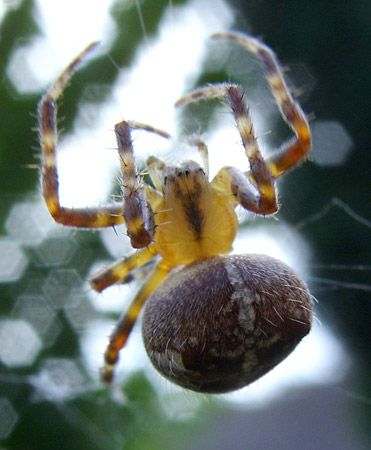
- Physical Adaptations: The legs of web-building spiders are equipped with specialized structures, including an extra claw, which may assist in navigating the silk threads. Additionally, their legs are covered in hairlike bristles called setae, which may help minimize contact with the adhesive glue on the web.6
- Chemical and Behavioral Factors: It is possible that spiders possess specialized coatings or behavioral patterns that prevent them from adhering to their own silk. Because the sticky silk is often applied only to specific sections of the web, the spider can effectively navigate the dry, non-adhesive areas.35
While these observations provide insight, the precise biological and chemical processes remain a subject of ongoing scientific study.5
What other types of spider webs exist besides orb webs?
While orb webs are the most recognizable, weaving spiders utilize several other distinct architectural strategies to capture prey. The four primary categories of spiderwebs include:9
- Orb Webs: Characterized by their familiar, circular, wheel-shaped spiral patterns, these webs are highly efficient at ensnaring flying insects.9
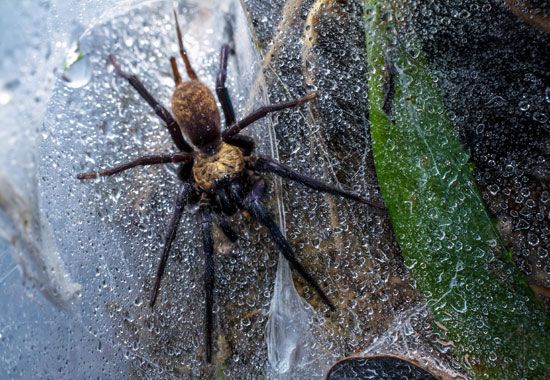
- Sheet Webs: These webs form flat, dense mats of silk that can be dome- or cup-shaped. The spider typically resides on the lower side of the web, often between layers of webbing, to wait for prey.910
- Tangle Webs: Also known as cobwebs, these structures are irregular and sticky. They are designed to ensnare insects that stumble into the complex, messy network of threads.911
- Funnel Webs: These webs feature a flat surface that narrows into a tubular retreat at one end. The spider waits in the funnel, using its legs to detect vibrations from prey landing on the web’s surface.912
Each of these designs represents a unique evolutionary strategy for survival in different environments, from grass and vegetation to the corners of buildings.912
Why do some orb weavers rebuild their webs every day?
Orb weavers frequently rebuild their webs because the sticky silk used to capture prey loses its effectiveness over time. The glue-like substance coating the ensnaring threads eventually dries out, rendering the web less capable of trapping insects.53
Additionally, webs are often subjected to physical damage during the process of capturing prey or due to environmental factors. While spiders may perform minor repairs to damaged sections, the daily reconstruction ensures the web remains a highly efficient trap. Because the web acts as an air filter, maintaining its structural integrity and stickiness is vital for the spider’s survival. For certain families, such as Araneidae and Tetragnathidae, the regular replacement of the sticky spiral is a necessary maintenance routine to keep the web functional.53
Sources
- orb weaver — Merriam-Webster
- orb weaver — Encyclopædia Britannica
- spider - Spiderwebs — Encyclopædia Britannica
- spider - Importance — Encyclopædia Britannica
- How do spiders make circular webs? — Encyclopædia Britannica
- spider - Silk — Encyclopædia Britannica
- arachnid - Locomotion — Encyclopædia Britannica
- spider - External features — Encyclopædia Britannica
- Types of Spiderwebs — Encyclopædia Britannica
- sheet-web weaver — Encyclopædia Britannica
- funnel weaver — Encyclopædia Britannica
- cobweb — Merriam-Webster
- webs — Merriam-Webster
Published on · 3 min read