Silkworm Moth
The domesticated silkworm moth (Bombyx mori) is a distinct species that has undergone complete domestication through thousands of years of sericulture, to…
What are the main differences between wild silkworm moths and domesticated ones?
The domesticated silkworm moth (Bombyx mori) is a distinct species that has undergone complete domestication through thousands of years of sericulture, to the point that it is no longer found in the wild. Its closest relative is the wild silk moth (Bombyx mandarina).1
The primary differences between the domesticated silkworm and its wild counterparts are rooted in the profound biological changes caused by artificial selection. Key characteristics of the domesticated Bombyx mori include:
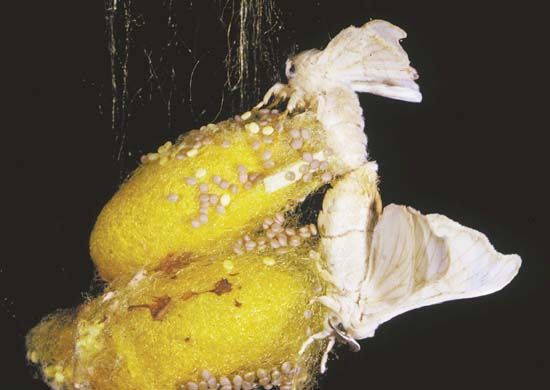
- Loss of Flight: Domesticated adult silkworms are unable to fly.1
- Reduced Adulthood: Adult moths have reduced or absent mouthparts and do not eat during their brief two-to-three-day lifespan.1
- Dependency: Because they have been bred for specific traits like silk production, they are entirely dependent on human care for survival and reproduction.12
- Reproductive Changes: Unlike wild ancestors that follow strict seasonal reproduction rhythms, domesticated species often exhibit altered reproductive cycles.3
While wild moths retain traits necessary for survival in natural environments, the domesticated silkworm has been specialized to produce large, continuous cocoons of silk, a trait prioritized by humans over the insect’s ability to survive independently.14
How do silkworm moths produce silk, and why is it valuable?
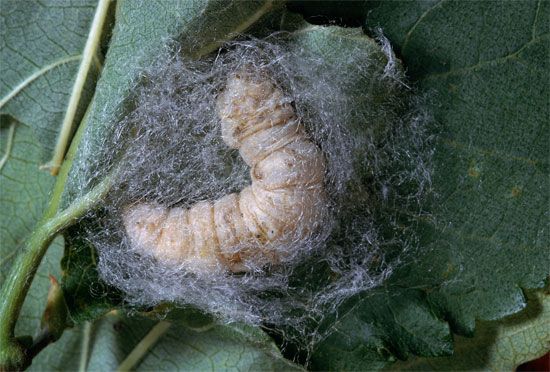
Silkworm moths, specifically the domesticated Bombyx mori, produce silk through a specialized biological process during their larval stage. As the caterpillar prepares to pupate, it secretes a protein called fibroin from two large glands. This liquid emerges through a single exit tube in the head known as the spinneret, hardening upon contact with air to form twin filaments. Simultaneously, a second pair of glands secretes sericin, a gummy substance that cements these filaments together into a single, continuous strand that can reach lengths of 600 to 900 meters.352
Silk is highly valued as a luxury material due to its unique physical properties:
- Texture and Appearance: Once the sericin is removed through a process called degumming, the remaining fiber is soft, lustrous, and semitransparent.35
- Durability: It possesses excellent strength, elasticity, and moisture-absorbent qualities, making it ideal for fine textiles and clothing.35
- Versatility: It dyes exceptionally well and can be woven into intricate patterns, such as damask or brocade.315
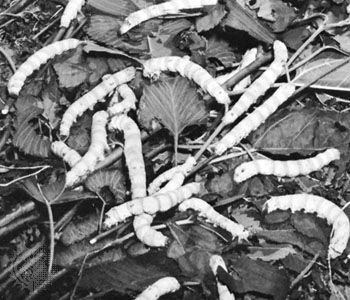
What are the primary species of silkworm moths used in silk production?
The primary species used in commercial silk production is the domesticated silkworm moth, known as Bombyx mori. This species, which belongs to the family Bombycidae, has been utilized in sericulture for thousands of years.137
Through extensive domestication, Bombyx mori has become entirely dependent on human care and is no longer found in the wild. Its larvae are specifically raised on a diet of mulberry leaves to produce the long, continuous filaments of silk that form their cocoons.123
While Bombyx mori is the standard for the silk industry, modern scientific advancements have also introduced genetically modified silkworms. By incorporating spider silk genes into their genome, these modified silkworms produce a composite silk that is notably stronger, tougher, and more elastic than that produced by traditional domesticated strains.12
How long have humans been cultivating silkworm moths for silk?
Humans have been cultivating silkworm moths for sericulture for thousands of years, with the practice originating in ancient China. Historical records indicate that the industry existed at least by the middle of the 3rd millennium BCE. According to Chinese legend, the art was taught to the people by the wife of the mythological Yellow Emperor, Huangdi.25
For centuries, the techniques for producing silk remained a closely guarded secret within Asia. While silk products reached the Mediterranean via the Silk Road as early as the Han dynasty, the actual cultivation of the silkworm did not reach the Byzantine Empire until approximately 550 CE, when two monks smuggled the insects out of China in bamboo canes.5
Sources
- silkworm moth — Encyclopædia Britannica
- How is silk made? — Encyclopædia Britannica
- sericulture — Encyclopædia Britannica
- Domestication - Biological and genetic changes — Encyclopædia Britannica
- silk — Encyclopædia Britannica
- Cocoon — Encyclopædia Britannica
- silkworm — Merriam-Webster
Published on · 3 min read