Processionary Caterpillar
A processionary caterpillar is the larval stage of certain moths, primarily within the genus Thaumetopoea. These hairy caterpillars are best known for their…
What is processionary caterpillar?
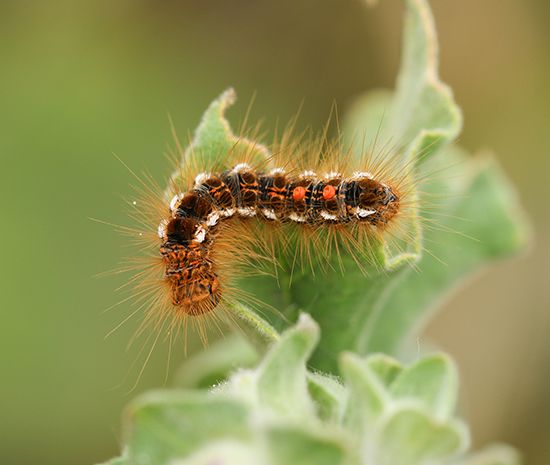
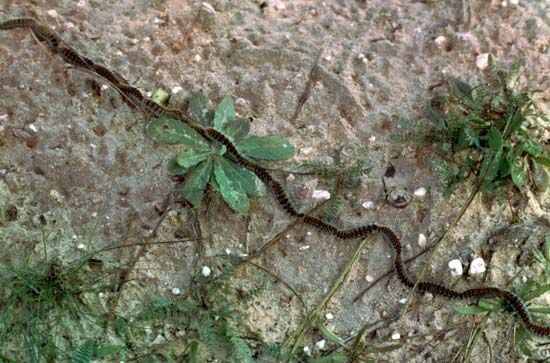
A processionary caterpillar is the larval stage of certain moths, primarily within the genus Thaumetopoea. These hairy caterpillars are best known for their unique social behavior: they live in communal silken webs and travel to food sources in distinct, single-file columns. During these movements, each larva leaves behind a silken thread to guide the others.1
While the genus Thaumetopoea is the most well-known, this behavior is also observed in other members of the subfamily Thaumetopoeinae. For example, the Australian bag-shelter moth (Ochrogaster lunifer) and the southern African reticulate bagnest moth (Anaphe reticulata) both exhibit this characteristic processionary movement when emerging from their nests to feed. Adult moths of the genus Thaumetopoea are typically dull-colored and lack a feeding organ, with females using an abdominal hair tuft to cover their egg masses.1
How do processionary caterpillars use silk to move in columns?
Processionary caterpillars, which belong to the genus Thaumetopoea and other members of the subfamily Thaumetopoeinae, utilize silk as a navigational aid during their collective movements.
When these caterpillars emerge from their communal silken nests to travel toward a food source, they move in distinct, single-file columns. During this process, each larva deposits a silken thread along the path. This trail of silk serves as a guide for the rest of the group, ensuring the column remains intact and follows the same route to their destination.2
What makes these caterpillars harmful to humans and animals?
What are some other unique defense mechanisms used by caterpillars?
Caterpillars have evolved a diverse array of defense mechanisms to survive against predators. Beyond simple camouflage, these strategies include:
- Chemical Defenses: Many caterpillars sequester toxins from their host plants, such as the cardenolides found in milkweed, which make them poisonous to predators. Others produce their own chemical deterrents, such as formic acid or foul-smelling substances released from specialized organs like the osmeteria.56
- Physical Deterrents: Some species are covered in dense, irritating hairs or barbed spines that can cause pain and swelling in predators. Others use “reflex bleeding,” where they exude toxic or repellent fluids from their body joints when disturbed.36
- Acoustic Signaling: Certain caterpillars, such as those of the giant peacock moth, produce ultrasonic chirps to deter predators. Others create vibratory signals by drumming their mandibles or scratching their legs against leaves to defend their territory.5
- Deceptive Appearances: Many caterpillars utilize false eyespots to startle or confuse attackers. Others construct protective cases out of silk, leaves, or debris to hide their bodies, or adopt a rigid, deathlike posture to complement their cryptic coloration.653
Sources
- processionary caterpillar — Merriam-Webster
- processionary caterpillar — Encyclopædia Britannica
- caterpillar — Encyclopædia Britannica
- Hormone - Pheromones — Encyclopædia Britannica
- insect - Protection from enemies — Encyclopædia Britannica
- Lepidoptera - Protection against danger — Encyclopædia Britannica
Published on · 2 min read