Skagerrak
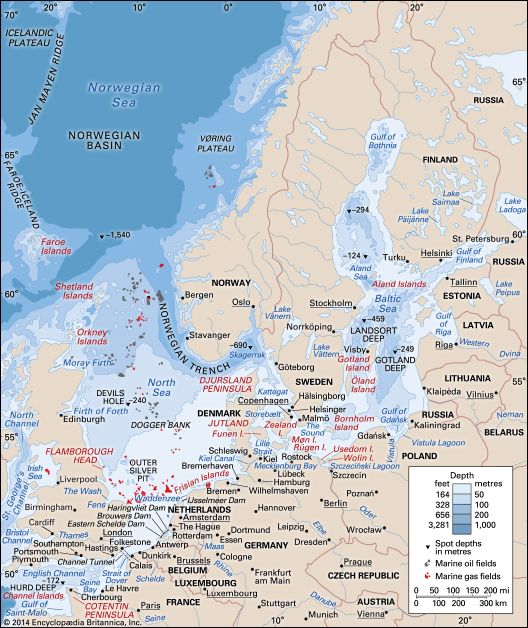
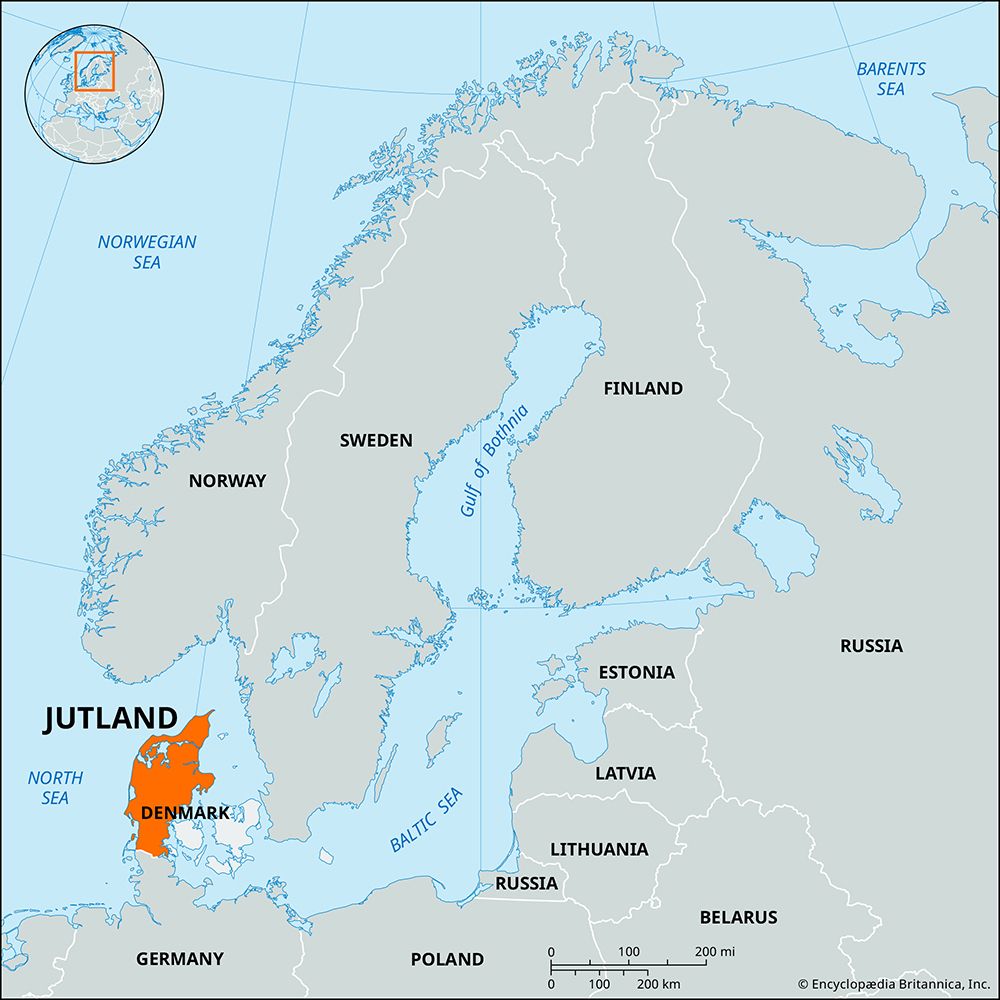
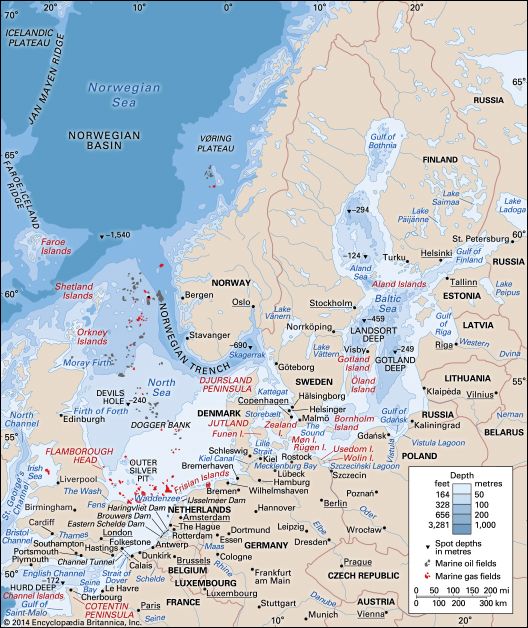
The Skagerrak is a rectangular arm of the North Sea that stretches between Norway to the north and the Jutland peninsula of Denmark to the south.
What is Skagerrak?
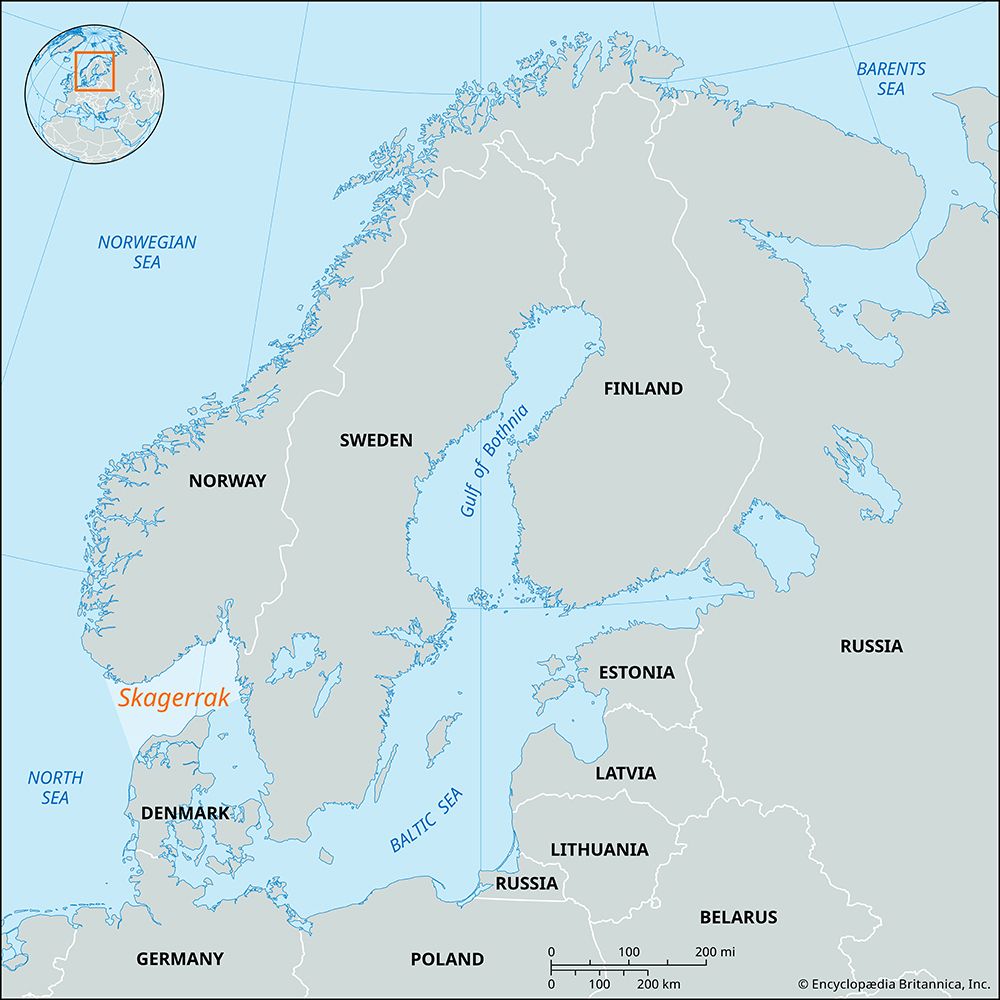
The Skagerrak is a rectangular arm of the North Sea that stretches between Norway to the north and the Jutland peninsula of Denmark to the south.1
Measuring approximately 150 miles (240 km) in length and 80–90 miles (130–145 km) in width, the waterway narrows between Cape Skagen and the Sweden coast before connecting to the Kattegat and eventually the Baltic Sea. While the area is relatively shallow along the Danish coast, it reaches depths exceeding 2,000 feet (600 meters) near Norway.1
The Skagerrak serves as a vital shipping lane, supporting major ports such as Oslo and Kristiansand. Historically, it is also notable as the site near which the Battle of Jutland occurred during World War I.1
What is the difference between the Skagerrak and the Kattegat?
The Skagerrak and the Kattegat are both vital straits connecting the North Sea and the Baltic Sea, but they differ in geography, depth, and orientation.21
Feature
Skagerrak
Kattegat
Location
Between
Norway
and the
Jutland
peninsula of
Denmark
Between the Jutland peninsula,
Denmark
’s islands, and
Sweden
Orientation
Trends southwest to northeast
Trends north-south
Depth
Deep, reaching over 2,000 feet (600 meters) near Norway
Relatively shallow, with a mean depth of 84 feet (26 meters)
Salinity
Higher (direct arm of the North Sea)
Lower (approx. 30 parts per 1,000 due to Baltic freshwater inflow)
While the Skagerrak acts as a broader, deeper gateway to the North Sea, the Kattegat serves as a narrower transition zone that links the Skagerrak to the Baltic Sea via the Danish sounds.21
How does the Baltic Sea connect to the North Sea?
The Baltic Sea connects to the North Sea through a series of straits that transition through the Kattegat and the Skagerrak.23
The connection functions as follows:
- The Baltic to the Kattegat: Water flows from the Baltic Sea into the Kattegat through three primary passages located within the Danish archipelago: The Sound (Øresund), the Great Belt, and the Little Belt.24
- The Kattegat to the North Sea: The Kattegat serves as a transition zone that links these southern straits to the Skagerrak in the north.23
- The Skagerrak: This deep inlet of the North Sea acts as the final gateway, separating southern Norway from northern Jutland and opening directly into the North Sea.23
Hydrologically, this system facilitates a complex exchange: a surface flow of fresher water exits the Baltic Sea toward the North Sea, while a deeper countercurrent of denser, saltier water flows inward from the North Sea into the Baltic.25
What happened during the Battle of Jutland?
The Battle of Jutland (May 31–June 1, 1916) was the largest naval engagement of World War I, fought between the British Grand Fleet and the German High Seas Fleet near the Skagerrak.1011
Strategic Context
German Admiral Reinhard Scheer aimed to lure and destroy a portion of the British fleet. However, the British intercepted the German signals, allowing Admiral John Jellicoe to mobilize the Grand Fleet to intercept them.11
Key Maneuvers
The battle featured the tactical maneuver known as “crossing the T,” where the British fleet positioned itself to bring full broadsides against the German line. Despite this advantage, German ships survived due to superior construction and disciplined crews, while British efforts were hampered by poor shell quality. Scheer twice executed difficult 180-degree turns to escape traps, eventually retreating under the cover of darkness.11
Outcome
While both sides claimed victory, the battle resulted in higher British losses in ships and men. However, the strategic balance remained unchanged; the British maintained North Sea dominance, and the German fleet largely remained in port for the remainder of the war.1112
Sources
- Skagerrak — Encyclopædia Britannica
- Kattegat — Encyclopædia Britannica
- Baltic Sea — Encyclopædia Britannica
- Great Belt — Encyclopædia Britannica
- Little Belt — Encyclopædia Britannica
- Baltic Sea - Hydrology — Encyclopædia Britannica
- Øresund — Merriam-Webster
- Baltic Sea - Physiography — Encyclopædia Britannica
- The Sound — Encyclopædia Britannica
- Battle of Jutland — Encyclopædia Britannica
- World War I - The Battle of Jutland — Encyclopædia Britannica
- Battle of Jutland - Outcome and aftermath — Encyclopædia Britannica
Published on · 3 min read