Skeena River
The Skeena River is a significant waterway located in western British Columbia, Canada. Rising in the Skeena Mountains, it flows approximately 360 miles (580…
What is Skeena River?
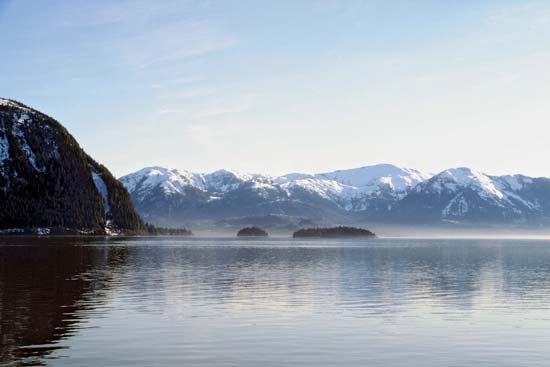
The Skeena River is a significant waterway located in western British Columbia, Canada. Rising in the Skeena Mountains, it flows approximately 360 miles (580 km) in a generally southwestward direction before emptying into the Pacific Ocean at Chatham Sound, south of Prince Rupert. The name “Skeena” is derived from an Indigenous word meaning “divide”.12
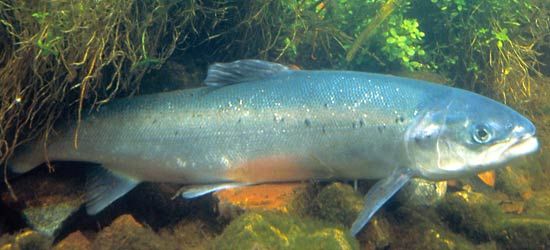
The river is a vital salmon-fishing stream, supporting several canneries near its mouth. Its course is fed by major tributaries, including the Babine and Bulkley rivers. The lower sections of the Skeena and Bulkley rivers are closely followed by the Canadian National Railway and the Yellowhead Highway, which connect communities such as Terrace, Hazelton, and Smithers. Along with other regional waterways like the Nass and Stikine rivers, the Skeena plays a key role in draining the northwestern region of British Columbia into the Pacific.13
What types of salmon spawn in the Skeena River?
The provided information confirms that the Skeena River is an important salmon-fishing stream, but it does not specify the particular species of salmon that spawn there.
Which Indigenous groups have historically lived along the Skeena River?
The Tsimshian people are the primary Indigenous group that has historically inhabited the region along the Skeena River. Their traditional territory spans the mainland and islands surrounding the river, with their social and linguistic divisions closely tied to the river’s geography:1
- Coastal Tsimshian: Historically lived along the lower Skeena River and the adjacent coast.1
- Gitksan (Kitksan): Traditionally occupied the upper reaches of the Skeena River.1
The Tsimshian economy was historically centered on fishing, particularly the seasonal harvesting of migrating salmon and eulachon. Their society was organized into clans and lineages, with each unit maintaining its own hunting and fishing grounds. They are also well-known for their totem poles, which served as memorials to chiefs, and for their elaborate potlatch ceremonies used to validate social status and mark significant community events.1
How do rivers like the Skeena contribute to British Columbia’s hydroelectric power?
British Columbia’s mountainous terrain and high precipitation provide significant potential for hydroelectric power, which has been a primary driver of the province’s economic expansion. While the provided search results highlight major hydroelectric developments on the Columbia River and the Peace River—such as the W.A.C. Bennett Dam—they do not contain information regarding the use of the Skeena River for hydroelectric power generation.56
The development of hydroelectricity in British Columbia has historically involved large-scale construction projects to meet energy demands for industry, such as the aluminum smelter at Kitimat. However, the construction of dams on river systems often raises significant environmental concerns, particularly regarding the impact on salmon populations and the loss of traditional fishing sites. Efforts to mitigate these effects have included the implementation of fish-passage facilities, though the success of such technologies remains a subject of ongoing environmental debate.567
Sources
- Skeena River — Encyclopædia Britannica
- Skeena — Merriam-Webster
- British Columbia - Drainage — Encyclopædia Britannica
- Tsimshian — Encyclopædia Britannica
- British Columbia - Resources and power — Encyclopædia Britannica
- Columbia River - Economy of the Columbia River — Encyclopædia Britannica
- dam - Fish passes — Encyclopædia Britannica
Published on · 2 min read