Skylark
The term "skylark" primarily refers to the skylark (Alauda arvensis), a species of lark known for its rich, sustained song and its habit of singing while in…
What is Skylark?
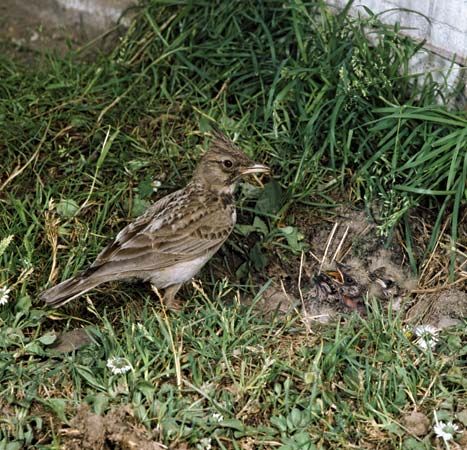
The term “skylark” primarily refers to the skylark (Alauda arvensis), a species of lark known for its rich, sustained song and its habit of singing while in flight. Measuring about 7 inches (18 cm) in length, this ground-dwelling bird features brown plumage streaked with black and is native to the Old World, though it has been introduced to regions including Australia, New Zealand, Hawaii, and British Columbia.12
Beyond its biological classification, the bird serves as a significant literary symbol. “To a Skylark,” a famous 1820 poem by Percy Bysshe Shelley, uses the bird to represent a joyous, divine spirit that exists beyond the reach of human disillusionment and empirical understanding.3
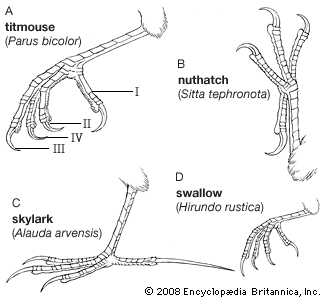
What makes the skylark’s song unique among birds?
The skylark (Alauda arvensis) is distinguished by its rich, sustained song, which is particularly notable because it is frequently uttered while the bird is in flight.14
While many songbirds utilize a complex vocal organ called the syrinx to produce various calls for courtship and territorial defense, the skylark is one of the species that specifically employs a “flight song”. This behavior is common among birds inhabiting open grasslands, where they perform their vocalizations while airborne rather than from a stationary perch. This combination of a melodious, long-continued song and the aerial delivery method has made the skylark a celebrated subject in literature and poetry.5
How do birds use song to communicate in the wild?
Birds utilize birdsong as a sophisticated tool for communication, primarily serving to attract mates and defend territories during the breeding season. These vocalizations are produced by the syrinx, a specialized organ located at the base of the trachea that allows many songbirds to control two independent voices simultaneously.67
The design of these signals is governed by specific social functions:8
- Mate Attraction: These signals are designed for long-range transmission and high species specificity. Because they are often energetically costly to produce, they serve as “honest” indicators of a male’s age, health, and status.89
- Territorial Defense: Owners use songs to inform rivals that an area is occupied. These signals often encode individual identity, allowing neighbors to establish stable boundaries.8
- Alarm Signaling: Birds use distinct vocalizations to warn of threats. “Flee” alarms are often high-frequency whistles that are difficult for predators like hawks to localize, while “assembly” alarms consist of repeated notes designed to be easily located by conspecifics for collective mobbing.8
Communication is both hereditary and learned; for instance, while some birds are born with the ability to produce basic sounds, many must hear adult songs to master their species-specific repertoire.6
Why did Percy Bysshe Shelley choose the skylark as a symbol for his poem?
In his poem “To a Skylark,” Percy Bysshe Shelley chose the skylark as a symbol for the joyous, divine spirit that exists beyond the reach of human experience and empirical understanding.2
Shelley utilized the bird’s unique behavior—swooping high above the earth—to represent a state of existence untainted by the disillusionments, disappointments, and loss of passion inherent in mortal life. By contrasting the bird’s soaring, melodic nature with the limitations of human existence, the poet expresses a longing to transcend human suffering and attain the pure, unburdened joy he perceives in the skylark. This choice of imagery allows the poem to explore themes of transcendence and the sublime, much like how Shelley used the landscape of Mont Blanc in his other works to contemplate inaccessible mysteries.210
Sources
- Skylark — Encyclopædia Britannica
- To a Skylark — Encyclopædia Britannica
- lark — Merriam-Webster
- skylark — Merriam-Webster
- Songbird — Encyclopædia Britannica
- Birdsong — Encyclopædia Britannica
- Syrinx — Encyclopædia Britannica
- Animal communication - Signal design rules — Encyclopædia Britannica
- Animal social behavior - Social interactions involving communication — Encyclopædia Britannica
- Mont Blanc — Encyclopædia Britannica
Published on · 3 min read