Slushball Earth Hypothesis
The Slushball Earth hypothesis is a counter-premise to the Snowball Earth hypothesis, which suggests that Earth was entirely encased in ice from the poles to…
What is Slushball Earth hypothesis?
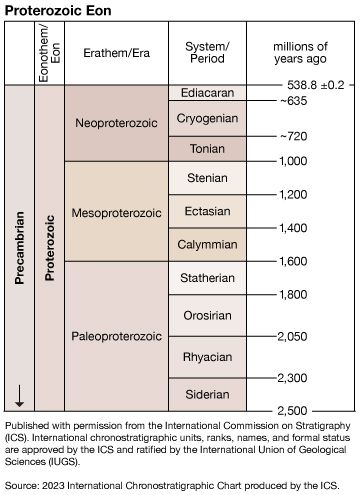
The Slushball Earth hypothesis is a counter-premise to the Snowball Earth hypothesis, which suggests that Earth was entirely encased in ice from the poles to the Equator during extreme Precambrian glaciations.12
Developed by American geologist Richard Cowen, the Slushball Earth model contends that while massive ice sheets covered the continents, the planet was not completely frozen. Instead, it proposes that regions near the Equator featured open seas draped only by a thin, watery layer of ice. This distinction is significant because, under the Slushball scenario, photosynthetic organisms in these ice-free or low-ice areas could have continued to capture sunlight efficiently, allowing them to survive periods of extreme cold that might have otherwise been lethal in a total “Snowball” state.12
How do scientists use tillites to identify ancient glaciations?
Scientists use tillites as key indicators of past glaciations because they represent the lithified, or hardened, form of glacial till—the unsorted, unstratified debris deposited directly by continental ice sheets.56
To identify these ancient glacial signatures, researchers look for several distinct physical characteristics:
- Matrix-Supported Fabric: Tillites are a type of diamictite, characterized by coarse, angular, or subangular rock fragments “floating” within a fine-grained, unstratified matrix of rock flour or clay.6
- Heterogeneous Composition: These rocks are notoriously diverse in composition, containing a chaotic mix of clasts derived from underlying bedrock without regard to size or stability.6
- Glacial Indicators: The clasts often exhibit specific features resulting from glacial movement, such as polishing, striations (scratches), or faceting caused by grinding while lodged within the ice.67
- Structural Alignment: In some cases, the long axes of the embedded rock fragments show a weak alignment parallel to the direction of the ancient ice flow.67
While tillites provide evidence of widespread glaciation, scientists must distinguish them from “tilloids,” which are similar-looking deposits formed by submarine landslides or gravity-driven flows rather than ice.6
What role did volcanic activity play in ending global ice ages?
Volcanic activity played a critical role in ending global ice ages, particularly during extreme cooling events like those proposed in the Snowball Earth hypothesis.910
The primary mechanism for this warming was the massive outgassing of carbon dioxide by volcanoes. During periods of global glaciation, the planet’s natural carbon dioxide sinks—such as photosynthesis and the weathering of silicate rocks—were significantly dampened because the Earth’s surface was largely encased in ice. As volcanoes continued to release carbon dioxide into the atmosphere, the gas accumulated to levels that eventually enhanced the greenhouse effect, trapping heat and causing the ice sheets to retreat.11109
On longer geologic timescales, the tectonic arrangement of continents also influenced climate. During periods of continental breakup, increased seafloor spreading and subduction led to higher volcanic emissions, which warmed the surface and prevented glaciation. Conversely, when volcanic activity declined, the removal of carbon dioxide through rock weathering could outpace its release, potentially triggering or sustaining cooler climates.212
How does photosynthesis continue in partially frozen oceans?
Photosynthesis continues in partially frozen oceans primarily through the existence of complex ecosystems that thrive within the sea ice itself. As seawater freezes, it traps pockets of liquid brine and nutrients within a matrix of pure ice crystals. These porous and permeable brine channels provide a habitat for algae, which are able to photosynthesize by utilizing the light that penetrates the ice.14
The distribution of these algae varies by region: in the Arctic, they are found primarily at the bottom of the ice, sometimes forming long strands, while in the Antarctic, they inhabit the top, bottom, and interior of the ice. While snow cover and the high albedo of ice can restrict the amount of solar radiation available for these organisms, the ice remains a vital environment for primary production. Furthermore, as the ice melts in the summer, these algae are released into the water, serving as a critical food source for krill and zooplankton and helping to seed phytoplankton blooms in the surrounding ocean.1415
Sources
- Slushball Earth hypothesis — Encyclopædia Britannica
- Climate change - Snowball Earth hypothesis — Encyclopædia Britannica
- Precambrian - Worldwide glaciations — Encyclopædia Britannica
- Precambrian - Glacial sediments — Encyclopædia Britannica
- tillite — Encyclopædia Britannica
- Climate change - Glacial and interglacial cycles of the Pleistocene — Encyclopædia Britannica
- sedimentary rock - Matrix-supported conglomerates — Encyclopædia Britannica
- till — Encyclopædia Britannica
- Cryogenian Period: Top Questions — Encyclopædia Britannica
- Climate change - Volcanic activity — Encyclopædia Britannica
- Ordovician Period - Paleoclimate — Encyclopædia Britannica
- Snowball Earth hypothesis — Encyclopædia Britannica
- Precambrian - Climatic conditions — Encyclopædia Britannica
- sea ice - Ice salinity , temperature, and ecological interactions — Encyclopædia Britannica
- Polar ecosystem - Biological productivity — Encyclopædia Britannica
- sea ice - Interactions with the oceans , atmosphere , and climate — Encyclopædia Britannica
Published on · 3 min read