Snapping Turtle
Snapping turtles have evolved several specialized adaptations to thrive in diverse freshwater environments across North and South America. Their physical…
How have snapping turtles adapted to survive in various environments?
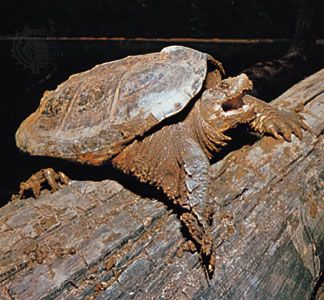
Snapping turtles have evolved several specialized adaptations to thrive in diverse freshwater environments across North and South America. Their physical structure is primarily adapted for a bottom-dwelling lifestyle; unlike the streamlined shells of many other aquatic turtles, snapping turtles possess ridged carapaces that provide effective camouflage in muddy, shallow waters.12
Their feeding strategies are highly specialized. Snapping turtles are opportunistic omnivores, but they are particularly noted for their carnivorous habits. The alligator snapping turtle has evolved a unique, wormlike appendage on the floor of its mouth, which it uses as a lure to attract fish while lying motionless on the riverbed. When threatened, they rely on their powerful, hooked jaws to bite vigorously in self-defense, a behavior that compensates for their inability to withdraw their heads into their shells as fully as other species.314
Furthermore, their sensory systems, including well-developed vision and the ability to detect chemical stimuli, allow them to effectively locate food and avoid predators in aquatic habitats.2
What is the average lifespan of a snapping turtle, and how large can they grow?
The lifespan and size of snapping turtles vary significantly between species.
Alligator Snapping Turtle
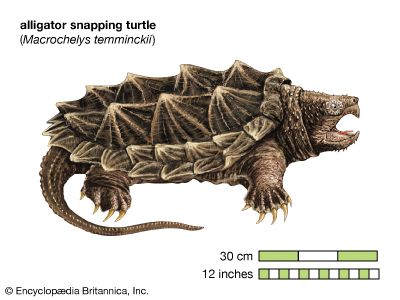
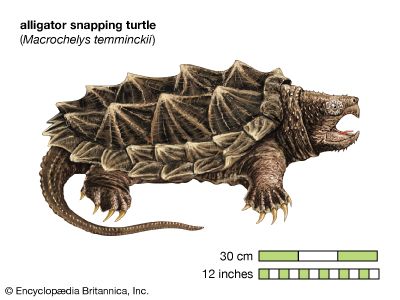
The alligator snapping turtle is the largest freshwater turtle in North America.43
- Size: Adults typically reach shell lengths of 80 to 100 cm (31.5 to 39.3 inches) and weigh between 70 and 90 kg (approximately 154 to 198 pounds).3
- Lifespan: In the wild, they generally live up to 45 years, though they can live significantly longer in captivity, with the oldest recorded individual reaching 70 years of age.3
Common Snapping Turtle
The common snapping turtle is generally smaller than its alligator counterpart.4
- Size: This species typically averages 20 to 30 cm (8 to 12 inches) in shell length and weighs between 4.5 and 16 kg (10 to 35 pounds).4
- Lifespan: While specific average wild lifespans are less frequently cited in general summaries compared to the alligator snapper, they are known to take 10 to 12 years to reach sexual maturity.8
How do snapping turtles differ from other turtle species in terms of behavior and appearance?
Snapping turtles (family Chelydridae) are distinct from many other turtle species due to their unique physical characteristics and defensive behaviors.
Appearance
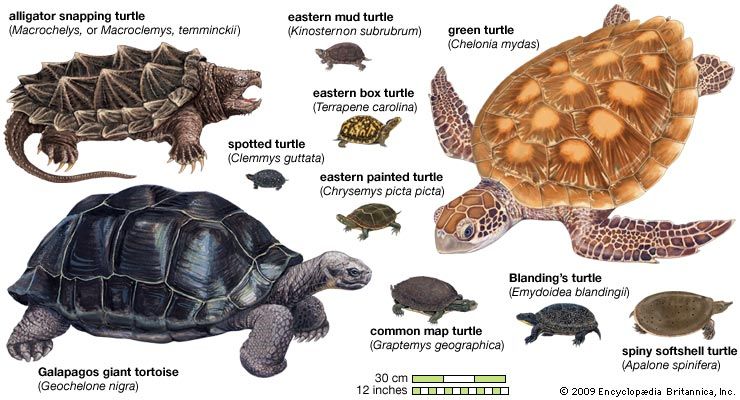
Unlike the streamlined shells of many aquatic turtles, which are adapted for efficient swimming, snapping turtles are bottom-dwellers with rough, ridged carapaces that provide camouflage in muddy, shallow water. Their anatomy includes several notable features:41
- Shell Structure: They possess a small, cross-shaped lower shell (plastron) and a large, rugged upper shell.4
- Head and Jaws: They have large heads equipped with powerful, hooked jaws.4
- Tail: They are characterized by a long tail, which in the common snapping turtle features a distinctive saw-edged crest.4
Behavior
Snapping turtles are well-known for their aggressive nature, particularly when on land, where they may lunge and snap at threats. Unlike many other turtles, they cannot fully withdraw their heads into their shells for protection. Their defensive strategy relies on frequent and vigorous biting.42
While many aquatic turtles are swimmers, snapping turtles are primarily bottom-walkers. They are opportunistic, strongly carnivorous predators that hunt fish, frogs, snakes, and birds, though they also consume plants. Some species, such as the alligator snapping turtle, utilize specialized lures—like a wormlike appendage in the mouth—to attract prey while remaining motionless.147
What are the two main species of snapping turtles, and how do they differ?
The two primary species of snapping turtles are the common snapping turtle (Chelydra serpentina) and the alligator snapping turtle (Macrochelys temminckii). While both belong to the family Chelydridae and are known for their large size and powerful, hooked jaws, they differ significantly in appearance and hunting behavior.4
Key Differences
- Physical Appearance: The common snapping turtle has a smoother shell as an adult and a long tail with a distinctive saw-edged crest. In contrast, the alligator snapping turtle is larger and more sedentary, characterized by three prominent longitudinal ridges on its upper shell and a more triangular-shaped head.410
- Hunting Strategy: The common snapping turtle is an omnivorous, active hunter that prefers animal prey. The alligator snapping turtle is a specialized predator that often lies motionless on the bottom of deep, slow-moving streams with its mouth open, using a pink, wormlike appendage on its tongue to lure fish within reach.410
- Size: The alligator snapping turtle is the largest freshwater turtle in the United States, reaching weights up to 70 kg or more, whereas the common snapping turtle typically weighs between 4.5 and 16 kg.410
Sources
- turtle - Form and function — Encyclopædia Britannica
- turtle - Feeding behaviour — Encyclopædia Britannica
- turtle - Reproductive age and activity — Encyclopædia Britannica
- snapping turtle — Encyclopædia Britannica
- reptile - Avoidance and noise — Encyclopædia Britannica
- turtle - Egg development and hatching — Encyclopædia Britannica
- reptile - Striking and biting — Encyclopædia Britannica
- alligator snapping turtle — Merriam-Webster
- alligator snapping turtle — Encyclopædia Britannica
- turtle - Habitats — Encyclopædia Britannica
Published on · 4 min read