Turtle
Turtles exhibit diverse feeding habits, which are largely determined by their species and environment. Because all turtles lack teeth, they rely on a beak to…
What are the feeding habits of turtles, and how do they vary among species?
Turtles exhibit diverse feeding habits, which are largely determined by their species and environment. Because all turtles lack teeth, they rely on a beak to process their food.
Dietary patterns generally fall into three categories:
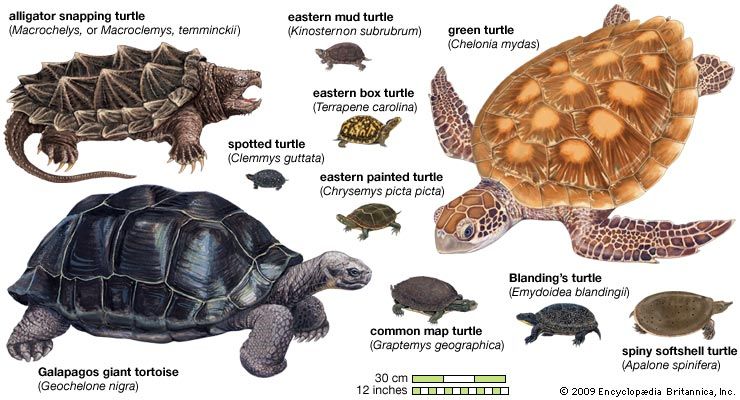
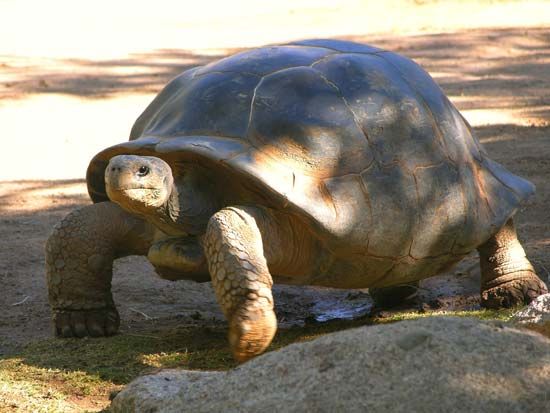
- Herbivores: Tortoises and many large river turtles, such as the Asian river turtle, primarily consume plants, fruits, and leaves. Green sea turtles favor marine grasses but will eat algae when necessary. Interestingly, many aquatic herbivores begin life as insectivores and transition to a plant-based diet as they mature.12
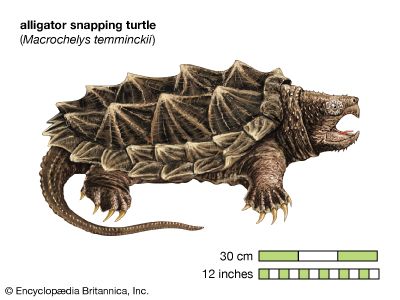
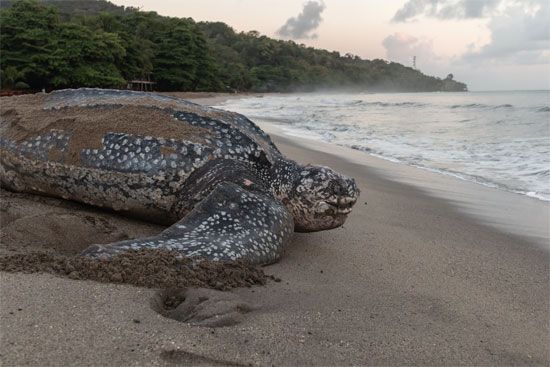
- Carnivores: Species like the snapping turtle are highly carnivorous, hunting fish, frogs, and even small birds1. Others are dietary specialists; for instance, the leatherback sea turtle feeds almost exclusively on jellyfish and salps, while some musk turtles eat only mollusks.21
- Omnivores: Many turtles, such as the red-eared slider, consume a mix of vegetation and animal matter, including carrion.12
How do human activities impact turtle populations, and what conservation efforts are in place to protect them?
Human activities have significantly impacted turtle populations globally, primarily through habitat loss, overexploitation, and pollution.45
Human Impacts
- Habitat Destruction and Fragmentation: Development for agriculture, residential, and commercial use destroys or subdivides essential nesting and foraging grounds, often isolating populations and hindering reproduction.65
- Overexploitation: Turtles and their eggs have long been harvested for food, traditional medicine, and the pet trade. This pressure has driven some species to local extinction.4
- Fisheries: Many turtles, particularly sea turtles, are captured—either intentionally or accidentally—in coastal fisheries, often before they reach sexual maturity.7
- Climate Change: Rising temperatures associated with global warming have skewed sex ratios in some populations, as turtle sex is temperature-dependent; for instance, some green sea turtle populations have become overwhelmingly female.8
- Pollution: Artificial lighting on beaches can disorient hatchlings, preventing them from reaching the ocean.7
Conservation Efforts
While many species remain endangered or critically endangered, conservation efforts include:
- Monitoring and Protection: Organizations like the IUCN assess population health to guide management.76
- Captive Breeding: Some species are raised in captivity to bolster wild numbers, especially when they do not breed well in the wild due to environmental pressures.4
How do turtles’ respiratory and circulatory systems differ from other reptiles?
Turtles possess unique physiological adaptations that distinguish their respiratory and circulatory systems from those of other reptiles.
Respiratory System
Unlike most reptiles, which use their rib cage and body wall muscles to expand the body cavity for breathing, turtles have a rigid shell that prevents this movement. Consequently, turtles have evolved specialized skeletal muscles to ventilate their lungs. Inspiration and expiration are both active, energy-consuming processes involving the movement of flank muscles and the compression of abdominal viscera against the lungs. While other reptiles rely on the potential energy of their body wall structures to assist in breathing, turtles cannot, though aquatic species may use water pressure on their limbs to aid in exhalation.1011
Circulatory System
While most modern reptiles have a partially divided ventricle that allows for a functional separation of blood, the turtle’s ventricle is not perfectly divided. This anatomical feature means that some slight mixing of aerated and nonaerated blood can occur. Unlike crocodiles, which have a complete ventricular septum, turtles lack this total separation. Furthermore, while the limitation of activity in most reptiles is generally attributed to circulatory or respiratory factors, turtles are a notable exception where such limitations are not easily explained by heart circulation alone, potentially pointing toward differences in blood chemistry, such as lower hemoglobin levels.1213
How have turtles evolved over time, and what are some of their prehistoric ancestors?
Turtles are an ancient group of reptiles with a fossil record dating back to the Late Permian Epoch, approximately 260 million years ago. Their evolutionary history is marked by the gradual development of their iconic shell and the transition from toothed ancestors to the toothless forms seen today.
Prehistoric Ancestors
- Eunotosaurus africanus: The earliest known turtle, it possessed broad, T-shaped ribs that likely served as an intermediate structure for the later evolution of the carapace and plastron.
- Odontochelys semitestacea: Dating to about 220 million years ago, this species is the oldest known to possess a complete plastron, though it lacked a fully developed carapace and still retained teeth in both jaws.
- Proganochelys quenstedi: A later species that featured a shell similar to modern turtles, though it still possessed teeth on the roof of its mouth.
Evolutionary Trends
The turtle shell is a complex adaptation formed from dermal bones in the skin and endochondral bone derived from the skeleton. While early forms were toothed, modern turtles rely on sharp, keratinous sheaths to process food. Evolutionary pressure also led to the divergence of the two primary suborders: Cryptodira (hidden-neck turtles) and Pleurodira (side-necked turtles), which differ in their neck-folding mechanisms and skull architecture.
Sources
- What do turtles eat? — Encyclopædia Britannica
- turtle - Feeding behaviour — Encyclopædia Britannica
- Beak — Encyclopædia Britannica
- sea turtle — Encyclopædia Britannica
- turtle - Egg development and hatching — Encyclopædia Britannica
- turtle - Habitats — Encyclopædia Britannica
- turtle - Reproductive age and activity — Encyclopædia Britannica
- turtle — Encyclopædia Britannica
- habitat loss — Encyclopædia Britannica
- Respiratory system - Reptiles — Encyclopædia Britannica
- reptile - Circulatory system — Encyclopædia Britannica
- reptile - Respiratory system — Encyclopædia Britannica
- Circulatory system - Reptiles — Encyclopædia Britannica
- Respiratory system - Gills of invertebrates — Encyclopædia Britannica
- turtle - Form and function — Encyclopædia Britannica
- turtle - Origin and evolution — Encyclopædia Britannica
Published on · 4 min read