Snow Leopard
Snow leopards are native to the high-altitude regions of central Asia and the Indian subcontinent. Their range spans several major mountain systems…
Where are snow leopards typically found in the wild?
Snow leopards are native to the high-altitude regions of central Asia and the Indian subcontinent. Their range spans several major mountain systems, including the Himalayas, the Hindu Kush, and the Plateau of Tibet. They are also found further north in the Altai Mountains and the highlands located west of Lake Baikal in Russia.12
These cats thrive in rugged, rocky, and grassy highland habitats at elevations ranging from 500 to 5,800 meters (1,640 to 19,000 feet). Because they are a vulnerable species facing threats from habitat loss, poaching, and human-wildlife conflict, protecting these remote environments is essential for their survival.12
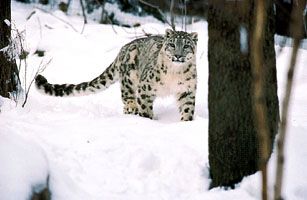
How do snow leopards differ from other big cat species?
While the snow leopard is often grouped with other big cats in the genus Panthera, it possesses distinct skeletal and physical characteristics that set it apart from its relatives like the lion, tiger, and leopard.
Skeletal and Biological Differences
Due to specific skeletal features—most notably a shorter skull and more-rounded eye orbits—some authorities classify the snow leopard as the sole member of the genus Uncia rather than Panthera. Genetic research indicates that the lineage of snow leopards diverged from that of tigers approximately 3.2 million years ago.
Physical Adaptations
To survive in the extreme, high-altitude environments of central Asia, snow leopards have evolved unique adaptations not found in other big cats:
- Insulation: They possess a dense, soft coat with an insulating undercoat and long outer hairs, as well as fur on their underparts that can reach 10 cm (4 inches) in length.
- Heat Conservation: They have small, rounded ears and broad front paws that act like snowshoes.
- Respiration: Their wide heads contain large nasal cavities, which serve to warm the cold mountain air before it enters their lungs.
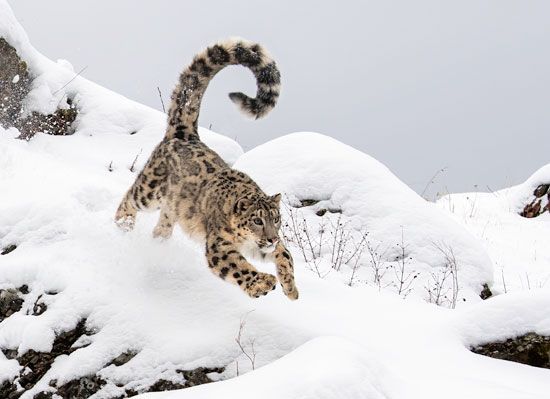
How do snow leopards hunt and what are their primary prey animals?
Snow leopards are crepuscular hunters, meaning they are most active during the dawn and dusk hours. Their primary hunting strategy involves stealth and ambush; they typically wait for their prey on rock outcrops and then leap down upon them to secure a kill.24
Their diet consists of a variety of animals found within their high-altitude habitats, including:
Because human activities and livestock grazing have expanded into their natural range, snow leopards sometimes target domestic animals, which often leads to conflict with local herders and ranchers.2
What are the unique physical characteristics of snow leopards?
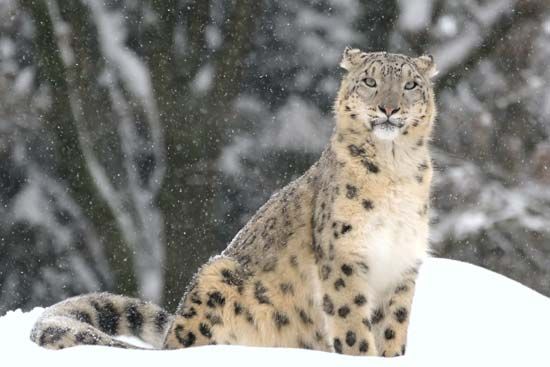
The snow leopard possesses several unique physical characteristics that distinguish it from other big cats and allow it to thrive in the harsh, high-altitude environments of central Asia.
Skeletal Structure
Unlike other members of the genus Panthera, the snow leopard has a shorter skull and more-rounded eye orbits. These distinct skeletal features lead some authorities to classify it as the sole member of the genus Uncia.2
Adaptations for Cold Environments
To conserve heat in freezing mountain climates, the snow leopard has evolved specialized physical traits:
- Insulating Coat: It features a dense, soft undercoat covered by a thick outercoat of hair approximately 5 cm (2 inches) long. The fur on its underparts is even longer, reaching up to 10 cm (4 inches).2
- Facial Features: The animal has a wide head with large nasal cavities, which function to warm the cold mountain air before it reaches the lungs. It also possesses small, rounded ears to minimize heat loss.2
- Paws: It is equipped with broad front paws that act effectively as snowshoes for traversing rugged, snowy terrain.2
Sources
- Snow leopard: Top Questions — Encyclopædia Britannica
- Snow leopard — Encyclopædia Britannica
- leopard — Encyclopædia Britannica
- What’s the difference between a cheetah and a leopard? — Encyclopædia Britannica
Published on · 3 min read