Ibex
The ibex is a sturdy, sure-footed wild goat belonging to the genus Capra. While physical traits vary by species, they generally share several distinguishing…
What are the distinguishing physical characteristics of an ibex?
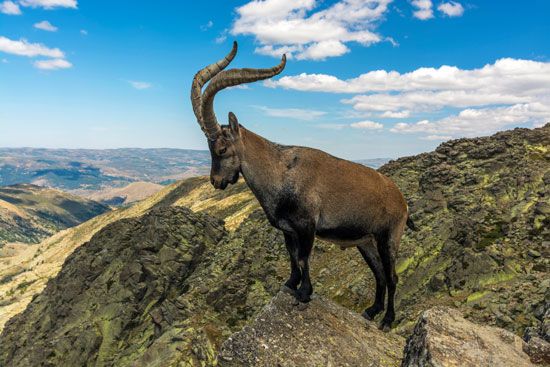
The ibex is a sturdy, sure-footed wild goat belonging to the genus Capra. While physical traits vary by species, they generally share several distinguishing characteristics:
- Horns: A primary feature of the male ibex is its large, semicircular, or backwardly arching horns, which feature broad, transversely ridged front surfaces.12
- Size and Build: Adult males are significantly larger than females; for example, the European ibex male weighs approximately 100 kg (220 pounds) and stands about 90 cm (3 feet) at the shoulder, while females are typically smaller and shorter.1
- Coat: Their fur is generally brownish to gray, often appearing darker on the underparts.1
- Facial Features: Males are typically distinguished by the presence of a beard.1
- Adaptations: Ibexes are renowned for their exceptional climbing and jumping abilities, which allow them to navigate high-elevation, rocky mountain habitats.12
Species variations exist, such as the Siberian ibex, which is larger with longer horns and beards, and the Nubian ibex, which is smaller with long, slender horns.1
Where are ibexes typically found in the wild, and what kind of habitats do they prefer?
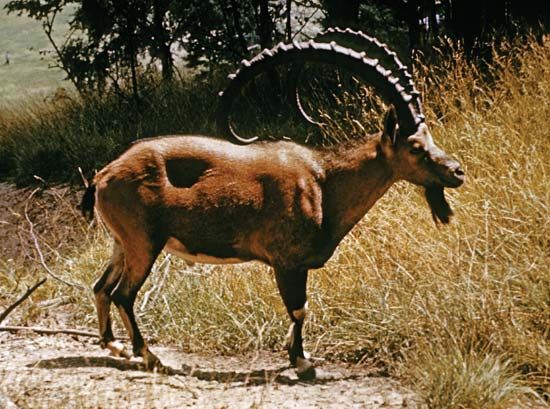
Ibexes are wild goats of the genus Capra that are native to the mountainous regions of Europe, Asia, and northeastern Africa. They are primarily found in high-altitude, rugged environments, often living near the snow line.13
These animals are well-adapted to steep, rocky terrain, possessing exceptional climbing and jumping skills that allow them to navigate precipitous slopes. Their habitat preferences are characterized by:1
- High Elevations: They typically inhabit alpine areas, though they are not strictly sedentary in these heights.14
- Vertical Migration: Many ibex populations engage in seasonal vertical migration. They spend the summer months in high-altitude alpine zones and descend to lower, forested environments during the winter to avoid harsh conditions.14
- Environmental Sensitivity: While they are mountain specialists, they generally avoid areas with deep snow, which can hinder their movement.1

What is the social structure and behavior of ibex herds?
The social structure of the ibex is characterized by a distinct segregation of the sexes. These animals typically live in herds that are exclusively male or exclusively female, with very old males often choosing to live solitary lives.1
Regarding their behavior and social dynamics, the following points are notable:
- Herd Segregation: Outside of the breeding season, males and females remain in separate groups. This separation is a common trait among many artiodactyls, where the maternal family unit serves as the primary cohesive structure.15
- The Rut: The mating season, or rut, occurs in early winter. During this time, the social barriers between the sexes temporarily shift to facilitate breeding.1
- Aggressive Displays: When males compete, they utilize their horns for stylized fighting. Unlike some other species that may ram head-on, goats typically engage in a sideways hooking motion. This behavior helps establish dominance and minimizes the risk of lethal injury during conflicts.5
- Survival Strategies: Living in groups provides protection through social facilitation, where the collective response of the herd—such as fleeing from a predator—increases the survival chances of individual members.5
What different species of ibex exist, and how do they differ from each other?
Several species of wild goats within the genus Capra are classified as ibexes. While they share common traits such as sturdy builds and transversely ridged horns, they differ in size, appearance, and geographic distribution.13
Key Ibex Species
- European (Alpine) Ibex: The standard reference for the group. Males weigh approximately 100 kg and possess large, semicircular horns. They are native to the Alps.1
- Siberian (Asiatic) Ibex: Generally larger than the European ibex, this species is distinguished by its longer beard and more prominent horns.1
- Nubian Ibex: A smaller species characterized by long, slender horns.1
- Spanish Ibex (C. pyrenaica): Found in the mountains of Spain, this species includes both extant and extinct subspecies. While some subspecies like the Pyrenean ibex are extinct, others like C. p. hispanica remain relatively abundant.16
- Abyssinian (Walia) Ibex: A critically endangered species found in Ethiopia, with a very small, declining population.1
Note that the Nilgiri ibex is taxonomically distinct and is classified as a tahr rather than a true ibex.1
Sources
- ibex — Encyclopædia Britannica
- alpine ibex — Merriam-Webster
- ibex — Merriam-Webster
- Tundra - Alpine mammals — Encyclopædia Britannica
- artiodactyl - Social behaviour — Encyclopædia Britannica
- Spanish ibex — Merriam-Webster
Published on · 3 min read