Marmot
Marmots, groundhogs, and prairie dogs are all members of the squirrel family (Sciuridae) within the order Rodentia, and they share close evolutionary ties as…
How do marmots compare to other rodents like prairie dogs or groundhogs?
Marmots, groundhogs, and prairie dogs are all members of the squirrel family (Sciuridae) within the order Rodentia, and they share close evolutionary ties as ground-dwelling rodents.123
Key Comparisons
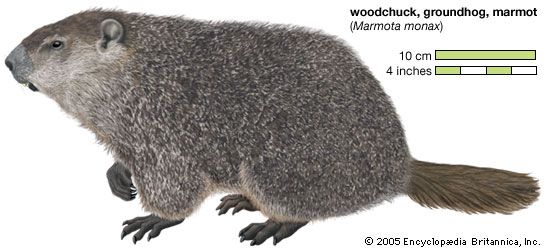
- Classification: The groundhog (Marmota monax) is actually a species of marmot, making it a type of giant ground squirrel. Prairie dogs belong to a separate genus (Cynomys) but are closely related to marmots and other ground squirrels.123
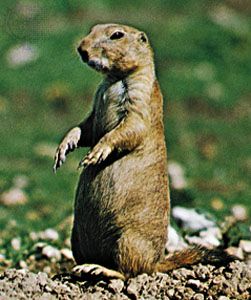
- Size: Marmots are generally the largest of the three, weighing between 3 and 7 kg. Groundhogs can weigh up to 6 kg, while prairie dogs are significantly smaller, typically weighing up to 1.7 kg.123
- Social Behavior: While some marmots are gregarious, others like the groundhog are solitary. In contrast, prairie dogs are famous for their highly social, colony-forming behavior, living in complex “towns” divided into family groups.123
- Hibernation: Marmots and groundhogs are true hibernators, accumulating fat reserves to survive the winter. Prairie dog behavior varies; some species hibernate, while others, like the black-tailed prairie dog, do not hibernate and remain active during winter.123
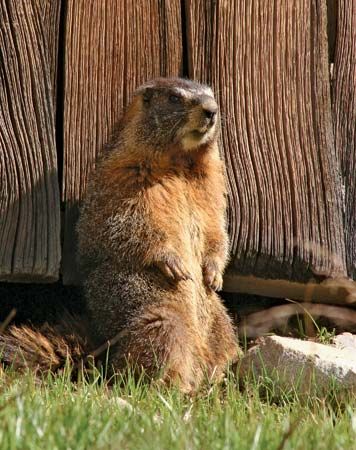
Where are marmots typically found in the wild?
Marmots are primarily found throughout North America (north of Mexico) and Eurasia. Their range in Eurasia extends from the European Alps across north-central Asia, the Himalayas, and northeastern Siberia to the Kamchatka Peninsula.1
These rodents are well-adapted to cold climates and typically inhabit open country, including montane meadows, steppes, tundra, and forest edges. They are known for excavating burrows in these environments, with many mountain-dwelling species specifically constructing their homes beneath boulder fields, rocky slopes, and within cliff crevices to gain protection from predators.1
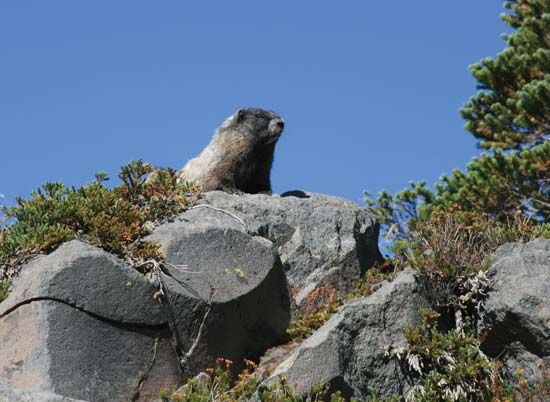
How long do marmots typically live in the wild versus in captivity?
The provided search results do not contain specific data regarding the typical life span of marmots in the wild versus in captivity. While the information confirms that marmots are sciurid rodents capable of living two to three times longer than smaller, mouselike rodents, it does not provide specific age ranges or comparative longevity statistics for these animals.14
We could dive deeper into the general biological factors that influence the life spans of ground-dwelling squirrels if you are interested.
What are the different species of marmots and how do they differ?
There are 14 recognized species of marmots (genus Marmota), which are large, heavy ground squirrels adapted for life in cold, open environments. While they share common physical traits—such as stocky bodies, short legs, and thick fur—they differ significantly in their social behaviors and reproductive cycles.1
Key Differences Among Species
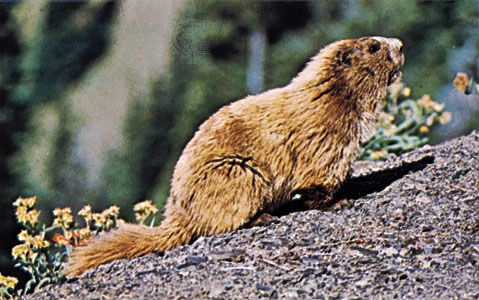
- Social Structure: Marmot species exhibit varying levels of sociality. Some, such as the Alpine marmot and the hoary marmot, are gregarious and live in social groups. In contrast, others like the woodchuck are solitary.1
- Reproductive Patterns: While most marmots produce young annually, there are exceptions. For example, the Olympic marmot of the United States typically bears young only every other year.1
- Dietary Adaptation: Species like the Alaska marmot are specialized to graze on low-nutrient tundra vegetation, which requires them to compete for foraging space with other grazers like caribou and Dall’s sheep.1
- Hibernation Duration: The length of hibernation varies by species and environment; the hoary marmot, for instance, may hibernate for up to nine months, relying on fat reserves that account for 20 percent of its body weight.1
Sources
- marmot — Encyclopædia Britannica
- groundhog — Encyclopædia Britannica
- prairie dog — Encyclopædia Britannica
- aging - Species differences in longevity and aging — Encyclopædia Britannica
- Tundra - Alpine mammals — Encyclopædia Britannica
Published on · 3 min read