Sobaek Mountains
The Sobaek Mountains represent the largest mountain range in southern South Korea. Extending 220 miles (350 km), the range runs southwest from the area north…
What is Sobaek Mountains?
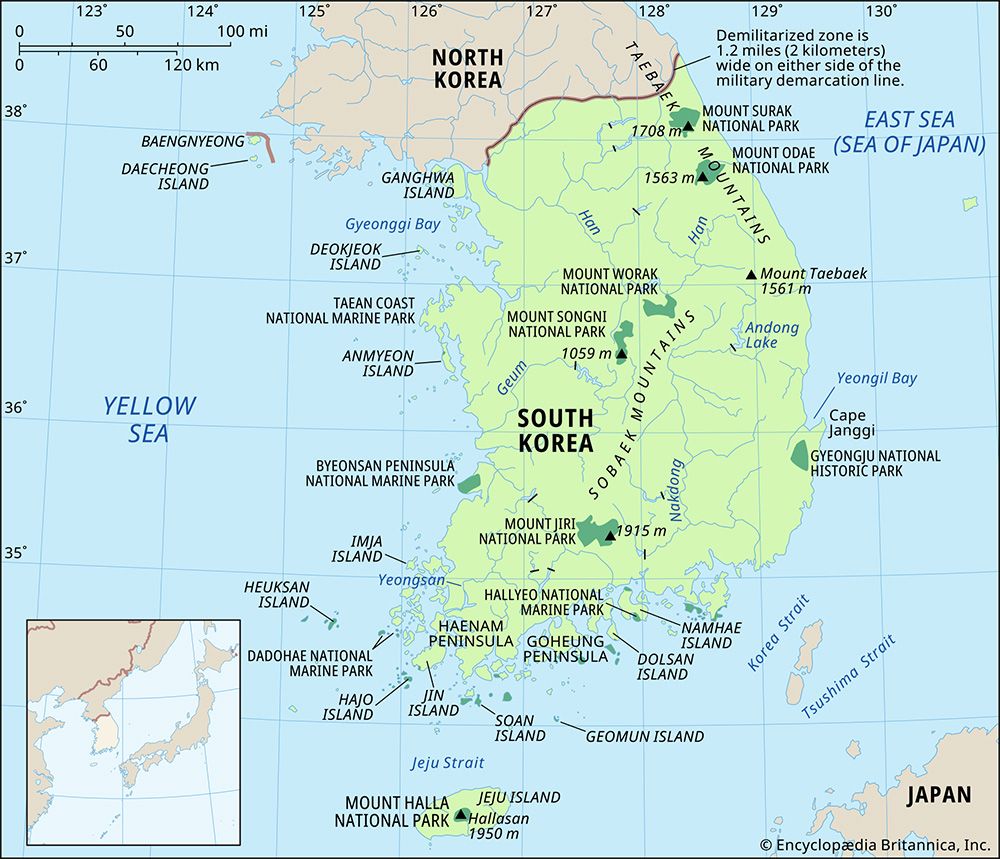
The Sobaek Mountains represent the largest mountain range in southern South Korea. Extending 220 miles (350 km), the range runs southwest from the area north of Taebaek Mountain in Gangwon Province to the Goheung Peninsula near Yeosu.1
The range is characterized by several prominent peaks that serve as vital watersheds for the region, including:
- Sobaek (4,760 feet [1,451 meters])
- Munju (2,437 feet [743 meters])
- Mount Songni (3,468 feet [1,057 meters])
- Deokyu (5,276 feet [1,608 meters])
- Baegun (4,190 feet [1,277 meters])
Additionally, the southwestern branch of the range features Mount Chiri, which stands at 6,283 feet (1,915 meters) and is designated as a national park.1
What makes Jirisan a significant national park?
Jirisan (also known as Mount Chiri) is a significant landmark in South Korea, primarily recognized for its status as a national park.2
Located on the southwestern branch of the Sobaek Mountains, it is the highest peak within that range, reaching an elevation of 6,283 feet (1,915 meters). Its designation as a national park highlights its importance as a protected area for the nation’s natural landscape and biodiversity.2
How do mountain ranges influence the climate of South Korea?
Mountain ranges in South Korea significantly influence the country’s climate by acting as physical barriers and drainage divides that affect precipitation patterns and temperature distribution.
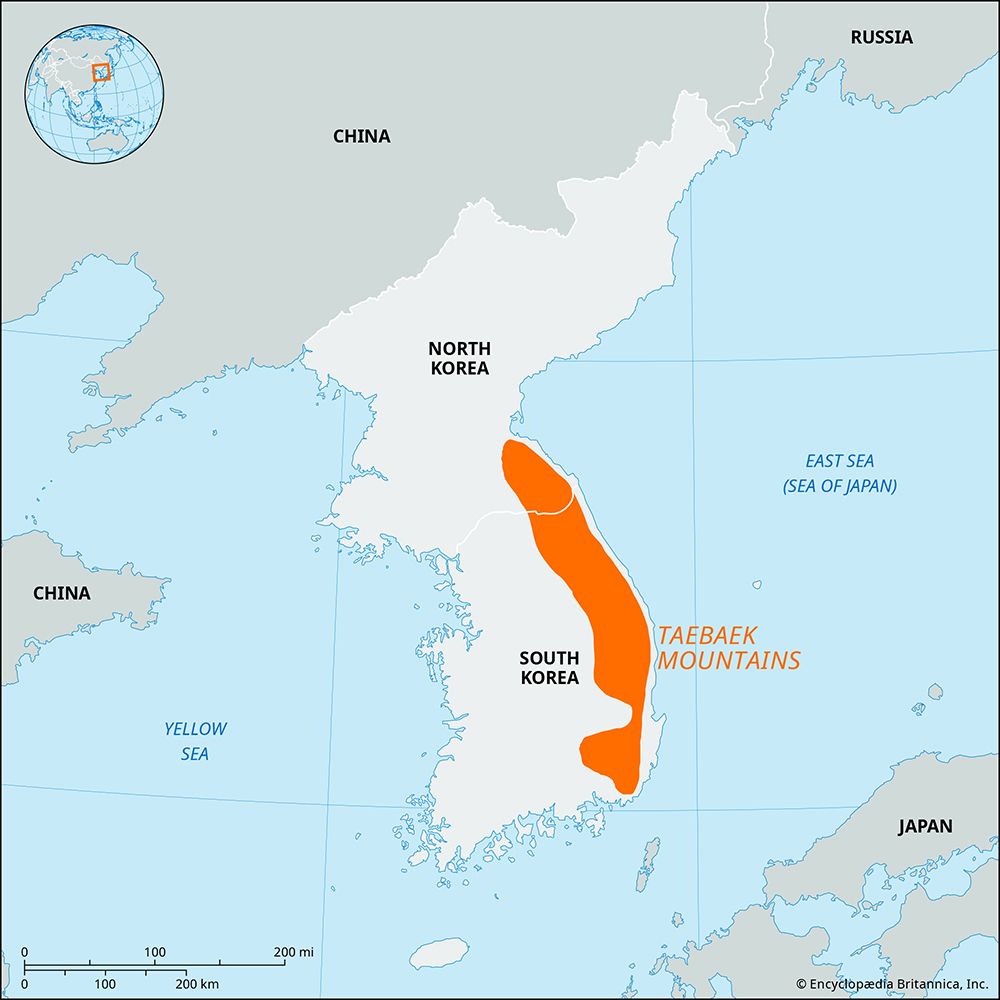
The Taebaek Mountains, which serve as the primary ridge of the Korean Peninsula, play a critical role in winter weather. During the colder months, these mountains experience the heaviest snowfall in the country as they intercept moisture-laden air.3
Furthermore, the orientation of these ranges—specifically the Sobaek Mountains and other spurs branching off the main Taebaek ridge—helps define the regional climate variations between the interior and the coast. While the broader climate of South Korea is primarily dictated by its proximity to the Asian landmass, which creates distinct summer-winter temperature extremes and seasonal monsoons, the mountainous terrain contributes to localized differences in precipitation and the length of the frost-free season, which varies from 170 days in the northern highlands to over 240 days on Jeju Island.31
What are some other major mountain ranges in the Korean Peninsula?
The Korean Peninsula is defined by a rugged, mountainous landscape. Beyond the central Taebaek Mountains, several other significant ranges shape the region’s topography:
- Hamgyŏng Mountains: Located in northeastern North Korea, this range is often called the “Korean Alps.” It contains the highest peaks on the peninsula, including Kwanmo Peak, and forms a steep watershed between the Kaema Highlands and the East Sea.46
- Sobaek Mountains: As the largest range in southern South Korea, these mountains branch southwest from the Taebaek range. They serve as a vital watershed for the southern region and include notable peaks such as Mount Songni and Jirisan.71
- Nangnim Mountains: Running north to south through the center of North Korea, this range acts as a primary divide between the peninsula’s eastern and western slopes.6
- Changbaek Mountains: Situated along the border between North Korea and China, this range includes Mount Paektu, the highest point on the entire peninsula.6
- Structural Extensions: Ranges such as the Kangnam and Myohyang mountains extend southwest from the Nangnim system, creating parallel ridges that define the western landscape.6
Sources
- Sobaek Mountains — Encyclopædia Britannica
- North Chungcheong — Encyclopædia Britannica
- South Korea - Climate — Encyclopædia Britannica
- Taebaek Mountains — Encyclopædia Britannica
- South Korea - Relief — Encyclopædia Britannica
- Hamgyŏng Mountains — Encyclopædia Britannica
- North Korea - Relief — Encyclopædia Britannica
Published on · 2 min read