Sole
The term "sole" has several distinct meanings depending on the context:
What is sole?
The term “sole” has several distinct meanings depending on the context:
Biological
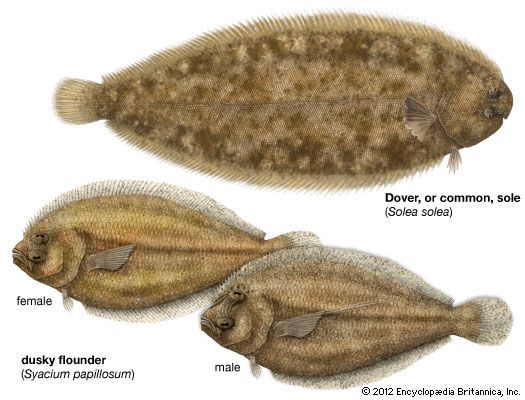
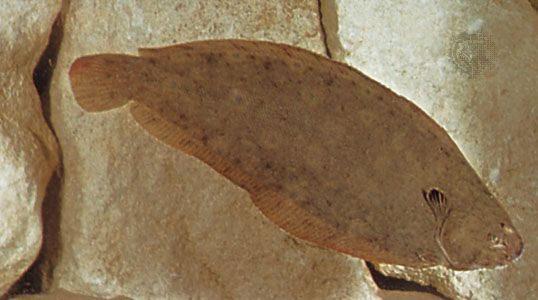
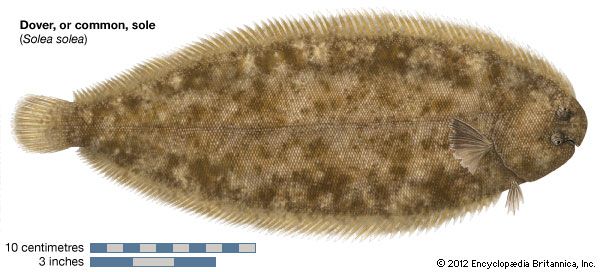
In zoology, a sole refers to a variety of flatfishes, specifically those belonging to the family Soleidae. These fish are characterized by their flattened, elongated bodies and small eyes positioned on the right side of the head. The Dover sole is a well-known, commercially valuable food fish found in the eastern Atlantic and Mediterranean.12
Anatomy and Objects
As a noun, “sole” refers to the undersurface of a foot or the bottom part of an item of footwear that makes contact with the ground. More broadly, it can describe the flat base or bottom surface upon which something rests.3
Adjective
As an adjective, “sole” denotes being the only one, having no sharer, or functioning independently without assistance. It can also refer to something belonging exclusively to a specific individual or group.4
How do flatfish develop their unique body shape?
Flatfish, which belong to the order Pleuronectiformes, develop their unique asymmetrical body shape through a dramatic process of metamorphosis.
While most vertebrates are bilaterally symmetrical, flatfish begin their lives as symmetrical larvae with one eye on each side of the head. As they grow and drift with ocean currents, they undergo a period of rapid physical transformation. During this metamorphosis, one eye migrates across the skull to the other side of the head, resulting in the adult form where both eyes are positioned on the same side. This migration causes significant osteological changes to the skull, which accounts for the fish’s characteristic asymmetry.
Once this transformation is complete, the fish settles to the bottom of the ocean to begin its adult benthic existence, habitually resting on its side. The side facing upward typically becomes pigmented to blend with the environment, while the lower side remains white.
What are some other examples of flatfish?
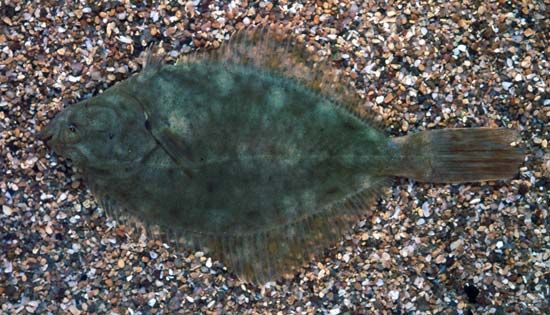
There are approximately 600 species of flatfish within the order Pleuronectiformes, which are categorized into 14 distinct families. Beyond the common sole, here are several other notable examples:510
- Halibuts: These are among the largest flatfish, with the Atlantic halibut reaching lengths of over 2 meters (7 feet) and weights up to 325 kg (716 pounds). They belong to the family Pleuronectidae, which are generally “right-eyed” flatfish.51110
- Flounders: This group includes a wide variety of species across several families, such as the summer flounder and the peacock flounder. Depending on the family, they may be “left-eyed” (such as those in Bothidae) or “right-eyed” (such as those in Pleuronectidae).1210
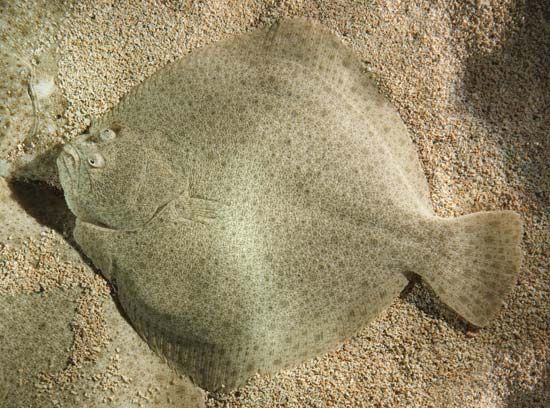
- Turbots: These are members of the family Scophthalmidae. They are typically “left-eyed” and can grow to significant sizes, with some reaching up to 1 meter (3 feet) in length.10
- Tongue Soles: Belonging to the family Cynoglossidae, these fish are characterized by their asymmetrical mouths and the fact that their dorsal and anal fins are confluent with the caudal fin.10
How does the anatomy of a human foot compare to the sole of a shoe?
The human foot and the sole of a shoe are fundamentally linked through function and design, though they differ in biological versus mechanical composition.
The human foot is a complex anatomical structure consisting of the heel, arch, and digits, supported by tarsal, metatarsal, and phalangeal bones. It is specifically adapted for bipedalism, utilizing a longitudinal arch to absorb shock and a transverse arch to distribute weight during locomotion.13
In contrast, the sole of a shoe is a manufactured component designed to protect the foot and mimic or support these natural structures. Modern footwear manufacturing involves “lasting,” where the upper part of a shoe is attached to a wooden form called a “last” to ensure the sole aligns with the shape of a human foot. While the foot relies on biological ligaments and bones to maintain its arches, shoe soles are often engineered with specific materials or corrective devices, such as arch support, to provide stability and comfort. Unlike the living, flexible tissue of the foot, shoe soles are constructed from various materials—including leather, rubber, and synthetic compositions—to meet performance and durability standards.141516
Sources
- sole — Encyclopædia Britannica
- sole — Merriam-Webster
- sole — Merriam-Webster
- sole — Merriam-Webster
- Did you know? — Merriam-Webster
- pleuronectiform — Encyclopædia Britannica
- pleuronectiform - Reproduction — Encyclopædia Britannica
- flathead — Encyclopædia Britannica
- Animal development - The larval stage — Encyclopædia Britannica
- flounder — Encyclopædia Britannica
- pleuronectiform - Annotated classification — Encyclopædia Britannica
- pleuronectiform - General features — Encyclopædia Britannica
- foot — Encyclopædia Britannica
- arch support — Merriam-Webster
- clothing and footwear industry - Special footwear processes — Encyclopædia Britannica
- Shoe — Encyclopædia Britannica
Published on · 3 min read