Pleuronectiform
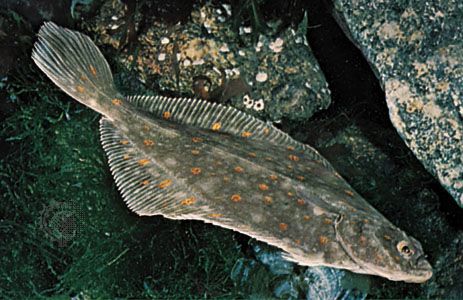
Pleuronectiform fish, commonly known as flatfishes, exhibit several unique biological and behavioral adaptations:
What are some unique behaviors exhibited by Pleuronectiform fish?
Pleuronectiform fish, commonly known as flatfishes, exhibit several unique biological and behavioral adaptations:
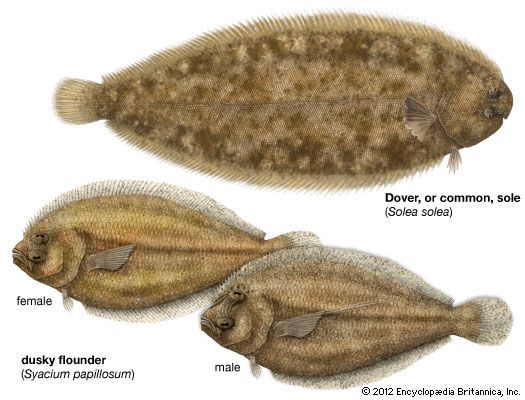
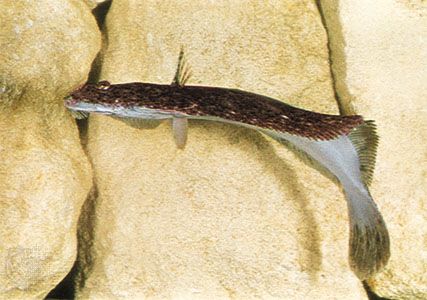
- Asymmetry and Metamorphosis: Unlike most vertebrates, adult flatfishes are asymmetrical with both eyes located on one side of the head. During metamorphosis, the larvae—which initially have an eye on each side—undergo a dramatic transformation where one eye migrates around or through the skull to join the other.12
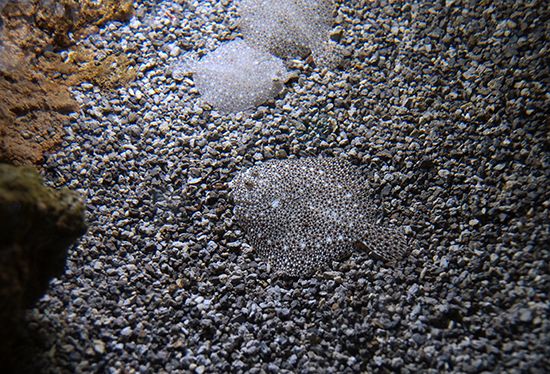
- Camouflage: Flatfishes possess a remarkable ability to mimic their surroundings. They can adjust their coloration to match the pattern and intensity of the surface on which they rest, providing effective concealment from predators.23
- Benthic Lifestyle: These fish typically live on the sea floor, often burying themselves in sand or mud with only their eyes exposed. Their eyes can move independently, allowing them to scan their environment while remaining hidden.4
- Ambush Predation: When hunting, they remain motionless on the bottom until prey—such as crustaceans or small fish—ventures close, at which point they launch a sudden, rapid pursuit.4
What is the economic importance of Pleuronectiform fish in commercial fishing?
Pleuronectiform fish, or flatfishes, hold significant value in commercial fishing, particularly those belonging to the family Pleuronectidae. These species are heavily exploited in northern waters, representing the most commercially utilized group among all flatfishes.7
Key aspects of their economic importance include:
- Valuable Species: Large flatfishes such as the Atlantic halibut and Pacific halibut are highly prized for their size and food value. Other commercially significant species include the plaice and various soles.879
- Fishing Methods: Specialized techniques are used to harvest these bottom-dwelling fish. The Danish seine, which utilizes long towing ropes to herd fish into a net, is a primary method for capturing flatfish in northern Europe and is a vital inshore fishery technique in Japan.10
- Conservation Status: Due to their economic demand, some populations have faced pressure. For instance, the Atlantic halibut has been considered an endangered species since 1996, while the Pacific halibut remains a more stable, commercially viable resource.8
How do scientists classify and study different species within the Pleuronectiform order?
Scientists classify and study the order Pleuronectiformes by examining their unique anatomical features and evolutionary history. Because these fish are characterized by their striking asymmetry—where both eyes migrate to one side of the head during metamorphosis—ichthyologists place significant emphasis on the comparative study of the skeleton. Osteological analysis is particularly valuable because it allows researchers to draw direct comparisons between living species and the limited fossil records available.
Taxonomic classification is currently organized into two suborders and 14 families, primarily based on the work of ichthyologist J.S. Nelson. Key diagnostic features used to distinguish these groups include:
- Fin structure: The presence or absence of spines in the dorsal, anal, and pelvic fins.
- Eye orientation: Whether the eyes are located on the right (dextral) or left (sinistral) side of the head.
- Jaw and skull morphology: The presence of supplemental bones on the maxillary and the positioning of the lower jaw.
- External counts: Researchers also analyze counts of teeth, fin rays, and scales, alongside body dimensions and coloration patterns.211
What are the defining characteristics of the Pleuronectiform fish order?
The order Pleuronectiformes, commonly known as flatfishes, comprises approximately 680 species of bony fishes defined by several unique biological and anatomical characteristics:2
- Asymmetry: Unlike most vertebrates, which are bilaterally symmetrical, adult pleuronectiforms are asymmetrical. They possess strongly compressed, oval-shaped bodies, and in adults, both eyes are located on the same side of the head.212
- Metamorphosis: This asymmetry is achieved through a dramatic developmental process. While larval flatfishes are symmetrical with an eye on each side of the head, they undergo a period of rapid metamorphosis during which one eye migrates to the opposite side. This shift is accompanied by significant changes to the skull and skeletal structure.2
- Benthic Lifestyle: Flatfishes are generally bottom-dwelling (benthic) organisms. They typically move by undulating their bodies or fins along the substrate.146
- Physiological Traits: Adults lack a swim bladder. Their pelvic bones are attached directly to the cleithrum, and they are characterized by a lack of bilateral symmetry in their skull morphology.212
Sources
- pleuronectiform - Form and function — Encyclopædia Britannica
- pleuronectiform — Encyclopædia Britannica
- coloration - Background matching — Encyclopædia Britannica
- coloration - Disruptive coloration — Encyclopædia Britannica
- pleuronectiform - Feeding behaviour — Encyclopædia Britannica
- pleuronectiform - Reproduction — Encyclopædia Britannica
- pleuronectiform - General features — Encyclopædia Britannica
- commercial fishing - Seine nets — Encyclopædia Britannica
- halibut — Encyclopædia Britannica
- plaice — Encyclopædia Britannica
- pleuronectiform - Critical appraisal — Encyclopædia Britannica
- pleuronectiform - Annotated classification — Encyclopædia Britannica
- fish - Distinguishing taxonomic features — Encyclopædia Britannica
- fish - Locomotion — Encyclopædia Britannica
- Metamorphosis — Encyclopædia Britannica
Published on · 4 min read