South Uist
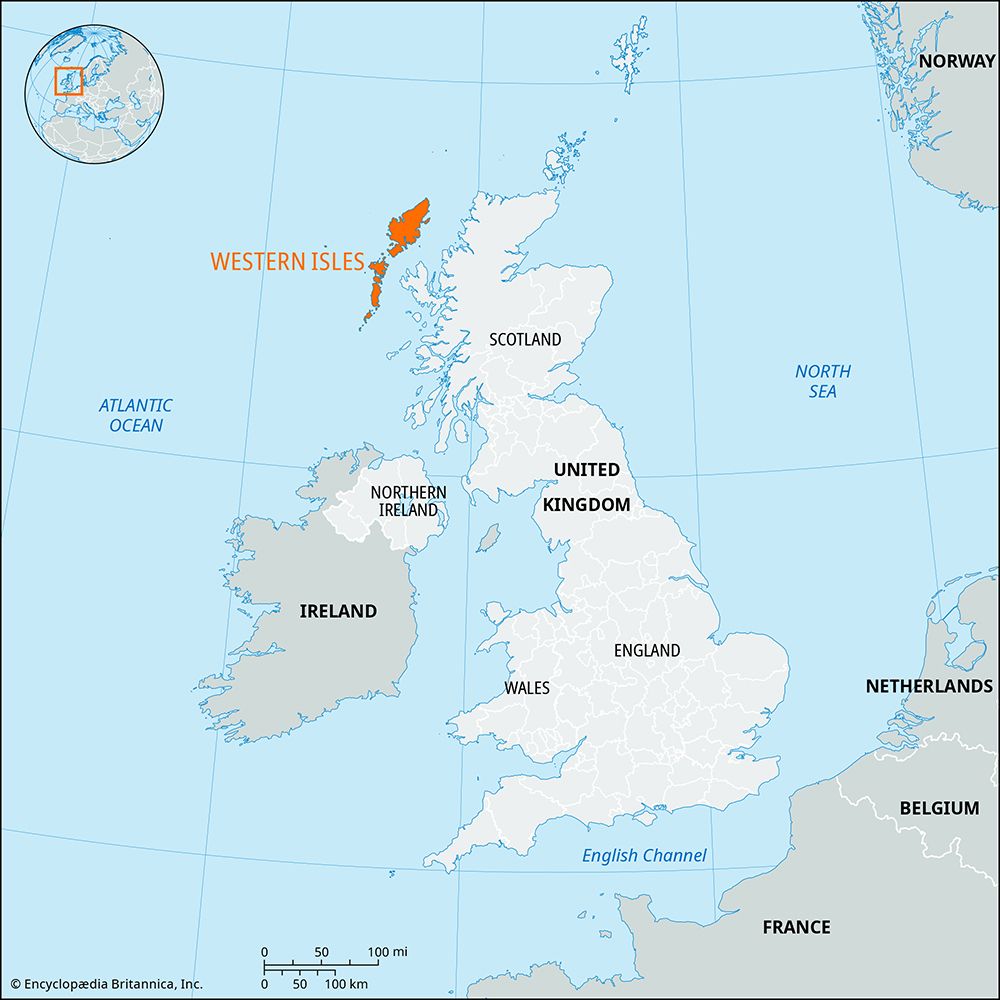
South Uist is an island located in the Outer Hebrides, part of the Western Isles council area in Scotland. It is situated west of the island of Skye…
What is the geographical location and size of South Uist in the Outer Hebrides?
South Uist is an island located in the Outer Hebrides, part of the Western Isles council area in Scotland. It is situated west of the island of Skye, separated by approximately 25 miles (40 km) of water.1
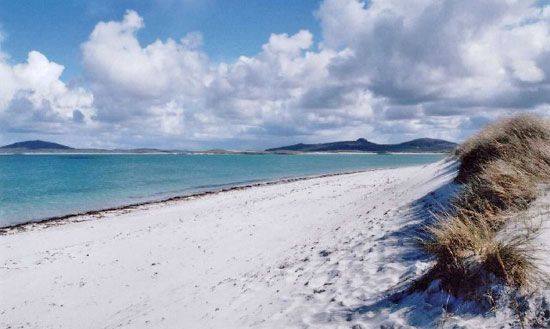
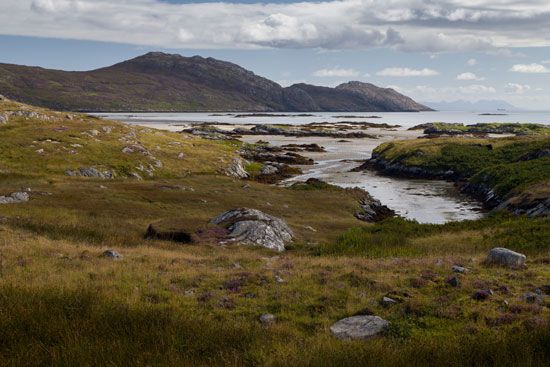
Regarding its size, the island measures 20 miles (30 km) from north to south and is 7 miles (11 km) wide. It is physically linked to the islands of Benbecula and North Uist to the north via road bridges. The island’s geography is characterized by a mountainous, indented eastern coast and a western side featuring a belt of arable land.1
What are the primary economic activities and industries on South Uist?
The economy of South Uist is diverse, relying on a mix of traditional land-based practices, maritime activities, and the service sector. The primary economic activities on the island include:
- Stock Raising: This is the chief occupation for many islanders, supported by the fertile belt of arable land found on the western side of the island.1
- Crofting: Many residents engage in crofting, which involves small-scale tenant farming primarily for subsistence.1
- Fishing: Maritime activities remain a significant part of the local economy.1
- Seaweed Processing: The island supports industry related to the processing of seaweed.1
- Weaving: The production of tweeds is a traditional craft practiced on the island.1
- Tourism: This sector is considered very important to the overall economic health of South Uist.1
These activities reflect the broader economic patterns of the Outer Hebrides, where residents have historically adapted to the island’s varied geography—utilizing the fertile western machair for agriculture while relying on the coast and moorlands for other forms of sustenance and industry.13
What is the significance of South Uist in Scottish prehistory and archaeology?
The provided Britannica search results do not contain specific information regarding the significance of South Uist in Scottish prehistory or archaeology. While the records detail the island’s geography, economy, and modern demographics, they do not document prehistoric settlements, monuments, or archaeological findings unique to South Uist.
General information on Scottish prehistory—such as the development of Neolithic farming, the construction of Bronze Age stone circles, and the appearance of Iron Age brochs and hill forts—is available for Scotland as a whole, but these sources do not explicitly link these developments to South Uist.6
What are some notable landmarks or attractions on South Uist?
South Uist, located in the Outer Hebrides of Scotland, is characterized by its distinct geography and traditional culture rather than a list of conventional tourist landmarks. Notable features and points of interest include:
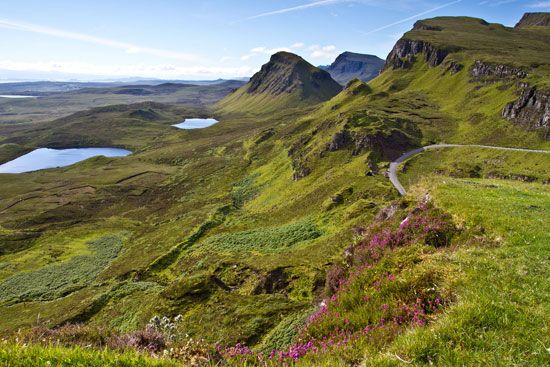
- Beinn Mhor: The island’s highest point, reaching an elevation of 2,033 feet (620 metres). It dominates the mountainous and deeply indented eastern landscape of the island.7
- Lochboisdale: The main village and primary settlement on the island, situated on the east coast.7
- Western Machair: The western side of the island features a fertile belt of arable land derived from shell sand, which contrasts sharply with the peat bogs and heather of the eastern moorlands.7
- Cultural Heritage: The island is a stronghold of Scottish Gaelic, with approximately four-fifths of the population speaking the language. Visitors often engage with the local tradition of weaving tweeds.7
- Connectivity: South Uist is connected by road bridges to the neighboring islands of Benbecula and North Uist, allowing for easy exploration of the wider island chain.71
Sources
- South Uist — Encyclopædia Britannica
- Outer Hebrides — Encyclopædia Britannica
- Hebrides — Encyclopædia Britannica
- North Uist — Encyclopædia Britannica
- Scotland - Fishing — Encyclopædia Britannica
- Scotland - Ancient times — Encyclopædia Britannica
- World Heritage site - Select World Heritage sites — Encyclopædia Britannica
Published on · 3 min read