Western Isles
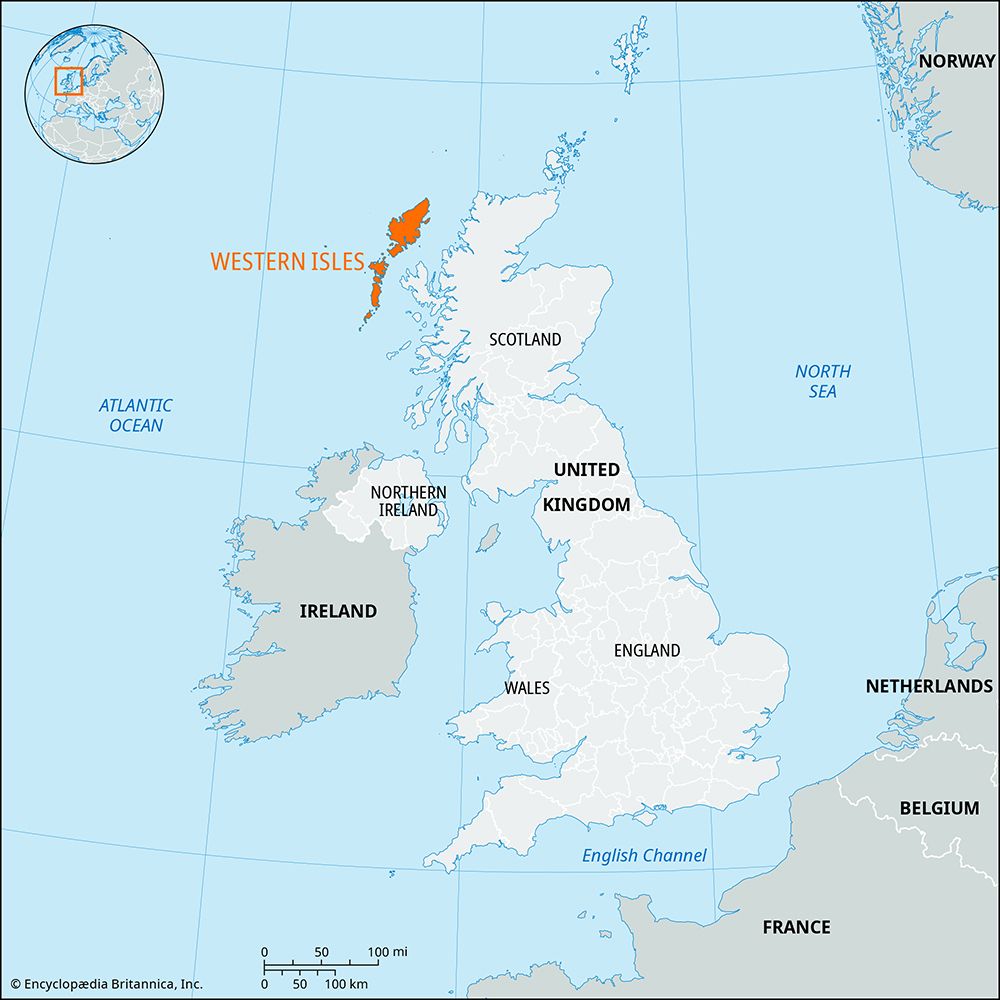
The economy of the Western Isles (the Outer Hebrides) is rooted in traditional practices while diversifying into modern sectors. The primary economic…
What are the main economic activities and industries in the Western Isles?
The economy of the Western Isles (the Outer Hebrides) is rooted in traditional practices while diversifying into modern sectors. The primary economic activities and industries include:
- Crofting: This traditional form of tenant farming remains a mainstay of the islands’ economy. Crofts typically consist of a few acres used for raising sheep and a cow, alongside small-scale crop cultivation to supplement diets and provide modest income.12
- Harris Tweed: The islands are renowned for the production of high-quality Harris tweed. While traditionally woven on handlooms by crofters in their homes, the process now involves a combination of factory-based preparation—such as washing, dyeing, and spinning—and home-based weaving.13
- Fishing: Although the industry has declined from its peak during the 20th-century herring boom, fishing remains an important economic contributor.12
- Modern Industries: The region relies on several contemporary sectors to support its population, including tourism, food processing, and renewable energy. Additionally, the oil industry serves as an important economic engine.3
Stornoway, located on the island of Lewis, serves as the chief commercial and administrative center, providing essential infrastructure such as a natural harbor and ship-repair facilities.12
What is the historical significance of the Western Isles in Scottish and British history?
The Western Isles (the Outer Hebrides) hold significant historical importance, characterized by thousands of years of human habitation and a unique cultural evolution.
Prehistoric and Early History
The islands have been inhabited for at least 4,000 years, evidenced by remarkable prehistoric sites such as the Callanish Stones on Lewis, which are considered equal in importance to Stonehenge. By the first centuries CE, the inhabitants spoke Gaelic, and the region became a center of early Christianity following St. Columba’s arrival in the 6th century.6
Norse Influence and the Lordship of the Isles
Beginning in the 8th century, the islands suffered from Viking raids and eventually fell under Norwegian dominance from the 9th to the 12th century. This era ended when the native leader Somerled rebelled, founding the [Lordship of the Isles]. The Lords of the Isles maintained effective, semi-independent rule over the region throughout the late Middle Ages until the kingdom of Scotland established formal control in 1493.67
Integration and Social Change
Following 1493, the history of the Western Isles merged with that of the Scottish counties. In later centuries, the region was deeply affected by the Jacobite risings, particularly the 1745 rebellion, which led to significant economic and social restructuring as traditional clan systems were dismantled in favor of capitalist agriculture.681
What are some of the unique environmental features and wildlife found in the Western Isles?
The Western Isles, or Outer Hebrides, are characterized by a distinct and often austere natural environment that supports a variety of unique wildlife.
Environmental Features
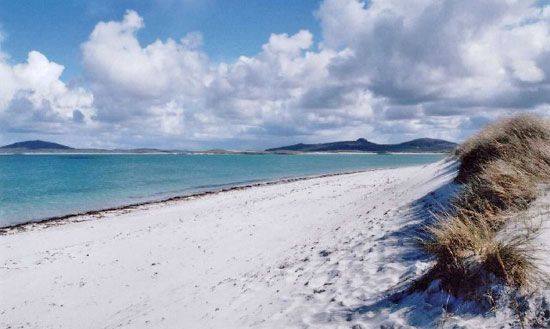
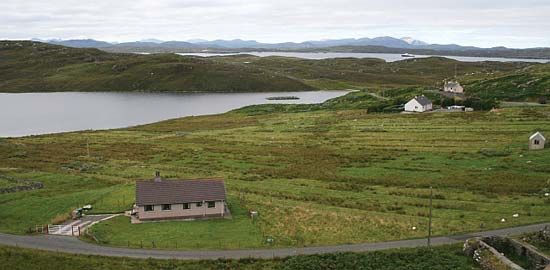
The islands feature a sharp contrast between their two coasts. The eastern coasts are typically barren and rock-strewn, while the western coasts are defined by white sand beaches backed by machair—fertile, grassy plains that serve as some of the most productive agricultural land in the region. The interior of the islands is largely composed of poorly drained lowlands featuring extensive peat bogs, which have historically provided fuel for the inhabitants. The landscape is generally open and austere, with very few trees.1221
Wildlife
The islands host an abundant and diverse range of wildlife, particularly in more isolated areas:12
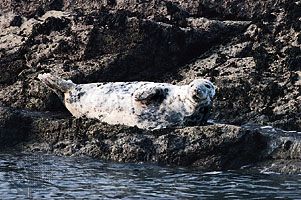
- Marine Life: The surrounding waters are vital habitats for the Atlantic gray seal, with a significant portion of the world’s population breeding in these areas. Common seals are also numerous, and sightings of dolphins, porpoises, and whales are not uncommon.512
- Birds: The islands support large populations of seabirds, including gannets, fulmars, and puffins.12
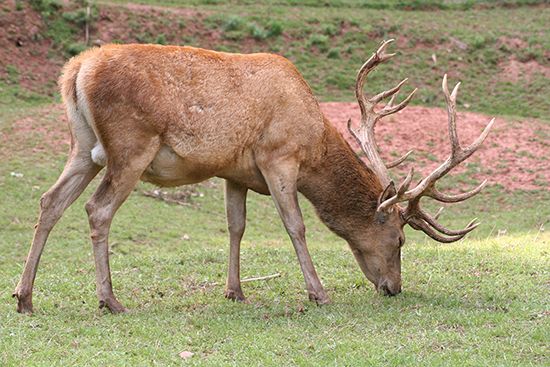
- Land Mammals: Red deer are found on the northern islands, and the island of Soay is home to a unique, primitive breed of wild sheep.122
How does the Gaelic language and culture influence the Western Isles region?
The Scottish Gaelic language and culture remain deeply embedded in the identity of the Western Isles, serving as one of the few regions in Scotland where the language is still spoken as an everyday tongue.13
Linguistic Significance
While Gaelic has faced a steady decline across much of mainland Scotland, it has maintained a strong presence in the Hebrides. Unlike urban centers such as Edinburgh or Glasgow, where Gaelic literary revivals often cater to displaced speakers, the Western Isles remain a stronghold where the language is primarily confined to the home and daily community life. This continuity helps preserve the unique phonetic and grammatical characteristics of the language, which has evolved distinctly from its Irish roots since the 13th century.141
Cultural Integration
The culture of the islands is inextricably linked to this linguistic heritage. The region’s history, including its Christianization by St. Columba in the 6th century and the era of the Lordship of the Isles, fostered a society where Gaelic traditions flourished. Today, this cultural influence is supported by modern media, including Gaelic-language radio, television, and newspapers, alongside efforts within the Scottish educational system to revitalize the language.1321
Sources
- Western Isles — Encyclopædia Britannica
- Outer Hebrides — Encyclopædia Britannica
- Scotland - Fishing — Encyclopædia Britannica
- Iceland - Agriculture and fishing — Encyclopædia Britannica
- Hebrides — Encyclopædia Britannica
- Inner Hebrides — Encyclopædia Britannica
- Scotland - The Norse influence — Encyclopædia Britannica
- Western Isles — Merriam-Webster
- Scotland - Jacobitism in the Highlands — Encyclopædia Britannica
- Argyllshire — Encyclopædia Britannica
- Jacobite — Encyclopædia Britannica
- Scotland - Plant and animal life — Encyclopædia Britannica
- Celtic languages - Scottish Gaelic — Encyclopædia Britannica
- Scots Gaelic language — Encyclopædia Britannica
- Ireland - Cultural life — Encyclopædia Britannica
Published on · 4 min read