Spotted Lanternfly
The spotted lanternfly (Lycorma delicatula) is a visually striking plant hopper native to China, India, and Vietnam. While it is a minor pest in its home…
What is a spotted lanternfly?
The spotted lanternfly (Lycorma delicatula) is a visually striking plant hopper native to China, India, and Vietnam. While it is a minor pest in its home range due to natural predators, it has become a destructive invasive species in countries like South Korea and the United States.1
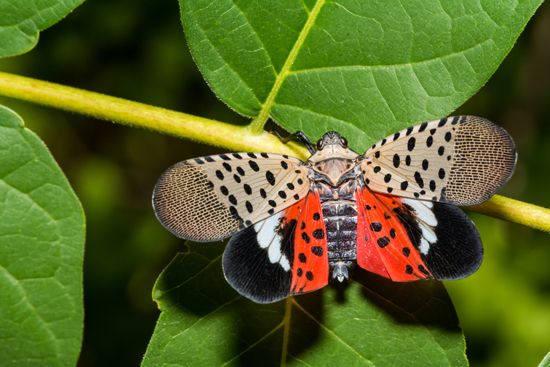
Adults are about 2.5 cm long with grayish-brown forewings featuring black spots and vibrant red hind wings. They feed on the sap of over 70 plant species, including grapes, fruit trees, and hardwoods, using piercing-sucking mouthparts. This feeding weakens plants and produces honeydew, a sticky substance that promotes the growth of sooty mold, which can block sunlight and eventually kill the host.21
Because they lack natural predators in these new regions, they pose a significant threat to agriculture and natural resources. Their spread is often aided by human activity, as egg masses can easily hitchhike on vehicles and cargo. Control efforts include mechanical trapping, the use of insecticides, and manual removal of egg masses.1
Where is the spotted lanternfly originally from?
The spotted lanternfly (Lycorma delicatula) is native to China, India, and Vietnam. In its original range, the insect is considered a minor pest because its population is naturally constrained by predators, such as parasitic wasps.31
Outside of these regions, however, it has become a destructive invasive species in countries including South Korea, Japan, and the United States, where it lacks natural enemies to keep its numbers in check.31
What does the spotted lanternfly look like?
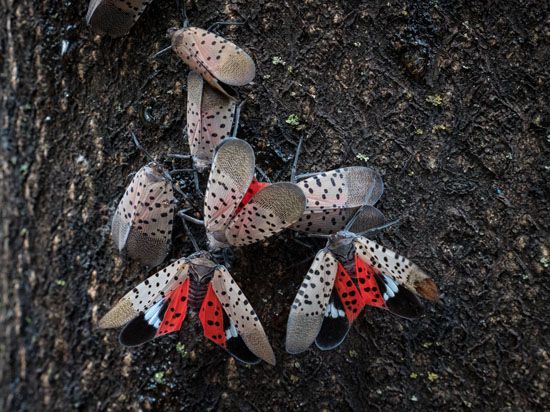
The adult spotted lanternfly (Lycorma delicatula) is a visually distinct plant hopper measuring approximately 2.5 cm (1 inch) in length with a 5 cm (2 inch) wingspan. Its appearance changes significantly depending on whether it is at rest or in flight.2
- At Rest: The wings are folded over a black abdomen. The visible forewings are a light pinkish-brown color, marked with black spots near the body and black bars at the tips.2
- In Flight: The hind wings are revealed, displaying a bright red base with black spots. The middle sections feature black and white bars, while the tips are black.2
The insect also undergoes dramatic changes during its life cycle:
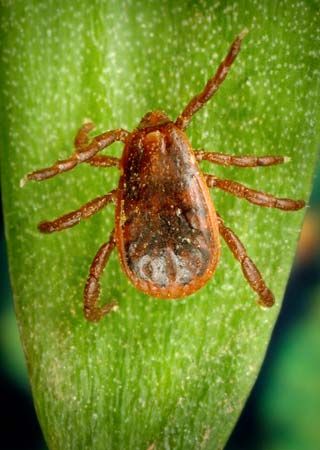
- Nymphs: Early-stage nymphs are black with white spots and are often mistaken for ticks, though they are strong jumpers. By the fourth instar stage, they develop a red coloration with white and black markings.2
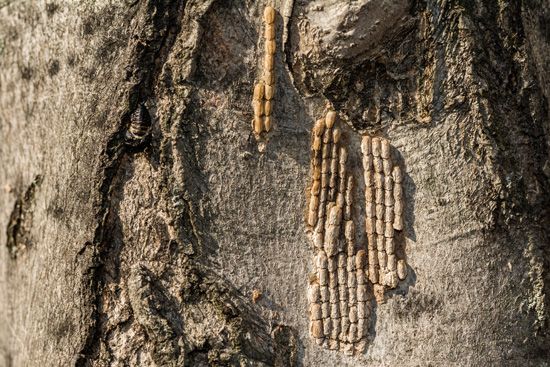
- Egg Masses: Laid on smooth surfaces, these masses are about 2.5 cm long. They are initially covered in a white coating that dries to a pinkish-gray and eventually darkens to resemble a splotch of mud.2
Why is the spotted lanternfly a problem in some areas?
The spotted lanternfly (Lycorma delicatula) is considered a significant threat in regions outside its native range because it lacks natural predators to control its population, allowing it to proliferate and cause extensive damage to plants and ecosystems.21
The insect’s impact is primarily driven by its feeding habits and the secondary effects of its waste:
- Plant Damage: Both nymphs and adults use piercing-sucking mouthparts to feed on the sap of over 70 plant species, including wine grapes, fruit trees, and various hardwoods. This feeding weakens plants, reduces their vigor, and can lead to their death.21
- Sooty Mold: As they feed, the insects excrete a sticky fluid called honeydew. This substance promotes the growth of sooty mold, a plant disease that coats leaves and branches, blocking sunlight and inhibiting photosynthesis.21
- Economic Threat: Heavy infestations threaten agricultural sectors, including vineyards, orchards, and the logging industry, by damaging crops and forest health.21
Sources
- spotted lanternfly — Merriam-Webster
- spotted lanternfly — Encyclopædia Britannica
- Why Are Spotted Lanternflies Bad? — Encyclopædia Britannica
- lanternfly — Encyclopædia Britannica
Published on · 3 min read